Kyrgyz traditional dances are a vivid expression of the nomadic soul of قيرغيزستان. Rooted in centuries-old traditions, these dances reflect the daily life, beliefs, and values of the Kyrgyz people – a nation shaped by mountains, horses, and a deep connection to nature. Unlike classical stage dances, Kyrgyz folk dances evolved organically from rituals, celebrations, and storytelling, making them an essential part of the country’s intangible cultural heritage.
Today, traditional Kyrgyz dances are performed at festivals, weddings, national holidays, and cultural shows, offering travelers a unique window into the nomadic past of Central Asia.
Origins of Kyrgyz Traditional Dances
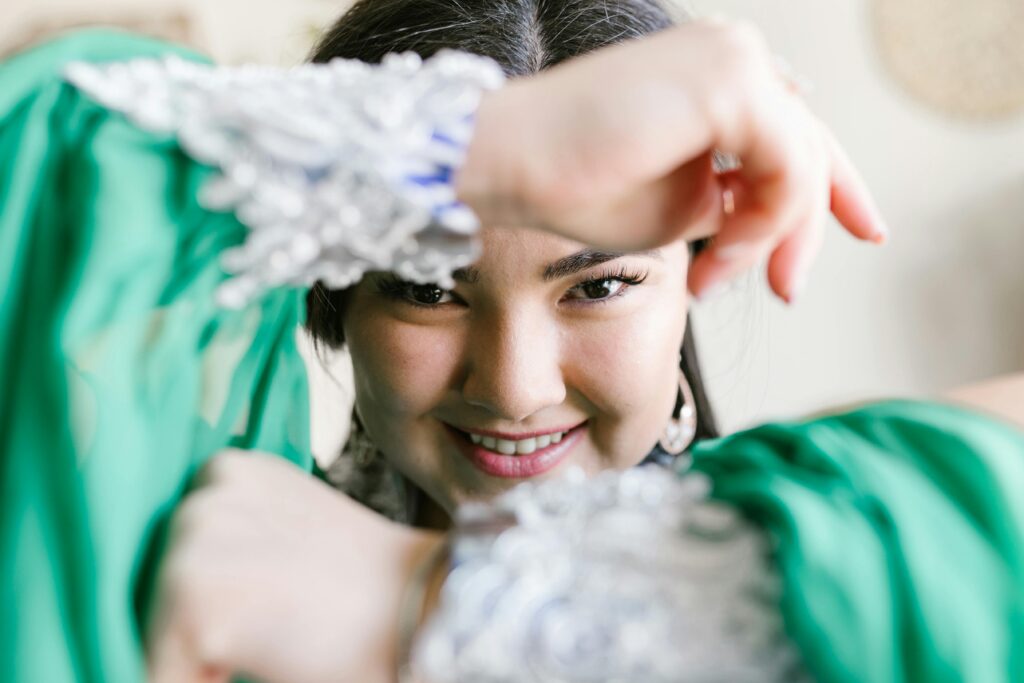
The history of Kyrgyz dances is closely linked to the nomadic lifestyle. For centuries, Kyrgyz tribes moved across the Tian Shan mountains with their herds, and dance became a way to celebrate seasonal cycles, victories, marriages, and community unity.
Unlike many urban cultures, Kyrgyz dance did not develop in palaces or theaters. Instead, it was performed:
- Around campfires
- During weddings and family celebrations
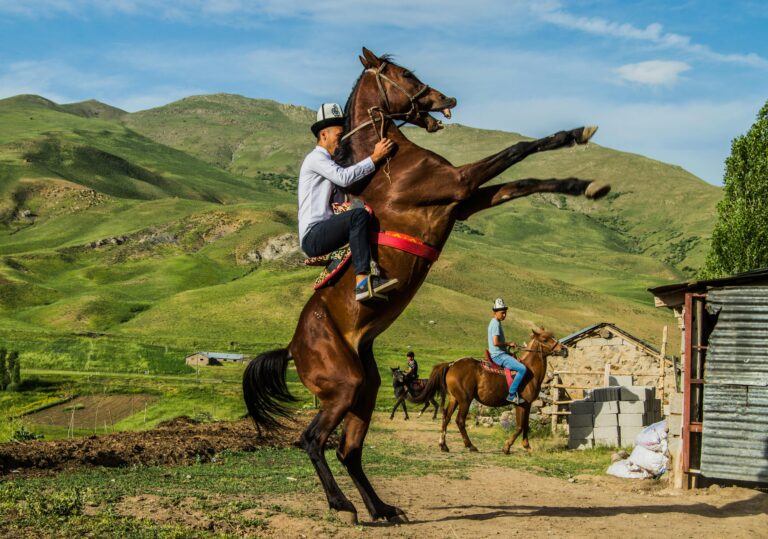
- At horse games and seasonal festivals
Movements often imitate nature, animals, hunting scenes, and horse riding, which were central to nomadic life.
Key Characteristics of Kyrgyz Folk Dances
Kyrgyz traditional dances are instantly recognizable due to their expressive style and symbolic gestures.
1. Strong Connection to Nature
Many movements represent:
- Eagles spreading wings
- Horses galloping across the steppe
- Wind, rivers, and mountain landscapes
This reflects the Kyrgyz worldview, where humans live in harmony with nature.
2. Expressive Hand and Arm Movements
Hands play a major role, telling stories through gestures rather than strict choreography. Each motion carries meaning, often linked to daily tasks such as weaving, hunting, or greeting guests.
3. Dynamic Rhythm
Kyrgyz dances can shift quickly from slow, graceful movements to energetic and powerful steps, symbolizing both peaceful life and the hardships of nomadic survival.
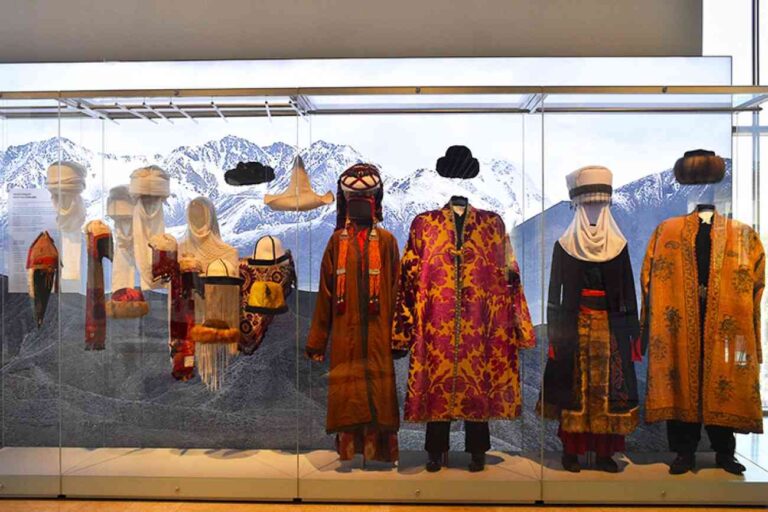
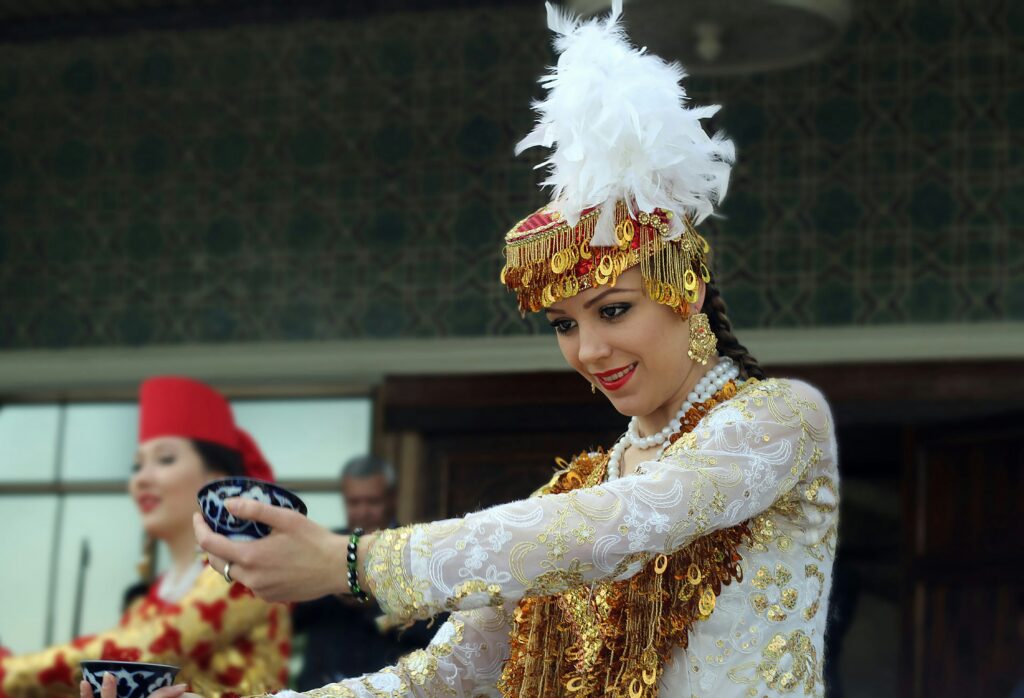
4. Traditional Costumes
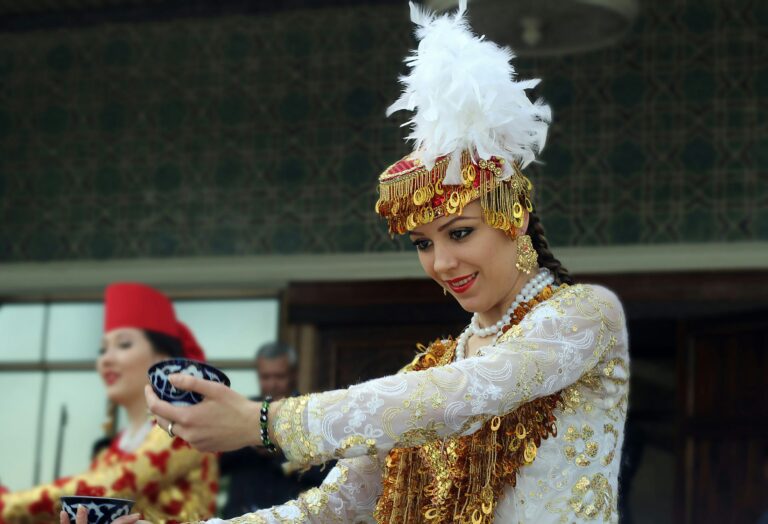
Dancers usually wear:
- Kalpak (traditional white felt hat for men)
- Embroidered dresses and vests
- Leather boots
The costumes themselves are cultural symbols, often decorated with ancient ornaments.
Famous Kyrgyz Traditional Dances
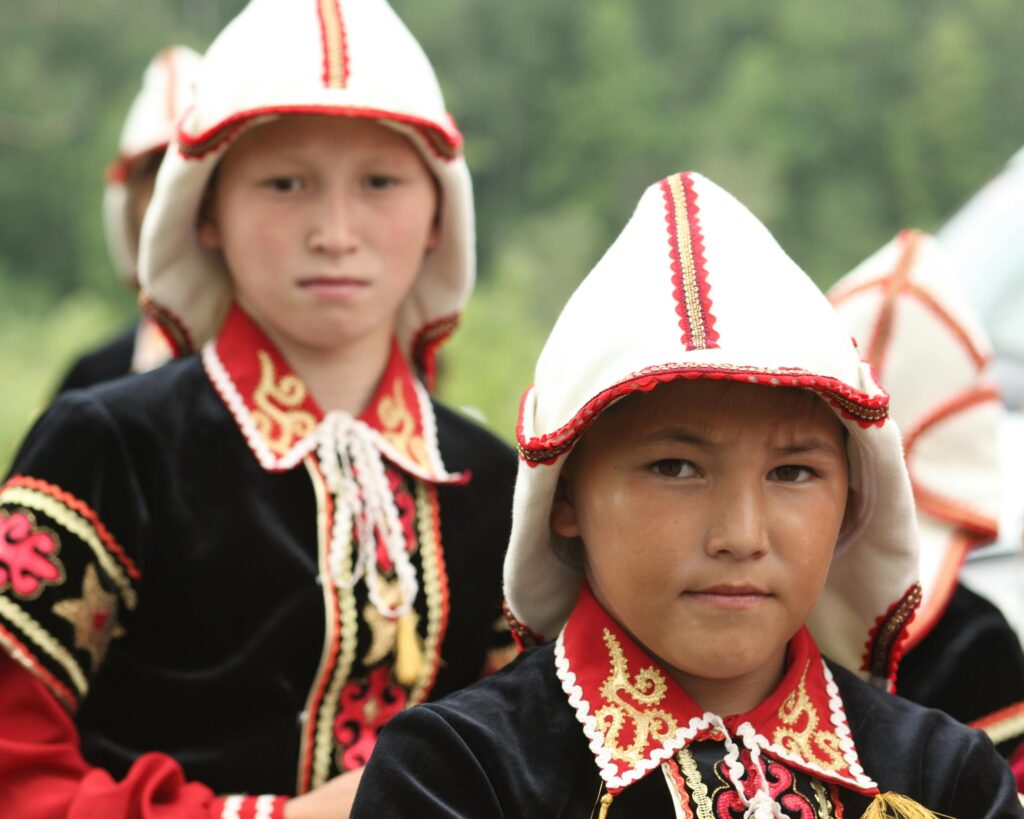
Kara Jorgo – The Dance of Strength and Masculinity
Kara Jorgo is the most well-known Kyrgyz dance and a national symbol. Traditionally performed by men, it represents:
- Strength
- Courage
- Horse riding skills
The movements are sharp, rhythmic, and powerful, often compared to a horse’s gait. Today, Kara Jorgo is danced by both men and women during weddings and public celebrations.
Kyz Kuumai Dance Interpretations
Inspired by the traditional horse game Kyz Kuumai (chasing the bride), this dance reflects playful courtship between men and women. It combines flirtation, humor, and dynamic interaction.
Ritual and Festival Dances
Some dances were historically connected to rituals for:
- Good harvest
- Protection from misfortune
- Seasonal transitions
While their ritual meaning has faded, they remain part of folklore performances.
Music and Instruments in Kyrgyz Dances
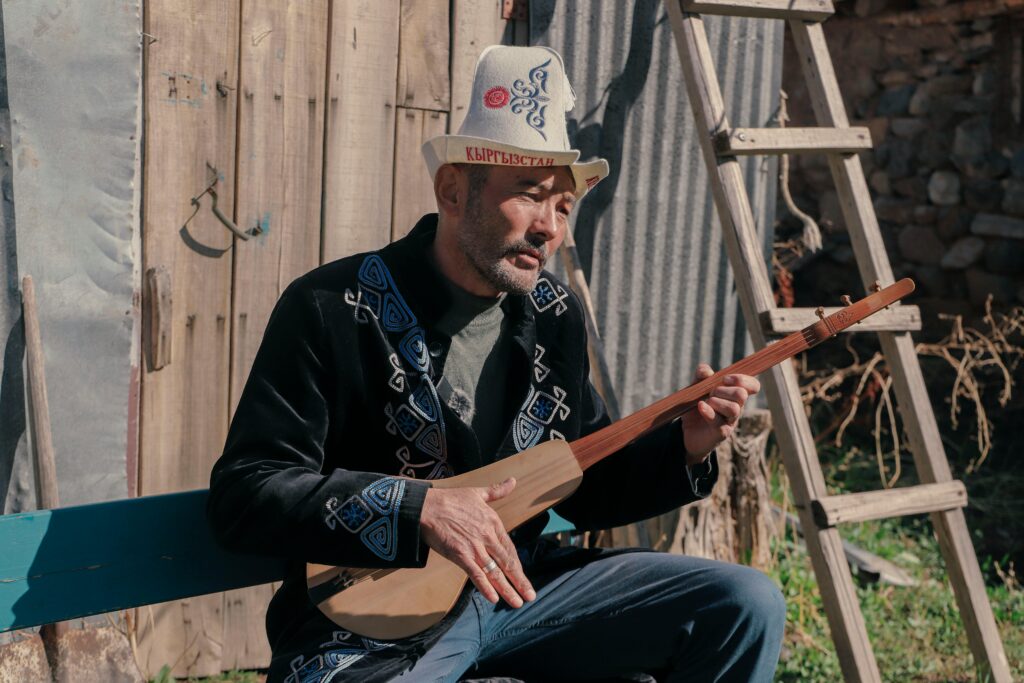
Music is inseparable from Kyrgyz dance. Traditional dances are accompanied by live folk music played on national instruments such as:
- Komuz – a three-stringed lute
- Kyl kyyak – a bowed string instrument
- Choor – a traditional flute
The rhythm guides the dancer’s movements and intensifies the emotional impact of the performance.
Kyrgyz Dances Today: Tradition Meets Modern Stage

In modern Kyrgyzstan, traditional dances are preserved and promoted by:
- National folklore ensembles
- Cultural centers
- Tourism performances
Choreographers adapt folk movements for the stage while preserving their original meaning. You can see Kyrgyz traditional dances at:
- National holidays (Nooruz, Independence Day)
- Cultural festivals
- Special shows for tourists
For visitors, watching a live performance is often one of the most memorable cultural experiences in Kyrgyzstan.
Why Kyrgyz Traditional Dances Matter
Kyrgyz dances are more than entertainment. They serve as:
- A living archive of nomadic history
- A symbol of national identity
- A way to pass traditions to younger generations
In a rapidly modernizing world, these dances keep the spirit of the nomads alive.