
جدول المحتويات
تبديلGur-e-Amir Mausoleum, Samarkand
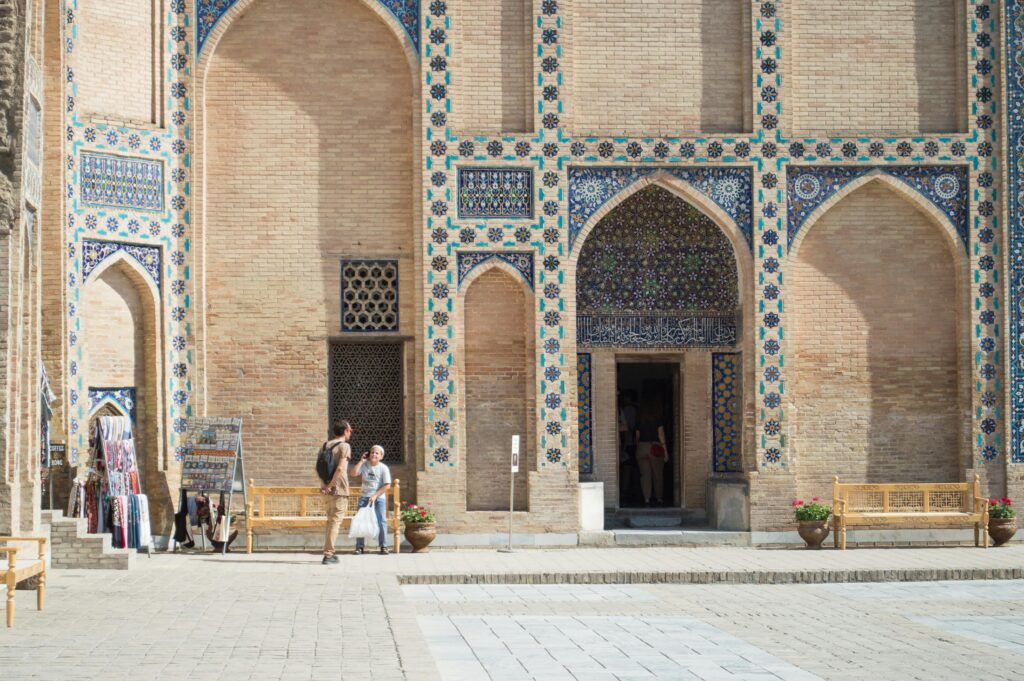
Gur-e-Amir Mausoleum is one of the most important historical landmarks in سمرقند, Uzbekistan. Famous for its magnificent turquoise dome, richly decorated interior, and connection with Amir Timur, the mausoleum is a masterpiece of Timurid architecture. It serves as the final resting place of Timur and several members of his family, making it an essential destination for travelers interested in the history of Central Asia.
The monument reflects the power and cultural achievements of the Timurid dynasty, which transformed Samarkand into one of the most influential cities of the medieval world. Its monumental entrance, intricate tilework, carved inscriptions, and golden interior decorations demonstrate the exceptional craftsmanship of the period.
Located within Samarkand’s historic center, Gur-e-Amir Mausoleum is easy to combine with other major attractions, including Registan Square, Bibi-Khanym Mosque, and Shah-i-Zinda Necropolis. Whether you are fascinated by medieval history, Islamic art, or historic architecture, this remarkable monument offers a memorable insight into Uzbekistan’s cultural heritage.
History of Gur-e-Amir Mausoleum
The history of Gur-e-Amir Mausoleum is closely connected with Amir Timur, the powerful ruler who made Samarkand the capital of his empire in the late 14th century.
The Origins of the Mausoleum
The complex began as a religious and educational foundation associated with Muhammad Sultan, Timur’s grandson and intended successor. Construction started around the beginning of the 15th century, with the original project including a madrasah and a khanqah, a building used by Sufi communities.
Following Muhammad Sultan’s death in 1403, the complex acquired a funerary purpose. Timur subsequently became associated with the mausoleum, and the building developed into an important burial place for the ruling family.
The transformation of the complex reflects the importance of dynastic memory in Timurid society. Monumental tombs honored prominent individuals while reinforcing the status and legacy of the ruling house.
Amir Timur and His Final Resting Place
Amir Timur, also known as Tamerlane, established a vast empire across parts of Central Asia and neighboring regions. He made Samarkand his capital and sponsored ambitious architectural projects intended to demonstrate the city’s importance.
Timur died in 1405 while preparing for a campaign toward China. Although his burial plans and the circumstances of his final journey form part of the wider historical story, he was ultimately buried at Gur-e-Amir.
The mausoleum later became the resting place of other members of the Timurid family, including Ulugh Beg, the celebrated ruler and astronomer. Their burials strengthened the site’s significance as a dynastic memorial.
The Timurid Dynasty and Samarkand
The Timurid period was a time of significant artistic and architectural development. Samarkand attracted skilled builders, tilemakers, calligraphers, and craftspeople whose work shaped the city’s distinctive appearance.
Gur-e-Amir is one of the clearest examples of this architectural tradition. Its monumental proportions and intricate decoration demonstrate how funerary architecture could express religious beliefs, political authority, and artistic sophistication.
The mausoleum also influenced later architectural traditions. Its combination of a prominent dome, a tall entrance portal, and a richly ornamented interior helped establish design features that appeared in other important buildings across the wider Islamic world.
Restoration and Preservation
Over the centuries, Gur-e-Amir Mausoleum experienced periods of deterioration and repair. Weathering, earthquakes, and changes in political circumstances affected the condition of the complex.
Restoration work, particularly during the modern period, helped preserve its structural elements and decorative surfaces. These efforts have made it possible for visitors to appreciate the monument’s architectural character while recognizing that some areas have been repaired or reconstructed.
Today, Gur-e-Amir is part of Samarkand’s UNESCO World Heritage-listed historic center and remains one of the city’s most significant cultural landmarks.
Architectural Highlights of Gur-e-Amir Mausoleum
Gur-e-Amir Mausoleum is renowned for its balanced proportions, distinctive dome, and elaborate decorative details. The exterior creates a powerful first impression, while the interior reveals a different level of craftsmanship.
1. The Turquoise Ribbed Dome
The mausoleum’s large ribbed dome is one of its most recognizable features. Its turquoise surface rises above the surrounding buildings and forms a prominent part of Samarkand’s historic skyline.
The dome’s vertical ribs create a distinctive silhouette, while its color connects the monument with other celebrated examples of Central Asian architecture.
From outside, take time to observe how the dome rises above the main chamber and how its shape complements the tall entrance portal.
2. The Monumental Entrance Portal
The entrance portal establishes the grandeur of the mausoleum before visitors enter the main chamber. Its tall arch and decorative surfaces demonstrate the monumental style favored by Timurid architects.
Blue, turquoise, and contrasting decorative elements form complex patterns across the façade. The portal also creates a visual transition between the exterior courtyard and the richly decorated interior.
3. Intricate Tilework
Glazed ceramic tiles are central to the appearance of Gur-e-Amir. The decorative surfaces combine geometric patterns, floral motifs, and carefully arranged borders.
The use of different shades of blue and turquoise creates depth and visual movement across the walls. Close inspection reveals the precision with which individual decorative elements were arranged.
These techniques reflect the high level of craftsmanship achieved by artisans working in Samarkand during the Timurid period.
4. Golden Interior Decoration
Inside the mausoleum, visitors encounter elaborate ornamentation that contrasts with the blue tones of the exterior. Decorative surfaces include gilded details, intricate patterns, and carefully composed inscriptions.
The richness of the interior reflects the status of the individuals commemorated here. It also demonstrates how Timurid architects and artisans used color, pattern, and light to create a solemn yet impressive space.
5. Marble and Onyx Tombstones
The central chamber contains cenotaphs, or symbolic markers, indicating the burial places below. Among them is the dark stone marker traditionally associated with Amir Timur.
These visible markers should be distinguished from the actual graves in the crypt beneath the main chamber. The arrangement helps visitors understand the commemorative function of the mausoleum while preserving the distinction between the decorative upper chamber and the burial space below.
6. Calligraphy and Geometric Patterns
Inscriptions and geometric decoration contribute to the mausoleum’s architectural character. Calligraphy provides visual emphasis across selected surfaces, while repeating patterns create continuity between walls, arches, and decorative panels.
These features are not simply ornamental. They reflect broader traditions in Islamic art, where writing, geometry, and stylized natural forms play important roles in architectural design.
Who Is Buried at Gur-e-Amir Mausoleum?
Gur-e-Amir is particularly important because it contains the tombs of several prominent members of the Timurid dynasty.
Amir Timur
Amir Timur is the best-known figure associated with the mausoleum. His empire made Samarkand a major political and cultural center, and his architectural projects left a lasting mark on the city.
His burial at Gur-e-Amir gives the monument its central historical significance. Visitors often come specifically to learn about his life, military campaigns, and influence on Central Asian history.
Ulugh Beg
Ulugh Beg was a Timurid ruler renowned for his contributions to astronomy and mathematics. He sponsored scholarly activities in Samarkand and helped establish the city as an important center of scientific learning.
His burial at Gur-e-Amir connects the mausoleum with the intellectual as well as political legacy of the Timurid dynasty.
Other Timurid Family Members
The mausoleum also contains the remains of other members of Timur’s family and ruling circle, including Muhammad Sultan and Mir Sayyid Baraka, a respected religious figure traditionally associated with Timur.
Their presence reflects the role of the complex as a dynastic burial place rather than a tomb dedicated to a single ruler.
Things to See and Do at Gur-e-Amir Mausoleum
A visit to Gur-e-Amir is most rewarding when you allow time to appreciate both the exterior architecture and the details inside.
Admire the Mausoleum from Outside
Begin by walking around the exterior to view the dome, entrance portal, and decorative façades. Observing the building from different angles helps reveal how the architects balanced its vertical elements and overall proportions.
The exterior is especially impressive when the turquoise dome contrasts with the surrounding sky.
Explore the Interior Chamber
Inside, look carefully at the decorative walls, gilded surfaces, inscriptions, and cenotaphs. The contrast between the exterior tilework and the interior ornamentation is one of the monument’s most memorable features.
Take your time rather than rushing through the chamber. Many details are easier to appreciate when viewed closely.
Learn About Amir Timur
The mausoleum provides an excellent starting point for understanding Timur’s role in shaping Samarkand. Reading about his reign and the development of the Timurid dynasty can add context to the architecture.
A guided visit can also help explain the historical figures buried at the site and the symbolic significance of its decorative features.
Photograph the Architecture
Gur-e-Amir is one of Samarkand’s most photogenic landmarks. Wide-angle photographs capture the dome and entrance portal, while closer images reveal the decorative patterns and tilework.
Morning and late-afternoon light can create attractive effects on the exterior surfaces. Always follow posted rules for indoor photography.
Observe the Details of Timurid Art
Look for the relationship between geometry, calligraphy, color, and architectural form. These elements work together to create a unified design rather than appearing as separate decorations.
Comparing Gur-e-Amir with Registan Square or Shah-i-Zinda can help you recognize shared design traditions across Samarkand’s historic monuments.
Best Time to Visit Gur-e-Amir Mausoleum
Gur-e-Amir Mausoleum can be visited year-round, but spring and autumn are generally the most comfortable seasons for exploring Samarkand.
Spring (March to May): Mild temperatures make spring an excellent time to visit historic monuments and walk between attractions.
Summer (June to August): Samarkand can experience intense heat. Consider visiting in the morning or later in the afternoon, and bring water when exploring outdoors.
Autumn (September to November): Autumn often provides pleasant conditions for sightseeing and photography, making it a popular period for cultural trips.
Winter (December to February): Winter can be quieter, although temperatures may be low. Dress warmly and check local conditions before visiting.
For photography, early morning can provide a calmer atmosphere, while late afternoon may produce warm light on the exterior. Confirm current opening hours before planning your visit.
How to Get to Gur-e-Amir Mausoleum
Gur-e-Amir Mausoleum is located in the historic center of Samarkand, making it convenient to include in a city sightseeing itinerary.
From Registan Square
ساحة ريغستان is one of the city’s major landmarks and can be combined with Gur-e-Amir on the same day. Depending on your route and pace, you may be able to walk between the two attractions or take a short taxi ride.
From Bibi-Khanym Mosque
مسجد بيبي خانم is another major Timurid monument in Samarkand. The two sites can be included in a broader tour of the historic center, together with Siab Bazaar and other nearby attractions.
From Samarkand Railway Station
Travelers arriving by train can take a taxi or local transport to the mausoleum. Journey times vary depending on traffic and the location of your starting point.
From Samarkand International Airport
A taxi or prearranged transfer is a convenient way to reach Gur-e-Amir from the airport. If you plan to visit other landmarks on the same day, allow enough time for transportation and check the opening hours of each site.
Practical Visitor Information
Before visiting Gur-e-Amir Mausoleum, keep these tips in mind:
Entry tickets | Admission prices and ticket arrangements can change. Check current information before your visit. |
Opening hours | Hours may vary by season, holidays, restoration work, and local arrangements. |
الوقت المطلوب | Allow around 45 minutes to 1.5 hours, depending on your interest in the architecture and history. |
الملابس | Wear comfortable shoes and choose respectful clothing suitable for a site with religious and cultural significance. |
التصوير الفوتوغرافي | Check the rules for indoor photography and follow any instructions from staff. |
الطقس | Bring water and sun protection during hot months, and wear layers during winter. |
Respectful behavior | Speak quietly inside the mausoleum, avoid touching fragile decorative surfaces, and respect other visitors. |
Places to Visit Near Gur-e-Amir Mausoleum
Gur-e-Amir is an excellent starting point for exploring Samarkand’s rich architectural and cultural heritage.
ساحة ريغستان
Registan Square is Samarkand’s most famous architectural ensemble, featuring three monumental madrasahs: Ulugh Beg, Sher-Dor, and Tilya-Kori.
Its decorated portals, blue tilework, and historical role as a center of education make it an essential stop for anyone interested in the city’s past.
مسجد بيبي خانم
Bibi-Khanym Mosque was commissioned by Amir Timur and is renowned for its monumental scale, large dome, and decorative tilework.
Visiting the mosque alongside Gur-e-Amir offers a deeper understanding of the architectural ambitions that shaped Samarkand during the Timurid era.
Shah-i-Zinda Necropolis
Shah-i-Zinda is a historic complex of mausoleums distinguished by richly decorated façades, turquoise tiles, and narrow passageways.
The necropolis provides another perspective on the funerary architecture and craftsmanship associated with Samarkand.
بازار سياب
Siab Bazaar is a traditional market where visitors can browse local bread, dried fruits, nuts, sweets, and spices.
It offers a lively contrast to the city’s monumental architecture and is a convenient place to experience local food culture.
مرصد أولوغ بيك
Ulugh Beg Observatory is associated with the astronomer and ruler Ulugh Beg. Its remains and museum highlight Samarkand’s importance in the history of astronomy and scientific scholarship.
It is a useful addition for travelers interested in the intellectual achievements of the Timurid period.
Suggested One-Day Itinerary in Samarkand
If you have one full day to explore Samarkand, Gur-e-Amir can be included alongside several of the city’s most famous landmarks.
Morning: Start at Gur-e-Amir Mausoleum to explore the exterior and interior before the day becomes too hot.
Late morning: Continue to Registan Square and explore its three madrasahs.
Midday: Visit Bibi-Khanym Mosque and then browse Siab Bazaar for traditional products and local food.
Afternoon: Head to Shah-i-Zinda Necropolis to admire its decorated mausoleums and historic passageways.
Late afternoon: If time permits, visit Ulugh Beg Observatory or return to a favorite monument for further photography.
This route can be adjusted according to opening hours, weather, and how much time you want to spend at each attraction.
Why Gur-e-Amir Mausoleum Is Worth Visiting
Gur-e-Amir Mausoleum is one of the most significant monuments in Samarkand because it combines architectural beauty with the history of one of Central Asia’s most influential dynasties.
Its turquoise dome, richly decorated interior, and connection with Amir Timur make it a standout attraction. The building also demonstrates the sophistication of Timurid craftsmanship and the importance of monumental architecture in expressing political authority and cultural identity.
For travelers interested in history, Islamic art, or the Silk Road, Gur-e-Amir offers an essential perspective on the people and ideas that shaped Samarkand.


