
Table des matières
ToggleBibi-Khanym Mosque, Samarkand
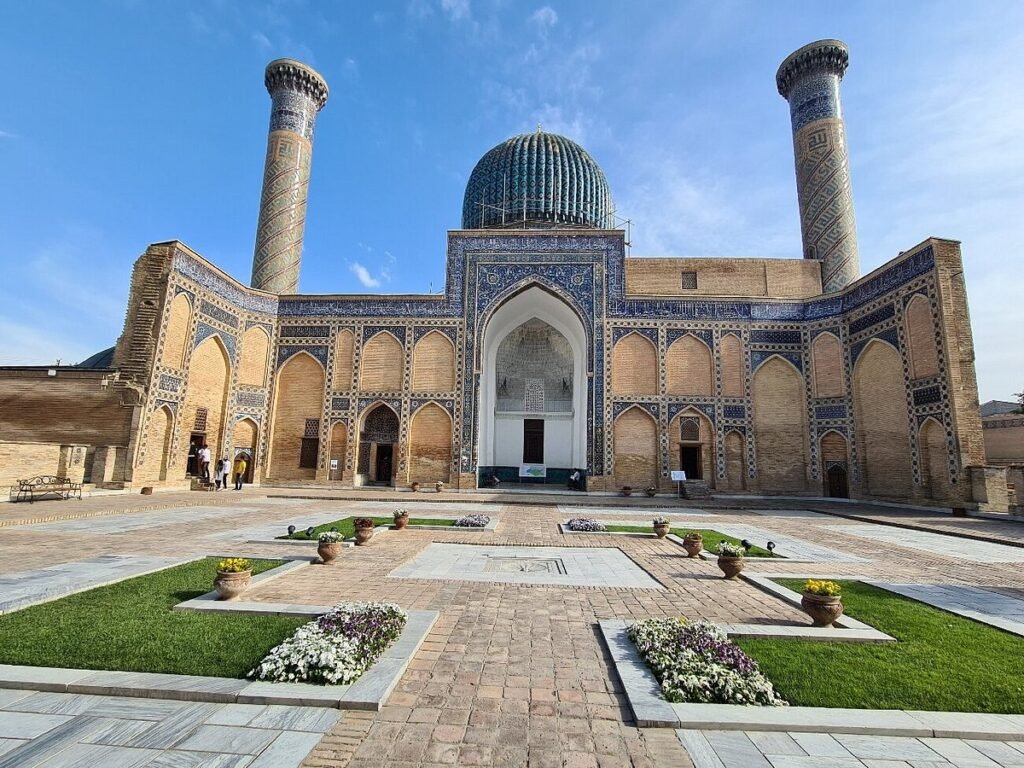
Bibi-Khanym Mosque is one of the most impressive historical landmarks in Samarcande, Uzbekistan. Built during the reign of Amir Timur, the mosque was designed on a monumental scale to reflect the power, wealth, and cultural ambitions of his empire. Its enormous entrance portal, imposing domes, decorative tilework, and spacious courtyard make it one of the most recognizable examples of Islamic architecture in Central Asia.
Located near Siab Bazaar and within reach of the city’s other famous monuments, Bibi-Khanym Mosque is an essential stop for anyone exploring Samarkand. The building tells a story of imperial ambition, architectural innovation, religious tradition, and the skilled artisans who helped shape the city’s historic landscape.
Although earthquakes and the passage of time damaged parts of the original structure, surviving sections and restoration work allow visitors to appreciate its remarkable scale. Today, Bibi-Khanym Mosque remains one of the city’s defining sights and an important part of Uzbekistan’s cultural heritage.
History of Bibi-Khanym Mosque
The history of Bibi-Khanym Mosque is closely connected with Amir Timur, the ruler who transformed Samarkand into the capital of a powerful empire in the late 14th century.
Construction Under Amir Timur
The mosque was commissioned during the late 14th and early 15th centuries, following Amir Timur’s military campaigns and the expansion of his empire. Construction took place on a grand scale, reflecting Timur’s desire to make Samarkand one of the most magnificent cities in the region.
Craftsmen, builders, and artisans from different parts of the empire contributed to the development of the city’s monumental architecture. Bibi-Khanym Mosque became one of the most ambitious religious buildings of its time, designed to accommodate large congregations and make a powerful visual impression.
Its enormous dimensions distinguished it from many other mosques in Central Asia. The structure was intended not only as a place of worship but also as a symbol of the city’s political and religious importance.
The Legend of Bibi-Khanym
The mosque’s name is associated with Bibi-Khanym, a figure traditionally connected with Amir Timur’s family. Popular stories link the building’s construction to Timur’s wife and describe dramatic events surrounding its completion.
These stories have become part of the monument’s cultural identity, adding a layer of romance and mystery to its history. However, legends about the mosque should be distinguished from documented historical accounts of its construction.
For visitors, the traditions surrounding Bibi-Khanym offer an interesting glimpse into how historical monuments become woven into local storytelling and collective memory.
Samarkand During the Timurid Era
During the Timurid period, Samarkand developed into an important center of administration, trade, science, and artistic production. Monumental buildings transformed the cityscape, while artisans introduced sophisticated decorative techniques and architectural designs.
Bibi-Khanym Mosque formed part of this wider program of urban development. Its scale reflected the ambitions of a ruler who wanted his capital to stand among the great cities of the contemporary world.
The mosque also illustrates the connection between religious architecture and imperial identity. Its grandeur expressed the resources available to the Timurid state and the importance of Samarkand within its territories.
Damage, Decline, and Restoration
Over the centuries, earthquakes and structural deterioration damaged significant parts of Bibi-Khanym Mosque. Its immense scale and ambitious construction presented considerable engineering challenges, and some sections gradually fell into ruin.
Despite the damage, the remaining walls, arches, and decorative elements preserved the building’s importance as a historical monument. Conservation and restoration projects helped stabilize and reconstruct parts of the complex, allowing modern visitors to understand its original design more clearly.
Today, the mosque stands as both an architectural landmark and a reminder of the challenges involved in preserving historic buildings.
Architectural Highlights of Bibi-Khanym Mosque
Bibi-Khanym Mosque is celebrated for its monumental proportions and decorative richness. Its design combines large architectural forms with intricate surface ornamentation, creating a striking contrast between overall scale and fine detail.
1. The Monumental Entrance Portal
The entrance portal is one of the mosque’s most recognizable features. Its great height and broad arched opening create an imposing approach to the complex.
The portal was designed to communicate grandeur even before visitors entered the courtyard. Decorative tilework, geometric patterns, and inscriptions contribute to its elaborate appearance.
Stand back to appreciate the full scale of the entrance, then look more closely at the decorative surfaces. This combination of distant views and close inspection reveals the ambition behind the design.
2. The Great Dome
The mosque’s dome is a defining element of its skyline. Its monumental form reflects the architectural traditions of the Timurid era, when large domes were used to emphasize the importance of religious and public buildings.
Blue and turquoise tones contribute to the dome’s distinctive appearance, linking it visually with other celebrated monuments in Samarkand.
The dome also illustrates the engineering challenges involved in constructing such large buildings with the materials and techniques available at the time.
3. The Main Courtyard
The central courtyard provides a sense of the scale for which Bibi-Khanym Mosque was designed. The open space connects the principal structures and allows visitors to view the surrounding architecture from different angles.
From the courtyard, the proportions of the entrance portal, domes, and remaining walls become easier to understand. It is also one of the best places to pause and appreciate the relationship between the mosque’s individual elements.
4. Blue and Turquoise Tilework
Blue and turquoise tiles are among the most recognizable features of Samarkand’s historic architecture, and Bibi-Khanym Mosque displays this tradition on a monumental scale.
The decorative surfaces combine geometric forms, floral motifs, inscriptions, and contrasting colors. Although parts of the original ornamentation have been lost or restored, the remaining details reveal the high level of craftsmanship associated with the Timurid period.
The colors change with the daylight, creating different visual effects throughout the day.
5. Arches and Decorative Inscriptions
Arches organize the mosque’s entrances and interior spaces, giving the structure both visual rhythm and architectural depth. Their shapes and proportions complement the larger domes and portals.
Decorative inscriptions form another important part of the design. Calligraphy and patterned borders were used to enhance the surfaces of significant architectural elements, reflecting the relationship between religious expression and artistic craftsmanship.
What to See Inside Bibi-Khanym Mosque
Exploring Bibi-Khanym Mosque is an opportunity to understand both the building’s original purpose and its later history.
The Main Mosque Structure
The main mosque building was designed to dominate the complex. Its scale and architectural features reflect the ambition behind the original project.
As you explore the accessible areas, pay attention to the relationship between the remaining structural elements and the reconstructed sections. These details help illustrate how the building has changed over time.
The Side Structures
The complex includes additional architectural elements arranged around the courtyard. Their proportions and placement contribute to the overall composition, showing how the mosque was designed as a unified ensemble rather than a single isolated building.
These structures also help visitors imagine the movement of worshippers through the complex.
The Decorative Details
Look for surviving sections of tilework, patterned borders, arches, and inscriptions. The decoration varies across the building, giving different surfaces their own character.
Visitors interested in architecture should take time to compare the restored areas with older surviving fabric where these differences are visible.
The Historic Setting
Bibi-Khanym Mosque stands within one of Samarkand’s most important historic districts. Its location near Siab Bazaar creates an interesting connection between monumental religious architecture and the everyday commercial life of the city.
The surrounding area offers a sense of how historic Samarkand’s major buildings relate to one another.
Things to Do at Bibi-Khanym Mosque
A visit to Bibi-Khanym Mosque can be more rewarding when you allow time to explore its architecture and understand its place in Samarkand’s history.
Admire the Monumental Architecture
Begin by viewing the mosque from a distance to appreciate its scale. The large portal, dome, and courtyard create a powerful architectural composition.
Move around the accessible areas to see how the building changes from different viewpoints.
Photograph the Mosque
Bibi-Khanym Mosque is an excellent location for architectural photography. Wide-angle photographs can capture the monumental structures, while close-up images reveal decorative tiles and inscriptions.
Morning and late-afternoon light can bring out the different shades of blue and the texture of the walls. Be considerate of other visitors and follow any restrictions on photography.
Learn About the Timurid Dynasty
The mosque is closely connected with Amir Timur’s transformation of Samarkand. Learning about the Timurid dynasty before your visit can help explain why the building was constructed on such an ambitious scale.
A local guide can provide additional context about the mosque’s design, its historical significance, and the stories associated with its name.
Visit Siab Bazaar
After exploring the mosque, continue to nearby Siab Bazaar. The market offers a lively contrast to the historic monument, with stalls selling traditional bread, dried fruit, nuts, sweets, spices, and other regional products.
This is a convenient opportunity to experience local food culture and observe everyday life in Samarkand.
Explore the Historic District on Foot
Bibi-Khanym Mosque can be combined with several nearby landmarks. Depending on your walking pace and the weather, you can continue toward Registan Square or Shah-i-Zinda and explore more of Samarkand’s historic architecture.
Comfortable shoes are recommended, especially if you plan to visit multiple attractions in one day.
Best Time to Visit Bibi-Khanym Mosque
Bibi-Khanym Mosque can be visited throughout the year, but spring and autumn are generally comfortable seasons for sightseeing in Samarkand.
Spring (March to May): Mild weather makes spring a good time to explore the mosque and nearby attractions on foot.
Summer (June to August): Temperatures can become very high. Consider visiting in the morning or later in the afternoon to avoid the strongest midday heat.
Autumn (September to November): Autumn often provides comfortable conditions for exploring historic monuments and walking between sites.
Winter (December to February): The mosque can be quieter during winter, although cold weather is possible. Dress in layers and check local conditions before visiting.
For photography, early morning and late afternoon can offer attractive natural light. Opening hours and access arrangements may vary, so confirm current details before planning your visit.
How to Get to Bibi-Khanym Mosque
Bibi-Khanym Mosque is located in the historic center of Samarkand, close to Siab Bazaar and within reach of the city’s other major landmarks.
From Registan Square
Registan Square is one of the most convenient starting points for visiting Bibi-Khanym Mosque. The two attractions can be combined in the same sightseeing itinerary. Depending on your preferred route, walking or taking a short taxi ride may be suitable.
From Shah-i-Zinda
Shah-i-Zinda is another major historical attraction in Samarkand. Its proximity to the wider historic district makes it possible to visit both sites in one day, although the best order depends on opening hours, weather, and how much time you want to spend at each monument.
From Samarkand Railway Station
Visitors arriving by train can take a taxi or local transport to the historic center. Travel time depends on traffic and the exact starting point.
From Samarkand International Airport
A taxi or prearranged transfer is a convenient way to reach Bibi-Khanym Mosque from the airport. If you are planning to visit several attractions after arrival, allow time for transport and check the current access arrangements at each site.
Practical Visitor Information
Keep these tips in mind when planning your visit to Bibi-Khanym Mosque:
Entry tickets: Admission prices and ticket arrangements can change. Check current information before your visit.
Opening hours: Visiting hours may vary by season, holidays, restoration work, and local arrangements.
Time needed: Allow around 45 minutes to 1.5 hours for a general visit, depending on your interest in architecture and photography.
Vêtements : Wear comfortable walking shoes and choose respectful clothing suitable for a site with religious significance.
Weather: Bring water and sun protection in summer. Wear warm layers during colder months.
Photography: Follow any posted restrictions, especially in areas used for prayer or religious activities.
Respectful behavior: Speak quietly where appropriate, avoid touching fragile decorative surfaces, and follow instructions from site staff.
Places to Visit Near Bibi-Khanym Mosque
Bibi-Khanym Mosque is surrounded by some of Samarkand’s most important historic and cultural attractions. Visiting several of these landmarks provides a fuller picture of the city’s development along the Silk Road.
Bazar Siab
Siab Bazaar is a traditional market near Bibi-Khanym Mosque. It is known for regional produce, dried fruits, nuts, sweets, spices, and Samarkand’s famous bread.
The market offers an opportunity to experience local commerce and sample traditional products. It is an excellent stop after exploring the mosque.
Place du Régistan
Place du Régistan is Samarkand’s best-known architectural ensemble. Its three monumental madrasahs—Ulugh Beg, Sher-Dor, and Tilya-Kori—are famous for their intricate tilework, towering portals, and historic educational role.
Visiting both Registan Square and Bibi-Khanym Mosque reveals two different expressions of Samarkand’s architectural heritage.
Shah-i-Zinda Necropolis
Shah-i-Zinda is a historic complex of mausoleums celebrated for its richly decorated façades, blue and turquoise tiles, and atmospheric passageways.
The necropolis offers a more intimate architectural experience than the monumental scale of Bibi-Khanym Mosque, making the two sites a rewarding combination.
Mausolée Gur-e-Amir
Gur-e-Amir Mausoleum is associated with Amir Timur and members of his family. Its dome, decorative interior, and historical significance make it one of the city’s essential attractions.
The mausoleum provides additional insight into the Timurid dynasty and its influence on Samarkand’s architecture.
Observatoire d'Ulugh Beg
Ulugh Beg Observatory is connected with the scientific achievements of the Timurid period. The remains of the observatory and its museum explain Samarkand’s role in the history of astronomy.
It is a worthwhile addition for travelers interested in the intellectual and scientific traditions of the city.
Suggested One-Day Itinerary in Samarkand
If you have one full day in Samarkand, you can combine Bibi-Khanym Mosque with several nearby landmarks.
Morning: Start at Shah-i-Zinda, exploring its historic mausoleums and detailed tilework while temperatures are cooler.
Late morning: Visit Bibi-Khanym Mosque and take time to appreciate its monumental entrance, domes, and courtyard.
Midday: Explore Siab Bazaar and sample local bread, dried fruit, or other regional specialties.
Afternoon: Continue to Registan Square to visit the three famous madrasahs and learn about Samarkand’s role as a center of education and culture.
Late afternoon: Visit Gur-e-Amir Mausoleum if time and opening hours permit.
This route can be adjusted according to your interests and the time available. Architecture enthusiasts may prefer to spend longer at the mosque and Registan Square rather than rushing between every attraction.
Why Bibi-Khanym Mosque Is Worth Visiting
Bibi-Khanym Mosque is one of Samarkand’s most important monuments because it captures the scale and ambition of the Timurid era. Its enormous proportions, richly decorated surfaces, and historic significance distinguish it from many other buildings in Central Asia.
The mosque also offers insight into the relationship between architecture, religion, and imperial power. Its construction reflects the resources and craftsmanship that helped transform Samarkand into a major center of the medieval world.
Whether you are interested in Islamic architecture, the history of Amir Timur, photography, or the Silk Road, Bibi-Khanym Mosque deserves a place on your Samarkand itinerary.


