
Table des matières
ToggleCentral State Museum of the Republic of Kazakhstan, Almaty
To understand Kazakhstan, it helps to look beyond its modern cities and dramatic landscapes. The country’s story stretches from prehistoric animals and ancient nomadic cultures to the Silk Road, the rise of the Golden Horde and the creation of an independent nation. One of the best places to explore this history in a single visit is the Central State Museum of the Republic of Kazakhstan in Almaty.
Now officially known as the National Central Museum of the Republic of Kazakhstan, this major cultural institution preserves an extensive collection of archaeological discoveries, traditional objects, historical documents and works of art. Its exhibitions introduce visitors to the people, traditions and events that have shaped the country over thousands of years.
Located in the Samal-1 district, the museum is a worthwhile stop for anyone interested in Kazakh history, Central Asian culture or the origins of the region’s nomadic traditions. It also provides useful context for travelers planning to visit historical monuments, mountain settlements and archaeological sites elsewhere in Kazakhstan.
Where Is the Central State Museum of Kazakhstan?
The National Central Museum is located at 44 Samal-1 microdistrict in Almaty, Kazakhstan. It stands in the southern part of the city center, in an area that is easy to reach by taxi or public transport.
Its modern building is a landmark in its own right, with monumental architecture that reflects the city’s development during the Soviet period. Inside, the exhibition spaces take visitors through different stages of Kazakhstan’s past, from ancient natural history to contemporary national identity.
The museum is also well suited to a wider Almaty sightseeing itinerary. You can combine it with a walk through the surrounding city districts, explore nearby cultural attractions or visit the foothills of the Trans-Ili Alatau on another day.
History of the National Central Museum
The museum’s history is older than its present building. Its collections developed from nineteenth-century regional museum collections and were gradually expanded through the combination of different institutions and historical holdings.
The institution received the name Central State Museum of Kazakhstan in 1944. Over time, it became one of the country’s leading centers for preserving and presenting historical and cultural heritage.
The current museum building opened in 1985. Designed by architects Yury Ratushny, Z. Mustafina and B. Rzagaliyev, it is an example of monumental modern architecture in Almaty. Its spacious galleries were created to accommodate extensive collections and large-scale exhibitions.
In January 2025, the museum received its official status as the National Central Museum of the Republic of Kazakhstan. Today, it combines exhibition work with research, educational programs and the preservation of objects important to the country’s history.
What Can You See Inside the Museum?
The museum’s collections cover a wide range of subjects, so the visit is not limited to one historical period. Depending on the exhibitions available, you can explore archaeology, ethnography, natural history, historical documents, traditional crafts and the development of independent Kazakhstan.
1. Archaeology and the Ancient History of Kazakhstan
Kazakhstan has a long archaeological record, with evidence of prehistoric life and human communities that inhabited the region thousands of years ago. The museum’s archaeological displays help explain how people lived, worked and developed cultural traditions across different periods.
Look for objects connected with early settlements, ancient burial traditions, metalworking and the communities that occupied the steppe and mountain regions. These finds provide clues about trade, technology, social organization and beliefs.
Archaeology is particularly important for understanding Kazakhstan’s early nomadic societies. Rather than presenting the steppe as an empty landscape, the artifacts reveal a region where people developed sophisticated skills, exchanged goods and maintained connections across large distances.
2. The Golden Collection and Saka Heritage
One of the museum’s most compelling subjects is the ancient goldwork associated with the Saka and other early nomadic cultures.
The Saka were ancient peoples of the wider Central Asian steppe, known in part for their distinctive animal-style art and elaborate metalwork. Gold ornaments and other archaeological finds demonstrate the technical skill and symbolic traditions of these societies.
The objects can be striking for their detailed decoration, but their importance goes beyond appearance. Jewelry, ornaments and ceremonial objects offer evidence of social status, artistic expression and cultural beliefs.
Visitors interested in Kazakhstan’s famous Golden Man and the country’s early nomadic heritage will find this subject especially relevant. Check the museum’s current exhibition information to see which gold collections and related displays are accessible during your visit.
3. Historical Ethnography and Traditional Kazakh Life
The ethnographic collections offer a closer look at the traditions and everyday practices of Kazakhstan’s diverse communities.
Exhibits may include traditional clothing, household objects, decorative arts, tools and items connected with seasonal activities. Together, these objects help explain how families adapted to life in the steppe, mountains and settlements.
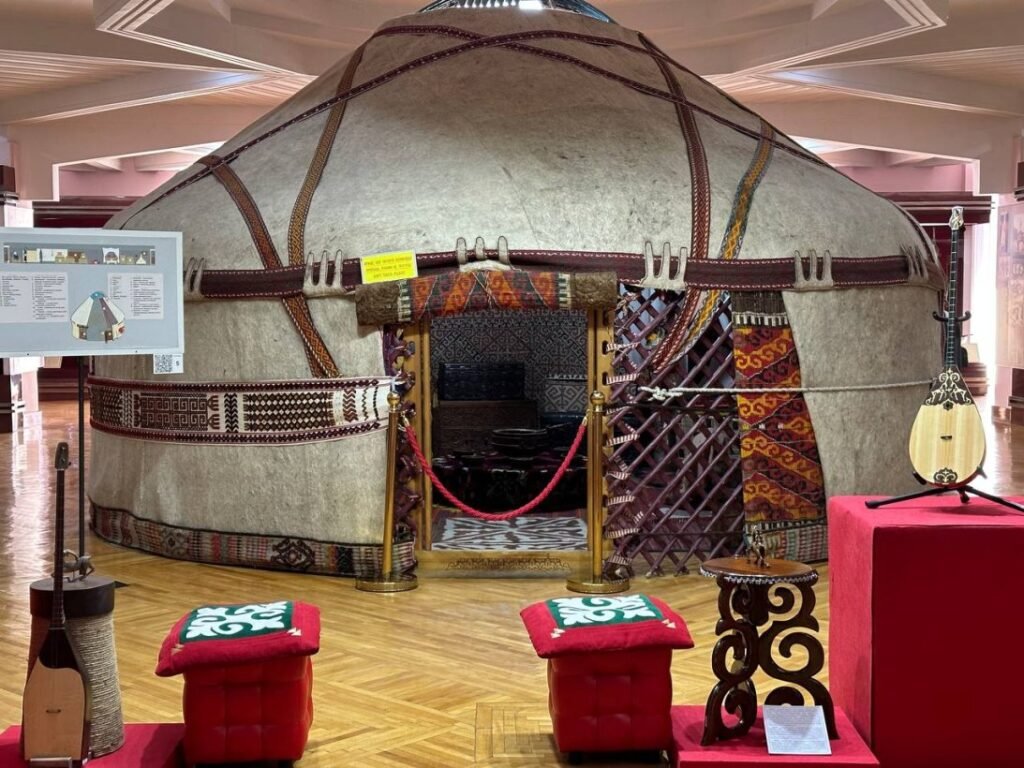
Traditional Kazakh nomadic culture is an important theme. The yurt, felt-making, embroidered textiles and portable household equipment illustrate how people organized domestic life in environments where mobility was essential.
For modern travelers, these displays add meaning to experiences outside the museum. After learning about traditional dwellings and clothing, a visit to a Kazakh ethno village or a rural settlement can become much more informative.
4. The History of Kazakhstan
The museum also explores the historical periods that shaped the territory of modern Kazakhstan.
The country’s position between major regions of Eurasia brought different communities, political powers and trading networks into contact. The museum’s historical collections help visitors follow changes in society, government and cultural life over time.
The Silk Road and other regional trade routes are important parts of this broader story. Goods, technologies, artistic styles and ideas moved between settlements, linking Central Asia with neighboring regions.
As you move through the historical displays, consider how the region’s geography influenced its development. Open steppe, mountain passes, river valleys and oases all played roles in movement, trade and settlement.
5. The Golden Horde
The Golden Horde is another important chapter in the history presented at the museum. This medieval political power emerged from the Mongol Empire and influenced large parts of the Eurasian steppe.
Its history helps explain the political and cultural changes that affected the region during the medieval period. The museum’s dedicated exhibition introduces visitors to this era through historical objects and interpretive displays.
For travelers who enjoy learning about medieval history, this section adds context to the broader story of Central Asia, including the development of political traditions and connections between nomadic and settled societies.
6. Independent Kazakhstan
The museum’s modern-history displays examine the transformation of Kazakhstan in recent decades, including the establishment of independence in 1991.
This part of the visit provides context for understanding the country as it exists today. It explores the development of national institutions, public symbols and cultural identity after the end of the Soviet Union.
For international visitors, the exhibition is a useful introduction to modern Kazakhstan before traveling to other cities or regions. It connects the country’s ancient history with the political, social and cultural changes experienced by contemporary society.
7. Natural History and Paleontology
Kazakhstan’s landscapes contain a rich record of geological change and prehistoric life. The museum’s natural-history and paleontological displays help visitors understand the environment in which human communities eventually developed.
Fossils and other natural-history material introduce the region’s distant past, when its ecosystems differed greatly from those seen today.
This is a useful section for families and travelers interested in science, geology and the natural world. It also complements trips to Kazakhstan’s national parks, where mountain formations, desert landscapes and unusual rock structures reveal the country’s geological diversity.
The Museum Building: A Landmark in Almaty
Even before entering the galleries, the museum’s architecture is worth noticing. The building dates from 1985 and was designed to accommodate a major national collection within a monumental modern structure.
Its scale and formal design distinguish it from older religious buildings and traditional architecture elsewhere in Almaty. The building reflects a period when large public institutions were designed to convey cultural importance through their architecture.
Inside, the galleries offer a different experience from a small local museum. The broad range of subjects makes it possible to move between archaeology, cultural traditions and modern history during a single visit.
Allow time to explore the displays at a comfortable pace rather than rushing through every hall.
How Long Should You Spend at the Museum?
For most visitors, two to three hours is a reasonable starting point. This allows time to explore several major exhibitions without having to rush.
History enthusiasts may want to stay longer, particularly if they are interested in archaeology, the Golden Collection or the Golden Horde. Families with children may prefer to focus on selected halls and take breaks between sections.
If you are visiting Almaty for only a short time, the museum can still be worthwhile. Choose the exhibitions that best match your interests, such as ancient goldwork, traditional Kazakh life or the country’s modern history.
Guided tours may provide additional context and help you navigate the collections. The museum recommends arranging tours in advance.
Practical Visitor Information
Adresse : 44 Samal-1 microdistrict, Almaty, Kazakhstan.
Opening hours: The official museum website lists regular opening hours of 9:00 a.m. to 6:00 p.m., with the ticket office closing at 5:30 p.m.
Weekly closure: Tuesday.
Tickets: Admission prices depend on visitor category and the areas included. The museum lists separate ticket options for foreign visitors, guided tours and certain specialized exhibitions. Check the official ticket page for current prices before your visit.
Official website: https://csmrk.kz/en
Opening hours, ticket conditions and exhibition availability can change, so confirm the latest information before traveling.
How to Get to the Central State Museum
The museum is situated in the Samal-1 district of Almaty and can be reached by several forms of transport.
By taxi: A convenient option from hotels and other attractions around the city. Enter the museum’s full name or address when arranging the ride.
By public transport: Local buses and other city transport serve the surrounding area. Check a current route planner to find the best connection from your location.
On foot: If you are staying in the southern part of central Almaty, walking may be a pleasant way to reach the museum while exploring the city.
As part of a guided tour: Some city tours include the museum alongside other cultural attractions. Confirm in advance whether admission and guided entry are included.
Plan your arrival so that you have enough time to explore before the ticket office closes.


