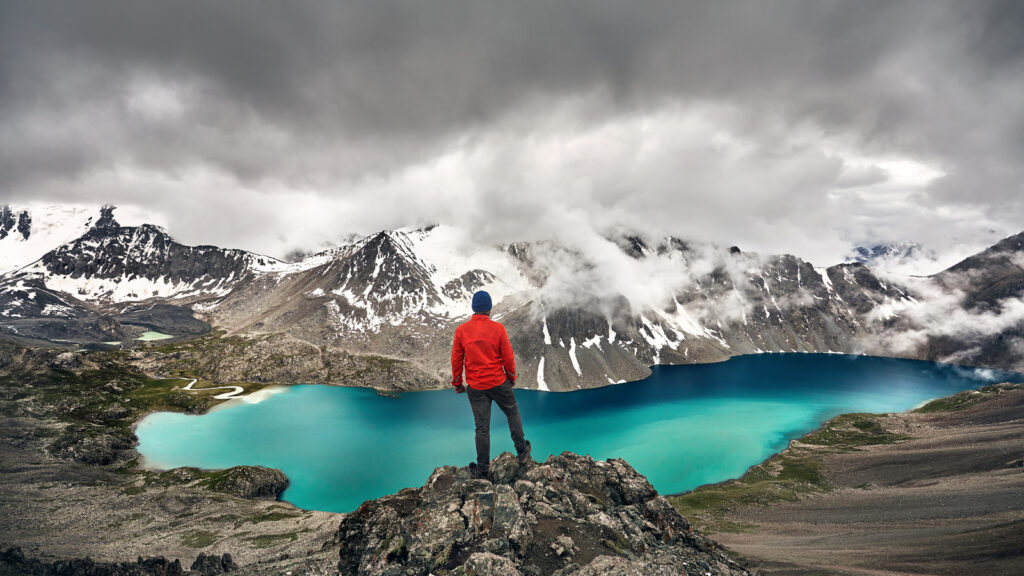
Imaginez-vous debout au bord d'un lac alpin à 3 500 mètres, entouré de sommets enneigés. L'air est vif, les vues sont inoubliables, puis le temps change en quelques minutes. Le soleil laisse place à la pluie, les températures chutent, et soudain, l'équipement que vous portez compte plus que le paysage.
Ceci est la randonnée au Kirghizistan.
Que vous planifiez le célèbre Ala-Kul Trek, exploriez les vallées paisibles de Jyrgalan, montiez à cheval vers le lac Song-Kul, ou vous aventuriez dans des régions reculées Kel-Suu, emporter le bon équipement rendra votre aventure plus sûre, plus confortable et bien plus agréable.
En tant que guides locaux organisant des tours de trekking à travers le Kirghizistan chaque saison, nous avons tout vu, des randonneurs terminant des treks de plusieurs jours en chaussures de trail aux voyageurs arrivant en baskets de mode à peine capables de survivre à la première montée rocheuse.
Ce guide explique exactement quoi emporter, ce que vous pouvez laisser à la maison, et comment choisir un équipement adapté à votre aventure.
Pourquoi un équipement de randonnée approprié est important
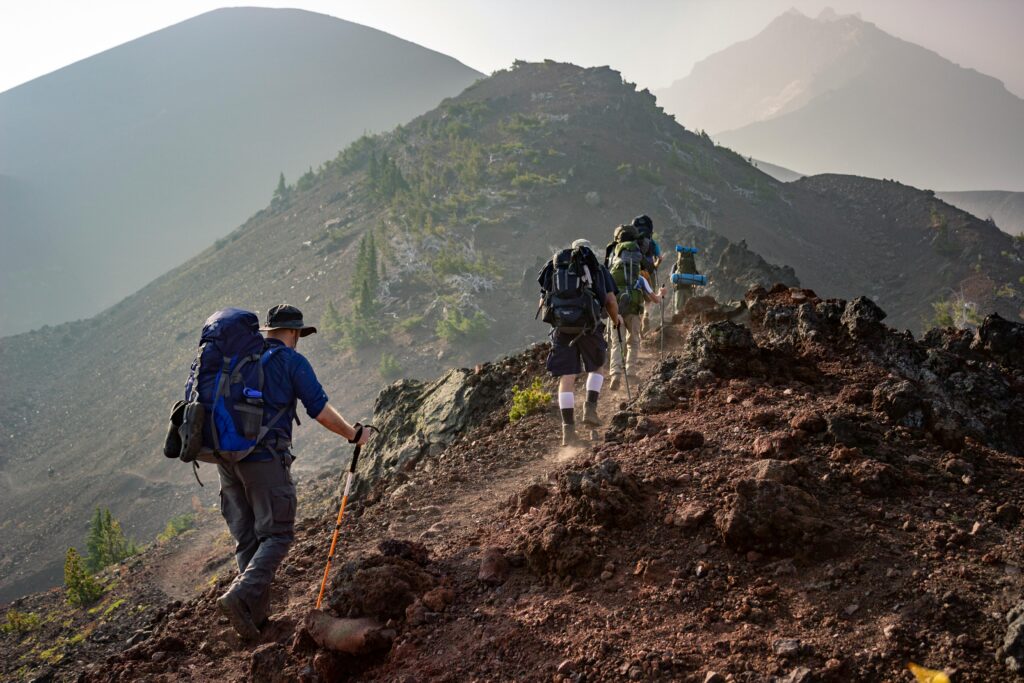
Beaucoup de visiteurs imaginent le Kirghizstan comme d'immenses pâturages verts et des promenades faciles. Si certains itinéraires sont adaptés aux débutants, beaucoup des plus belles destinations du pays impliquent :
- Sentiers montagneux rocheux
- Traversées de rivières
- Montées et descentes raides
- Haute altitude
- Changements météorologiques soudains
- Des plaques de neige : même en été
Il est courant de vivre les quatre saisons en une seule journée.
Un bon équipement ne signifie pas acheter du matériel cher. Il s'agit de choisir le bon équipement.
Comment choisir les bonnes chaussures de randonnée
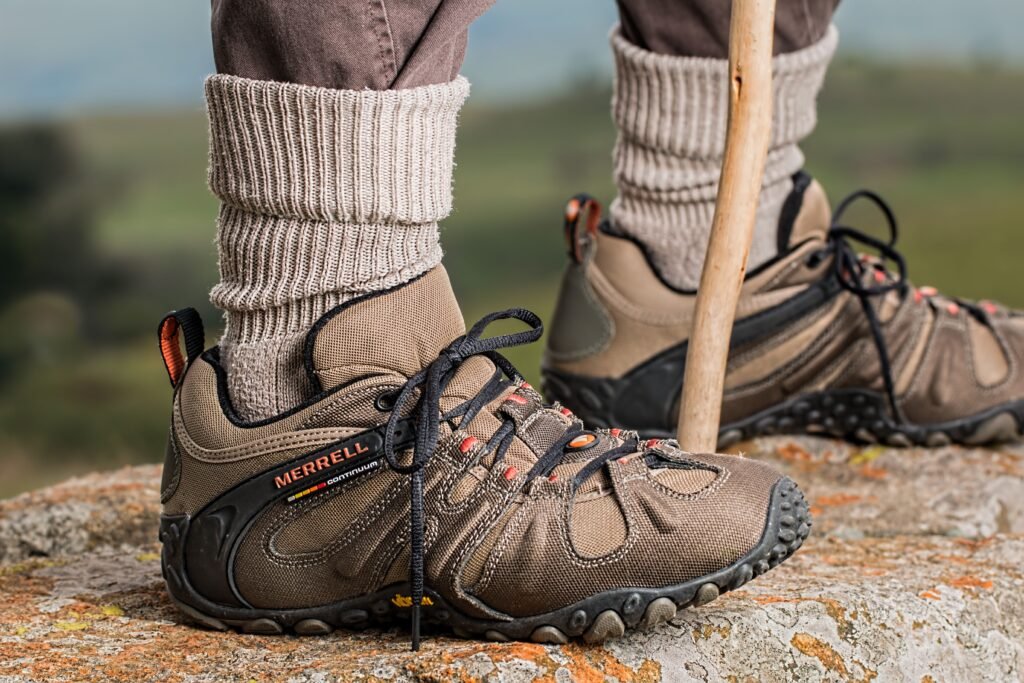
S'il y a un article sur lequel vous ne devez pas faire de compromis, c'est bien vos chaussures.
Les ampoules, les pieds douloureux et les glissades sur des pierres instables peuvent rapidement transformer un trek incroyable en une expérience épuisante.
Chaussures de randonnée
Les chaussures de randonnée sont conçues pour la stabilité et la protection.
Elles sont idéales si vous :
- Randonnez plusieurs jours d'affilée
- Portez un sac à dos lourd
- Traversez un terrain rocheux
- Faites un trek au-dessus de 3 000 mètres
- Randonnez par temps humide
Les chaussures protègent vos chevilles contre les entorses sur un terrain irrégulier, surtout lors des descentes raides.
Elles sont notre option préférée pour :
- Ala-Kul Trek
- Gorge d'Ak-Suu
- Randonnées de plusieurs jours à Jyrgalan
- Randonnées Peak Panorama
- Région de Sary-Jaz
Avantages
✔ Excellent maintien de la cheville
✔ Meilleure adhérence
✔ Options imperméables disponibles
✔ Plus durables
Inconvénients
- Plus lourdes
- Période de rodage plus longue
Chaussures de trail

Les chaussures de trail sont devenues de plus en plus populaires parmi les randonneurs expérimentés.
Elles sont légères, respirantes et confortables.
Pour de nombreuses randonnées d'une journée au Kirghizstan, elles conviennent parfaitement.
Choisissez des chaussures de trail si vous :
- Randonnez avec un sac léger
- Restez en dessous de la ligne de neige
- Faites des randonnées d'une journée
- Êtes déjà expérimenté sur les sentiers de montagne
Avantages
✔ Légères
✔ Confortables
✔ Sèchent plus vite
✔ Moins fatigantes sur de longues distances
Inconvénients
- Moins de maintien de la cheville
- S'usent plus vite
- Moins de protection sur les sentiers rocheux
Imperméable ou non-imperméable ?

Cela dépend de votre voyage.
Chaussures imperméables
Idéal pour :
- Printemps
- Automne
- Temps pluvieux
- Traversées de neige
- Trekking de plusieurs jours
Chaussures non-imperméables
Mieux adaptées pour :
- Randonnées estivales chaudes
- Conditions sèches
Elles sèchent beaucoup plus vite après les traversées de rivières.
Ne portez jamais de chaussures neuves
C'est l'une des plus grandes erreurs que font les débutants.
Faites vos chaussures en marchant plusieurs fois avant votre voyage.
Même les meilleures chaussures de randonnée peuvent provoquer des ampoules douloureuses si elles sont portées pour la première fois en montagne.
Les chaussettes de randonnée comptent plus que vous ne le pensez
Beaucoup de randonneurs dépensent des centaines dans des chaussures mais portent des chaussettes en coton ordinaires.
C'est une erreur.
Chaussettes de randonnée en laine mérinos :
- régulent la température
- réduisent les ampoules
- sèchent plus vite
- restent confortables même mouillées
Apportez au moins une paire supplémentaire pour chaque jour de randonnée.
Avez-vous vraiment besoin de bâtons de trekking ?
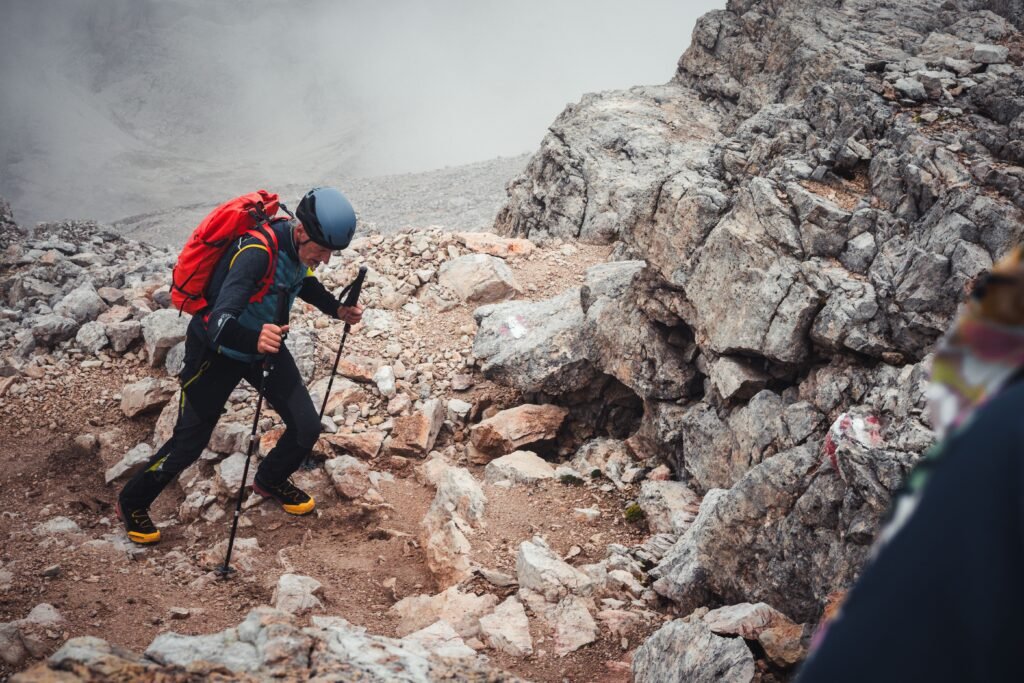
Beaucoup de débutants pensent que les bâtons de trekking sont optionnels.
Après une longue descente, la plupart changent d'avis.
Les bâtons réduisent la pression sur vos genoux, améliorent l'équilibre et rendent la randonnée nettement plus facile.
Ils sont particulièrement utiles sur :
- Gravier lâche
- Champs de neige
- Boue
- Traversées de rivières
- Descentes raides
Nos guides recommandent les bâtons pour presque toutes les randonnées de plus d'une journée.
Comment ajuster les bâtons de trekking
Une règle simple :
Lorsque vous êtes debout normalement, votre coude doit former un angle d'environ 90 degrés en tenant le bâton.
Raccourcissez les bâtons en montée.
Allongez-les légèrement en descente.
Comment s'habiller pour la météo en montagne

Oubliez la mode.
Le secret est la superposition.
Au lieu de porter une seule veste épaisse, portez plusieurs couches plus légères.
Cela vous permet de vous adapter aux variations de température tout au long de la journée.
Couche de base
Votre première couche doit éloigner la transpiration de votre peau.
Choisissez :
- La laine mérinos
- Les tissus synthétiques
Évitez le coton.
Une fois mouillé, le coton reste humide.
Couche intermédiaire
Cela assure une isolation.
Les options incluent :
- La polaire
- Les vestes légères isolantes
- Les pulls en mérinos
Couche extérieure
Une coquille imperméable protège contre :
- Le vent
- La pluie
- La neige
Même si la météo prévoit du soleil, emportez-en toujours une.
Le temps en montagne change rapidement.
Veste chaude
Même en juillet et août, les soirées au-dessus de 3 000 mètres deviennent froides.
Une veste légère en duvet ou synthétique isolante est l'un des meilleurs investissements pour la randonnée.
Choisir le bon sac à dos
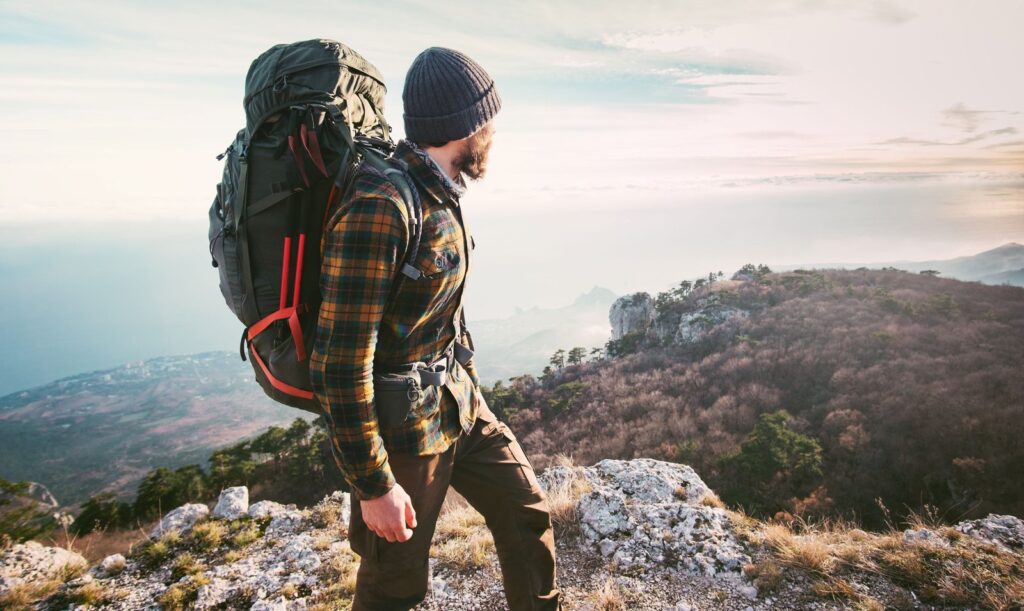
Votre sac à dos dépend de votre itinéraire.
Randonnée d'une journée
20–30 litres
Assez pour :
- L'eau
- Des encas
- Une veste
- Appareil photo
- Trousse de premiers secours
Trek de plusieurs jours
40–60 litres
Espace pour :
- Sac de couchage
- Vêtements supplémentaires
- Articles de toilette
- Nourriture
- Équipement personnel
Choisissez-en un avec :
- Ceinture ventrale
- Housse de pluie
- Longueur de dos réglable
- Poches latérales pour bouteilles d'eau
Votre liste d'essentiels pour la randonnée
Avant chaque randonnée, vérifiez bien que vous avez :
- Chaussures de randonnée
- Chaussettes de randonnée
- Pantalon de trekking
- Veste imperméable
- Polaire chaude
- Chapeau
- Lunettes de soleil
- Crème solaire
- Gants
- Bouteille d'eau (au moins 2 litres)
- Des encas
- Batterie externe
- Cartes hors ligne
- Lampe frontale
- Médicaments personnels
- Petite trousse de premiers secours
- Copie du passeport
- Argent liquide
Préparer son sac pour un trek de plusieurs jours
Si vous passez des nuits dans des camps de montagne ou des yourtes, vous aurez aussi besoin de :
- Sac de couchage (si non fourni)
- Serviette à séchage rapide
- Brosse à dents
- Articles de toilette
- Sacs étanches
- Chaussettes supplémentaires
- Sous-vêtements supplémentaires
- Sandales légères pour le camp
- Câbles de recharge
De nombreux circuits de trekking organisés fournissent tentes, repas et matériel de camping, vérifiez donc toujours ce qui est inclus avant de faire votre sac.
Peut-on louer du matériel de randonnée ou de camping au Kirghizstan ?
Oui.
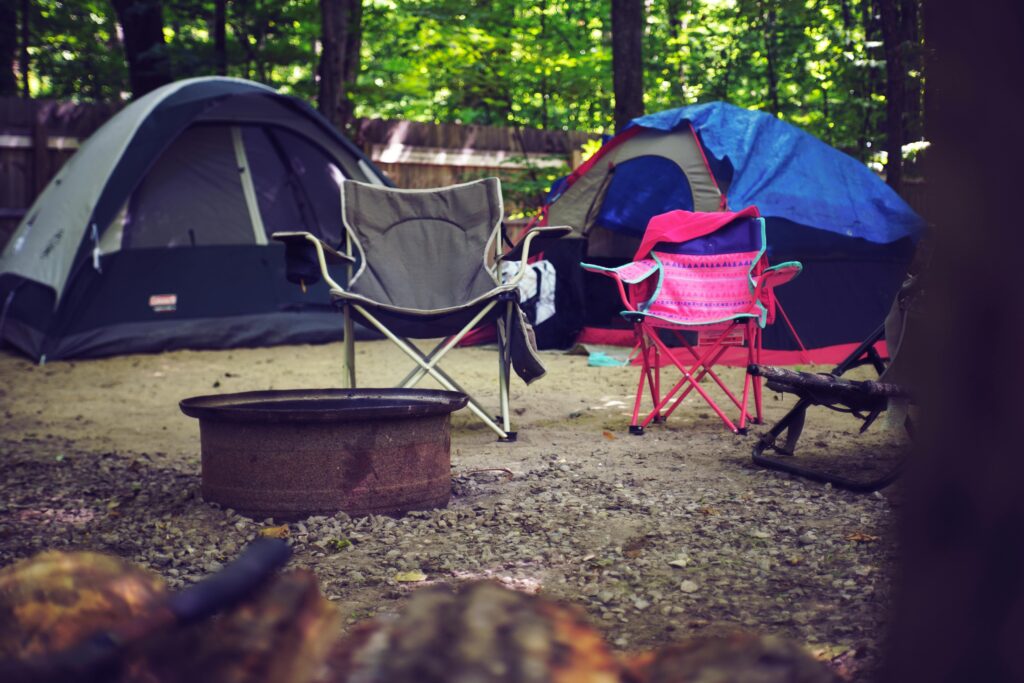
Beaucoup de voyageurs préfèrent louer du matériel plutôt que d’emporter des équipements encombrants lors des vols internationaux.
Selon la disponibilité, vous pouvez généralement louer :
- Bâtons de trekking
- Sacs de couchage
- Sacs à dos
- Matelas de couchage
- Tentes
- Équipement de camping
Si vous participez à un trek organisé, demandez à votre tour opérateur quel équipement est déjà inclus.
Erreurs courantes lors du choix du matériel
Porter des baskets de mode
Les chaussures de ville ne sont pas conçues pour les sentiers montagneux rocheux.
L’adhérence est importante.
Trop charger son sac
Beaucoup de débutants emportent des objets inutiles « au cas où ».
Chaque kilogramme supplémentaire semble beaucoup plus lourd après plusieurs heures d’ascension.
Oublier la protection solaire
En haute altitude, les rayons UV sont beaucoup plus forts.
Appliquez régulièrement de la crème solaire : même par temps nuageux.
Ne pas emporter assez d'eau
Les ruisseaux de montagne ne sont pas toujours sûrs à boire.
Emportez suffisamment d’eau ou une bouteille filtrante.
Ignorer les prévisions météo
Les prévisions peuvent changer rapidement en montagne.
Préparez-vous toujours à la pluie, même si la matinée est ensoleillée.
Conseils locaux de nos guides de montagne
Après avoir guidé des centaines de voyageurs à travers le Kirghizistan, voici quelques leçons que nous avons apprises :
- Commencez la randonnée tôt pour éviter les orages de l’après-midi.
- Buvez plus d’eau que ce que vous pensez nécessaire – l’altitude peut augmenter la déshydratation.
- Emportez une couche chaude même en plein été.
- Gardez votre veste de pluie en haut de votre sac à dos pour un accès rapide.
- Téléchargez des cartes hors ligne avant de quitter les villes.
- Ne nourrissez pas le bétail et n’approchez pas les chiens de berger sans accompagnement.
- Respectez les traditions locales lorsque vous séjournez dans des camps de yourtes familiaux.
- Faites des pauses pour vous acclimater si vous randonnez au-dessus de 3 000 mètres.
De petites préparations font souvent la plus grande différence.
Quel équipement faut-il pour les treks populaires ?
| Trek | Difficulté | Chaussures recommandées | Bâtons de trekking |
|---|---|---|---|
| Ala-Kul Trek | Modéré–Difficile | Chaussures de randonnée | Fortement recommandé |
| Altyn Arashan | Modéré | Bottes ou chaussures de trail | Recommandé |
| Song-Kul | Facile–Modéré | Chaussures de trail | Optionnel |
| Trek de Jyrgalan | Modéré | Chaussures de randonnée | Recommandé |
| Lac Kel-Suu | Facile | Chaussures de trail | Optionnel |
| Panorama du sommet | Difficile | Chaussures de randonnée | Essentiel |
Randonner de manière responsable
Le Kirghizistan reste l’une des destinations montagneuses les plus préservées au monde.
Aidez à la garder ainsi.
Suivez les principes Leave No Trace :
- Emportez tous vos déchets.
- Restez sur les sentiers balisés autant que possible.
- Respectez la faune.
- Évitez de cueillir les fleurs alpines.
- Soutenez les communautés locales en faisant appel à des guides locaux et en séjournant dans des camps de yourtes.
- Laissez les lieux exactement comme vous les avez trouvés.
Le tourisme responsable protège ces paysages pour les générations futures.
Réflexions finales
Le meilleur équipement de randonnée n’est pas forcément le plus cher : c’est celui qui est adapté à votre aventure.
Une paire de chaussures de randonnée confortables et déjà portées, une veste imperméable, suffisamment d’eau et un sac à dos bien préparé vous aideront à profiter en toute confiance des montagnes spectaculaires du Kirghizstan.
Que vous planifiiez une randonnée d’une journée ou un trek d’une semaine à travers les vallées alpines, une préparation réfléchie vous permet de vous concentrer sur l’essentiel : l’expérience.
Si vous ne savez pas quoi emporter, n’hésitez pas à demander. Les guides locaux connaissent les sentiers, la météo et les conditions mieux que quiconque, et nous sommes toujours heureux de vous aider à préparer votre voyage.