
Índice
ToggleNavoi Theatre, Tashkent
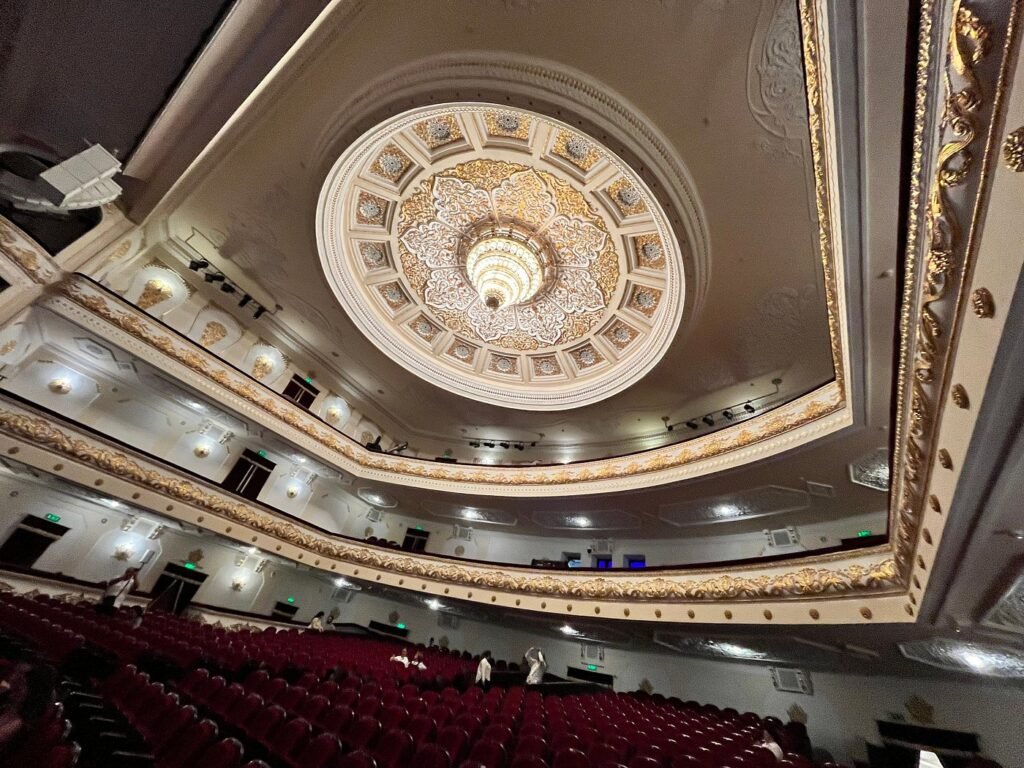
Navoi Theatre, officially known as the Alisher Navoi State Academic Grand Theatre, is one of the most recognisable cultural landmarks in Tashkent, Uzbekistan. Located in the heart of the capital, this impressive opera and ballet theatre is celebrated for its monumental architecture, elegant interiors, and important role in the country’s performing arts.
Designed by architect Alexey Shchusev, the theatre combines monumental mid-20th-century architecture with traditional Uzbek decorative arts. Its grand entrance, elegant arcades, detailed plasterwork, and richly decorated halls make it an attraction for visitors interested in architecture, history, and culture.
The theatre is also an active performing arts venue, hosting opera, ballet, concerts, and other cultural events. Whether you attend a performance or admire the building from outside, Navoi Theatre offers an opportunity to experience an important part of Tashkent’s cultural identity.
Where Is Navoi Theatre?
Navoi Theatre is located on Zarafshan Street in central Tashkent, Uzbekistan. Its central position makes it easy to include in a sightseeing itinerary alongside parks, shopping areas, museums, and other notable landmarks.
The theatre stands in an attractive public setting with landscaped surroundings and a fountain in the nearby square. The area is popular with residents and visitors who come to enjoy the architecture, take photographs, or relax during a walk through the city centre.
Thanks to its location and public transport connections, the theatre is relatively easy to reach from many parts of Tashkent. It is also a convenient stop when exploring the capital’s modern architecture and cultural attractions.
History of Navoi Theatre
The history of Navoi Theatre is closely connected with the development of professional opera and ballet in Uzbekistan. Its origins date to the musical and theatrical groups established in Tashkent during the early 20th century, which helped develop a professional performing arts tradition.
The theatre was officially established in 1939, and plans for a major new building were developed under the direction of architect Alexey Shchusev. Construction began in 1940 but was interrupted during the Second World War. Work later resumed, and Japanese prisoners of war participated in the final stages of construction.
The theatre opened in November 1947 and was subsequently named after Alisher Navoi, the celebrated 15th-century poet and thinker whose literary legacy remains central to Uzbek cultural identity.
Over the following decades, the institution gained academic status and became one of the country’s leading venues for opera and ballet. Restoration and renovation work has helped preserve the building’s architectural character while supporting its continued use as a modern performing arts venue.
Today, Navoi Theatre remains an important part of Tashkent’s cultural life, presenting both international classics and productions connected with Uzbek music and artistic traditions.
Architecture of Navoi Theatre
Monumental Exterior Design
One of the first things visitors notice is the theatre’s imposing façade. Its main entrance features a three-arched portal, while arcades and carefully arranged architectural details extend along the sides of the building.
The design gives the theatre a formal and monumental appearance without losing the decorative character associated with Central Asian architecture. Its balanced proportions and distinctive entrance make it one of the most memorable buildings in central Tashkent.
The exterior is particularly attractive when viewed from the surrounding square, where the open space allows visitors to appreciate the building’s scale and architectural composition.
Traditional Uzbek Decorative Arts
Although the theatre was designed by a Soviet architect, its interiors incorporate many elements of Uzbek craftsmanship. Decorative plasterwork, known as ganch carving, is especially notable. This traditional art uses carved gypsum-based material to create intricate patterns, reliefs, and ornamental surfaces.
The building also features decorative motifs inspired by the artistic traditions of different regions of Uzbekistan. These details give the interior a distinctive identity and connect the theatre with the country’s long history of applied arts.
Visitors who have an opportunity to enter the building can look for floral patterns, geometric ornamentation, carved surfaces, and carefully decorated architectural features.
The Grand Auditorium
The main auditorium is designed for opera and ballet performances, with seating arranged across the stalls, boxes, and upper tiers. Its decorative walls and balconies contribute to the formal atmosphere of the performance space.
The auditorium was designed with musical performance in mind, and its acoustics are an important part of the theatre’s reputation. Seeing a production here allows visitors to appreciate the architecture as well as the music, singing, choreography, and stage design.
Access to the auditorium may depend on whether a performance is scheduled or whether the theatre offers a guided visit.
Decorative Foyers and Halls
The foyers and side halls are among the most interesting architectural features of Navoi Theatre. Their decorative schemes draw inspiration from the traditional arts of different Uzbek regions, creating a varied interior experience.
These spaces combine ornamentation, carved plasterwork, paintings, and other artistic details. They also provide an opportunity to appreciate the work of craftspeople whose skills helped shape the theatre’s distinctive character.
If you attend an evening performance, arrive early enough to explore the public areas before taking your seat.
What to See at Navoi Theatre
The Main Entrance and Façade
Begin your visit by examining the theatre’s main entrance. The arched portal, symmetrical composition, and decorative exterior make it an excellent place to appreciate the building’s architecture.
The surrounding square provides several viewpoints for photographs. Step back far enough to capture the entire façade, then look more closely at the details around the arches and entrances.
The Theatre Square and Fountain
The public space in front of the theatre adds to the appeal of the visit. Landscaped areas, ornamental trees, and the fountain create a pleasant setting for a short walk or a break during sightseeing.
The square is especially inviting in the evening, when the theatre and surrounding area may be illuminated. Fountain operation and lighting can vary depending on the season and local arrangements.
Representaciones de Ópera y Ballet
Attending a performance is one of the best ways to experience Navoi Theatre. Its programme includes classical opera and ballet as well as productions connected with Uzbek musical traditions.
Depending on the schedule, visitors may have the opportunity to see well-known international works, national productions, concerts, or special cultural events.
Check the current programme and ticket availability before your visit. Performances may be presented in different languages, and the experience can vary depending on the production.
Photography and Architectural Details
Navoi Theatre is a rewarding destination for architectural photography. The main façade, entrance arches, surrounding greenery, and fountain offer several attractive compositions.
If you attend a performance, take time to appreciate the public interior spaces where access is permitted. Photography rules may differ inside the auditorium, particularly during performances, so follow the theatre’s instructions.
What Makes Navoi Theatre Special?
Navoi Theatre stands out because it brings together architecture, traditional craftsmanship, and live performing arts in one landmark.
Visitors can enjoy several aspects of the theatre:
Architectural heritage: Admire a major mid-20th-century building designed by Alexey Shchusev.
Uzbek craftsmanship: Discover traditional decorative arts, including detailed ganch carving.
Performing arts: Experience opera, ballet, and concerts in one of Uzbekistan’s leading cultural venues.
Public spaces: Enjoy the landscaped square and fountain around the theatre.
Cultural history: Learn about the development of professional opera and ballet in Uzbekistan.
For travellers exploring Tashkent, the theatre offers a different experience from the city’s bazaars, mosques, and historic madrasahs. It reveals another side of Uzbekistan’s cultural identity through music, architecture, and artistic performance.
How to Visit Navoi Theatre
Navoi Theatre can be visited as part of a walking tour of central Tashkent or as an evening destination for a performance. If you are mainly interested in architecture, you can admire the exterior and surrounding square. To experience the interior, consider purchasing tickets for an opera, ballet, or concert.
How Much Time Do You Need?
Allow around 20–40 minutes to see the exterior and explore the surrounding square.
If you plan to attend a performance, allow additional time for arriving, collecting or checking tickets, entering the building, and enjoying the show. The total visit will depend on the length of the production.
Architecture enthusiasts may want to spend longer exploring the surrounding area and photographing the building from different angles.
Mejor época para visitar
Spring and autumn are generally comfortable seasons for exploring central Tashkent on foot. The surrounding square is pleasant for walking in mild weather, while evening visits can offer attractive views of the illuminated building.
If you want to attend a performance, plan your visit around the theatre’s programme rather than choosing a time based only on sightseeing conditions.
During busy cultural events, allow extra time for arrival and entry. Performance schedules can change, so confirm the details in advance.
Tickets and Opening Hours
The theatre’s ticket arrangements and opening hours depend on its performance schedule and administrative activities. A performance ticket may provide access to the auditorium and public areas associated with the event, but it does not necessarily include a full building tour.
Check the official theatre website for current performances, ticket information, and visitor arrangements before travelling.
Official website: https://www.dakt.uz/
How to Get to Navoi Theatre
Navoi Theatre is located in central Tashkent and can be reached by metro, taxi, or on foot from nearby attractions.
The Mustaqillik Maydoni and Kosmonavtlar metro stations are useful reference points for reaching the theatre area. The best station and walking route will depend on your starting point, so check a current map before setting off.
Taxis and ride-hailing services are convenient if you are travelling from your hotel or from attractions elsewhere in the city. If you are exploring central Tashkent on foot, the theatre can be combined with other nearby landmarks for a relaxed sightseeing route.
Places to Visit Near Navoi Theatre
The theatre’s central location makes it easy to combine with several other attractions in Tashkent.
Plaza de la Independencia
Plaza de la Independencia, known locally as Mustaqillik Maydoni, is one of the capital’s most important public spaces. Its monuments, landscaped gardens, fountains, and ceremonial areas reflect Uzbekistan’s modern history and national identity.
A visit to both Independence Square and Navoi Theatre offers a useful introduction to the architecture and public spaces of central Tashkent.
Plaza Amir Timur
Amir Timur Square is another well-known landmark in the city centre. It features an equestrian monument to Amir Timur and is surrounded by prominent buildings and landscaped areas.
The square is popular with visitors who want to explore central Tashkent, take photographs, and enjoy a walk between cultural attractions.
State Museum of the History of the Timurids
This museum explores the history and legacy of the Timurid period through exhibitions connected with art, culture, architecture, and historical figures.
It is a useful stop for travellers interested in the wider history of Uzbekistan and the region’s contributions to Central Asian civilisation.
Tashkent’s Central Streets and Parks
The area around Navoi Theatre includes landscaped public spaces, cafés, shops, and major city streets. Exploring on foot allows visitors to experience the contrast between the theatre’s monumental design and the modern urban environment surrounding it.
Depending on your interests, you can extend your walk towards nearby squares, museums, or shopping districts.
Is Navoi Theatre Worth Visiting?
Yes, Navoi Theatre is worth visiting if you are interested in architecture, music, ballet, or the cultural history of Uzbekistan. Its monumental exterior and detailed interior decorations make it one of Tashkent’s most distinctive buildings.
Even without attending a performance, the theatre is a worthwhile stop for a short architectural visit. However, seeing an opera or ballet can make the experience more memorable by allowing you to appreciate the building as an active cultural institution rather than simply a historic landmark.
For visitors spending a few days in Tashkent, Navoi Theatre fits easily into an itinerary that includes Independence Square, Amir Timur Square, and other central attractions.


