
Índice
ToggleHazrati Imam Complex, Tashkent
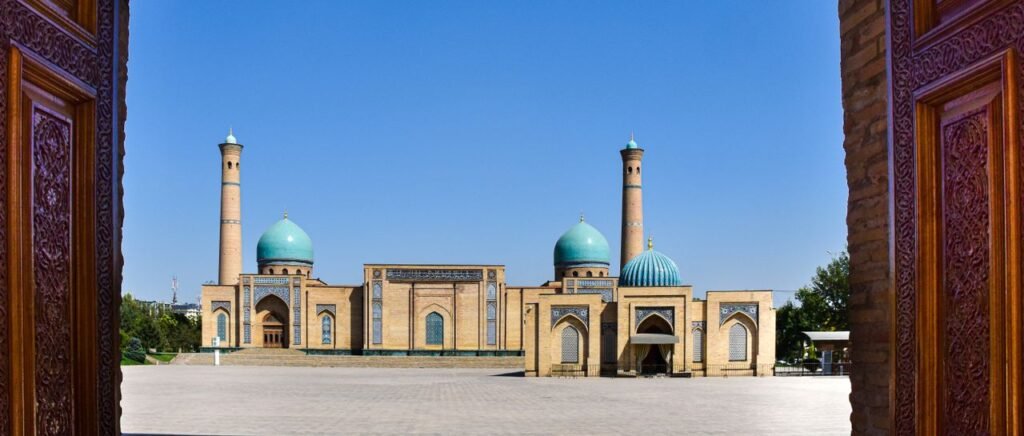
The Khast Imam Complex, also known as Hazrati Imam or Hast-Imam, is one of the most important historical and religious landmarks in Tashkent, Uzbekistán. Located in the city’s old town, this impressive architectural ensemble brings together mosques, madrasahs, a mausoleum, and centuries of Islamic heritage.
With its blue domes, decorated façades, traditional courtyards, and peaceful atmosphere, Khast Imam offers visitors an opportunity to discover a different side of the Uzbek capital. The complex developed around the burial place of Abu Bakr Kaffal Shashi, a respected Islamic scholar associated with the early religious history of Tashkent. Today, it remains an important spiritual destination and a rewarding stop for travellers interested in history, architecture, and local culture.
Where Is the Khast Imam Complex?
The Khast Imam Complex is located in the Olmazor district of Tashkent’s Old City, near Qorasaroy Street. It stands away from some of the capital’s modern commercial districts, offering a glimpse into the city’s historic neighbourhoods and religious traditions.
The surrounding area features traditional streets, local shops, and residential quarters, making it a good place to combine sightseeing with a walk through old Tashkent. The complex is also close to the Chorsu Bazaar area, another popular destination for visitors exploring the historic part of the city.
History of the Khast Imam Complex
The history of Khast Imam is closely connected with Abu Bakr Muhammad Kaffal Shashi, a prominent Islamic scholar who lived in the 10th century. His tomb became a place of religious remembrance and pilgrimage, and buildings were gradually established around it.
Over the centuries, the area developed into an important centre of Islamic learning and worship. Several of its best-known monuments date from the 16th century, while other buildings were constructed or renovated during the 19th and early 20th centuries. Together, they reflect different stages in the architectural and religious history of Tashkent.
The complex also experienced periods of damage, rebuilding, and restoration. Today, its collection of historic structures preserves an important part of the capital’s cultural heritage.
Main Attractions at Khast Imam Complex
Barak Khan Madrasah
The Barak Khan Madrasah is one of the most recognisable buildings in the Khast Imam Complex. Dating primarily from the 16th century, it is known for its monumental entrance portal, blue domes, traditional brickwork, and decorative architectural details.
Like other Central Asian madrasahs, the building was designed as a place of religious education. Its rooms and courtyard once formed part of a learning environment where students studied Islamic subjects and religious scholarship.
Today, the madrasah is a highlight for visitors interested in traditional Uzbek architecture. Take time to admire the façade, examine the decorative details, and explore the courtyard when access is permitted. Small craft and souvenir shops have also operated in parts of the historic complex, connecting its architectural heritage with contemporary local life.
Tillya Sheikh Mosque
The Tillya Sheikh Mosque is another important monument within the ensemble. Associated with the 19th century, the mosque contributes to the complex’s distinctive skyline of domes, minarets, and traditional Islamic architecture.
Its name is commonly translated as “Golden Sheikh.” Along with the surrounding historic buildings, the mosque represents the continuing importance of religious life in Tashkent.
Visitors can appreciate the mosque’s exterior architecture and its place within the wider complex. As it is a religious site, access to prayer areas may be restricted during services, and visitors should be respectful of worshippers.
Kaffal Shashi Mausoleum
The Kaffal Shashi Mausoleum is closely connected with the origins of Khast Imam. It commemorates Abu Bakr Kaffal Shashi, a scholar remembered for his contributions to Islamic learning and his importance in Tashkent’s religious history.
His burial place became the focal point around which the wider architectural ensemble developed. The mausoleum is therefore more than a historic building: it helps explain why this particular location became one of the city’s most significant spiritual centres.
Visitors interested in the history of Tashkent should make time to see the mausoleum and learn about the scholar associated with it.
Muyi Muborak Madrasah
The Muyi Muborak Madrasah is a historic religious building whose name is commonly translated as “Sacred Hair,” referring to a religious tradition associated with a relic of the Prophet Muhammad.
The madrasah has long been associated with Islamic manuscripts and religious scholarship. It is particularly well known for its historical connection with the famous Uthman Quran, an important early Quranic manuscript traditionally linked to the third caliph, Uthman ibn Affan.
Important visitor note: Information about the manuscript’s location has changed. The original Uthman Mushaf was transferred from the Muyi Muborak Madrasah to the Center of Islamic Civilization in Uzbekistan in November 2025. The Center opened in 2026, and the manuscript is now associated with its Quran Hall. Visitors hoping to see the original should check current access arrangements at the Center rather than relying on older travel guides.
Even without the original manuscript, Muyi Muborak remains an interesting stop for travellers exploring the complex’s religious and architectural heritage.
Hazrati Imam Mosque and the Surrounding Square
The wider Khast Imam ensemble includes additional mosque buildings and open spaces that connect its historic monuments. The Hazrati Imam Mosque is an important part of the area’s religious life and contributes to the impressive architectural setting.
The square provides opportunities to appreciate the layout of the complex as a whole. Rather than visiting each building in isolation, take time to walk through the grounds and observe how the mosques, madrasahs, and mausoleum form a connected historical ensemble.
Architectural details, tiled surfaces, domes, and the contrast between older structures and more recent additions make the area particularly interesting for photography and cultural sightseeing.
What Makes Khast Imam Complex Special?
Khast Imam stands out because it combines religious significance, historic architecture, and the everyday atmosphere of Tashkent’s Old City. While Uzbekistan’s most famous Silk Road monuments are often associated with Samarkand and Bukhara, the capital also preserves important examples of traditional Islamic architecture.
The complex offers several experiences in one visit:
Historic architecture: See traditional madrasahs, mosques, domes, courtyards, and decorative façades.
Islamic heritage: Learn about Kaffal Shashi and the religious scholarship associated with Tashkent.
Cultural discovery: Explore a historic neighbourhood and observe how the area remains connected to religious life.
Photography: Capture the complex’s architectural details and distinctive skyline, while respecting restrictions around worship areas.
A connection to the Silk Road region: Understand the wider cultural and scholarly traditions that shaped Central Asia over many centuries.
How to Visit Khast Imam Complex
Khast Imam is an excellent destination for travellers who want to explore Tashkent beyond its modern avenues, shopping districts, and contemporary landmarks. You can visit independently or include it in a guided walking tour of the Old City.
How Much Time Do You Need?
Allow approximately one to two hours to explore the complex at a comfortable pace. You may want more time if you are particularly interested in Islamic architecture, local history, or visiting additional cultural attractions nearby.
If you plan to visit the Center of Islamic Civilization as well, set aside extra time for its exhibitions and check its current ticketing and entry arrangements in advance.
Mejor época para visitar
Morning and late afternoon are often comfortable times to explore the outdoor areas, particularly during Tashkent’s hot summer months. Softer daylight can also make the domes and architectural details especially attractive for photography.
During religious services and Friday prayers, the area may be busier. Visitors should remain considerate of worshippers and follow any instructions from staff.
Dress Code and Visitor Etiquette
Khast Imam is an active religious site, so modest clothing is recommended. Cover your shoulders and knees, and consider carrying a headscarf if you plan to enter mosque areas where head covering is expected.
Speak quietly near prayer spaces, avoid interrupting religious activities, and ask permission before photographing people. Photography rules may differ between outdoor areas, mosques, and exhibitions.
Entrance Fees and Opening Hours
The outdoor grounds and individual buildings may have different access arrangements. Some areas may be freely accessible, while museums, libraries, or special exhibitions can require a ticket. Opening hours may also change according to the season, religious events, and restoration work.
Check the latest information with the local tourism authority or the relevant attraction before your visit, especially if you want to enter a specific building or see a particular exhibit.
How to Get to Khast Imam Complex
The complex is situated in the Old City of Tashkent and can be reached by taxi, local transport, or as part of a guided city tour.
If travelling by metro, Chorsu and Gafur Gulom are commonly used stations for reaching the wider Old City area. From there, you can continue by taxi or on foot, depending on your route and walking preferences.
For convenience, enter “Khast Imam Complex” or “Hazrati Imam Complex” into your preferred map application to find the most suitable route from your accommodation.
Places to Visit Near Khast Imam Complex
Khast Imam can be combined with several other attractions in Tashkent, making it a useful stop on a half-day or full-day sightseeing route.
Bazar Chorsu
Chorsu Bazaar is one of Tashkent’s best-known traditional markets. Visitors can browse stalls selling fresh produce, spices, bread, sweets, textiles, and other local products. It is a good place to experience the city’s everyday food culture and bustling market atmosphere.
Center of Islamic Civilization
Located close to the Khast Imam area, the Center of Islamic Civilization explores the history and intellectual heritage of the Islamic world, with a particular focus on Uzbekistan and Central Asia. Its exhibitions provide useful context for understanding the region’s religious scholarship, manuscripts, and cultural achievements.
The original Uthman Mushaf was transferred here in November 2025, making the Center an important additional stop for visitors interested in the manuscript’s history. Confirm current opening hours, tickets, and display arrangements before visiting.
Tashkent Old City
The surrounding Old City is worth exploring at a slower pace. Traditional neighbourhoods, local streets, historic religious sites, and small shops provide a different perspective on the Uzbek capital compared with its newer districts.
Walking through the area helps place Khast Imam within the broader history and everyday life of Tashkent.
Is Khast Imam Complex Worth Visiting?
Yes, Khast Imam Complex is a worthwhile stop for visitors interested in history, architecture, religion, and local culture. Its collection of mosques, madrasahs, and a historic mausoleum makes it one of the defining heritage sites of Tashkent.
Even travellers with limited time in the capital can enjoy a visit, particularly when combining it with Chorsu Bazaar or the Center of Islamic Civilization. Whether you are interested in architectural photography or the history of Central Asian scholarship, Khast Imam offers a meaningful introduction to the city’s cultural heritage.


