
Índice
ToggleJyrgalan Valley, Kyrgyzstan
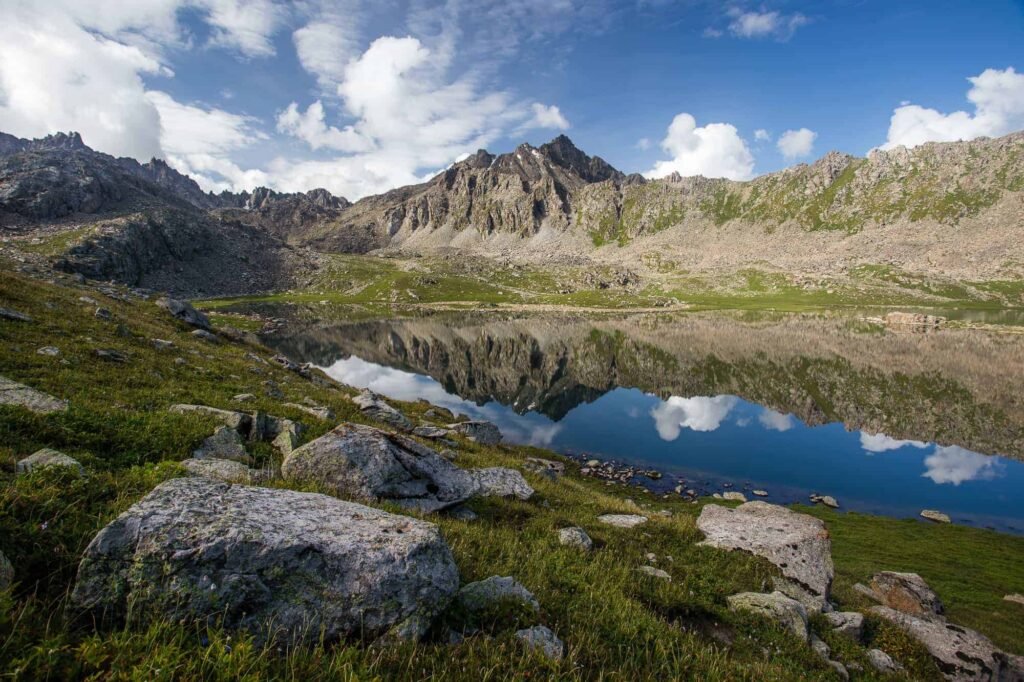
Jyrgalan Valley is a mountain valley in eastern Kyrgyzstan known for alpine trekking, horseback riding, mountain scenery, traditional pastures, and winter ski touring. The valley is centered around Jyrgalan village, a former coal-mining settlement that has developed into a community-based adventure tourism destination.
Located east of Karakol in the Issyk-Kul Region, Jyrgalan provides access to a network of mountain trails leading to alpine lakes, passes, waterfalls, high pastures, and surrounding valleys.
About Jyrgalan Valley
Jyrgalan Valley lies in the eastern part of the Issyk-Kul Region, in the Tian Shan Mountains.
The valley’s main settlement, Jyrgalan village, sits at roughly 2,300–2,400 meters above sea level. Higher trails lead toward mountain passes, alpine lakes, glaciers, and peaks at considerably greater elevations.
For many travelers, Jyrgalan is less a single sightseeing stop than a base for exploring the surrounding mountains.
At a Glance
Information | Details |
Type of Place | Valley |
Location | Issyk-Kul Region, eastern Kyrgyzstan |
Nearest major city | Karakol |
Main settlement | Jyrgalan village |
Village altitude | Approximately 2,300–2,400 m |
Main activities | Trekking, horseback riding, mountain biking, ski touring |
Trekking season | Generally June–September |
Winter activities | Ski touring and freeride skiing |
Recommended stay | 2–4 days for trekking |
Main character | Mountain valley and adventure-tourism base |
Where Is Jyrgalan Valley?
Jyrgalan Valley is located east of Karakol in the eastern Issyk-Kul Region.
Travel information sources give somewhat different road distances from Karakol, depending on the route and starting point. A practical description is that Jyrgalan is roughly 35–60 km east of Karakol, with the journey generally taking around an hour depending on road conditions.
Jyrgalan village is the principal access point for the valley’s trekking routes.
What Makes Jyrgalan Valley Special?
Alpine Mountain Landscape
The valley is surrounded by Tian Shan mountains, with forests, open meadows, rivers, mountain passes and high-altitude landscapes.
During summer, the lower and middle elevations become green and are covered with wildflowers.
Trekking Trails
Jyrgalan has a network of marked trekking routes ranging from relatively easy day hikes to challenging multi-day mountain traverses.
The local tourism organization lists routes including Turnaluu-Kol, Kok-Bel Waterfall, Robber’s Canyon, Kesenkiya Loop, Boz-Uchuk Lakes, Ailampa Glacier Loop and other mountain routes.
Alpine Lakes
Several trekking routes lead from Jyrgalan toward high mountain lakes.
The Boz-Uchuk Lakes are among the best-known destinations in the area, with the local DMO describing a multi-day route reaching elevations of approximately 3,470 meters.
High Mountain Pastures
The surrounding mountains include traditional jailoo, or summer pastures, where visitors may encounter shepherds, horses, sheep and seasonal yurt camps.
Horse trekking allows travelers to experience these landscapes without completing every section on foot.
Winter Mountains
Jyrgalan is also developing as a winter destination.
From approximately December to March, the surrounding mountains can provide conditions for ski touring and freeride skiing. Winter mountain travel requires appropriate equipment, experience and careful consideration of snow and avalanche conditions.
Jyrgalan Village
Jyrgalan village developed around coal mining during the Soviet period.
The decline of the mining industry changed the local economy, and the community has increasingly developed tourism based around trekking, guesthouses, horse trekking and other mountain activities.
Today, the village functions as the main base for exploring Jyrgalan Valley.
Travelers can stay in local guesthouses, arrange guides and horses, obtain route information, and begin several treks directly from the village.
Popular Treks from Jyrgalan
Boz-Uchuk Lakes
A multi-day mountain trek leading to high alpine lakes.
The local DMO lists the route at approximately 46 km over 2 nights and 3 days, with a maximum elevation around 3,471 m.
Kesenkiya Loop
A multi-day route crossing several mountain passes and high pastures.
The DMO describes the loop as approximately 53 km over 3 nights and 4 days, reaching around 3,375 m.
Turnaluu-Kol Lake
A shorter day hike to a high mountain lake with views back across Jyrgalan Valley.
The DMO lists the route at approximately 13.3 km with a maximum elevation of about 2,862 m.
Kok-Bel Waterfall
A day hike through mountain pasture and a narrow canyon to Kok-Bel Waterfall.
The local DMO lists the route at approximately 12 km, with a waterfall of around 20 meters.
Horse Trekking in Jyrgalan Valley
Horseback riding is one of the natural ways to explore the valley and surrounding jailoo.
Horse-supported trips can also be used on longer trekking routes, particularly when travelers want to reduce the amount of camping equipment they need to carry.
Yurt stays and interactions with local shepherd communities can also be incorporated into some routes.
How to Get to Jyrgalan Valley
Most visitors reach Jyrgalan from Karakol.
A private taxi, shared vehicle or transfer can be arranged from Karakol. Local guesthouses and the Jyrgalan tourism organization can also assist with transport arrangements.
Road conditions can vary, particularly during winter, so journey times should be treated as approximate.
Best Time to Visit Jyrgalan Valley
Summer: June–September
June through September is the principal trekking season.
July and August generally offer the most favorable conditions for hiking, alpine meadows and high mountain routes, although snow can remain on higher passes early in the season.
Winter: December–March
Winter is suitable for experienced travelers interested in ski touring and freeride skiing.
Conditions in the mountains can change quickly, and avalanche awareness and appropriate equipment are essential.
Practical Information
- Altitude: Jyrgalan village is around 2,300–2,400 m.
- Trekking: Routes range from short day hikes to multi-day mountain treks.
- Guides: Recommended for more remote or technically demanding routes.
- Navigation: Mobile coverage can be limited in the mountains, so offline maps and GPS tracks are useful.
- Accommodation: Local guesthouses and homestays operate in the village.
- Food: Guesthouses can provide meals and packed lunches.
- Weather: Mountain weather can change quickly, even in summer.
- Border areas: Some routes require additional permissions. The local DMO specifically notes that the Echkili Tash trek requires a border permit.
Jyrgalan Valley and Karakol
Jyrgalan works well as an extension of a Karakol trip.
Karakol provides access to major eastern Issyk-Kul attractions and mountain routes, while Jyrgalan offers a quieter base for multi-day trekking and horseback travel.
A Kyrgyzstan itinerary can therefore combine:
Karakol to Jyrgalan Valley to mountain trek to Issyk-Kul
Tours to Jyrgalan Valley
Jyrgalan Valley is particularly suitable for commercial trekking, horseback-riding and multi-day adventure tours.
Places Near Jyrgalan Valley
Related sights include:
- Karakol
- Ak-Suu Village
- Altyn-Arashan
- Ak-Suu Glacier
- Lake Issyk-Kul
- Boz-Uchuk Lakes
- Jeti-Oguz Gorge


