Table of Contents
ToggleAla-Kul Lake Yurt Camps: Sirota, Bulak-Say, Keldike camps
The Ala-Kul Lake Trek is one of Kyrgyzstan’s most popular mountain routes, connecting the Karakol Valley with the spectacular Ala-Kul Lake and the high Ala-Kul Pass.
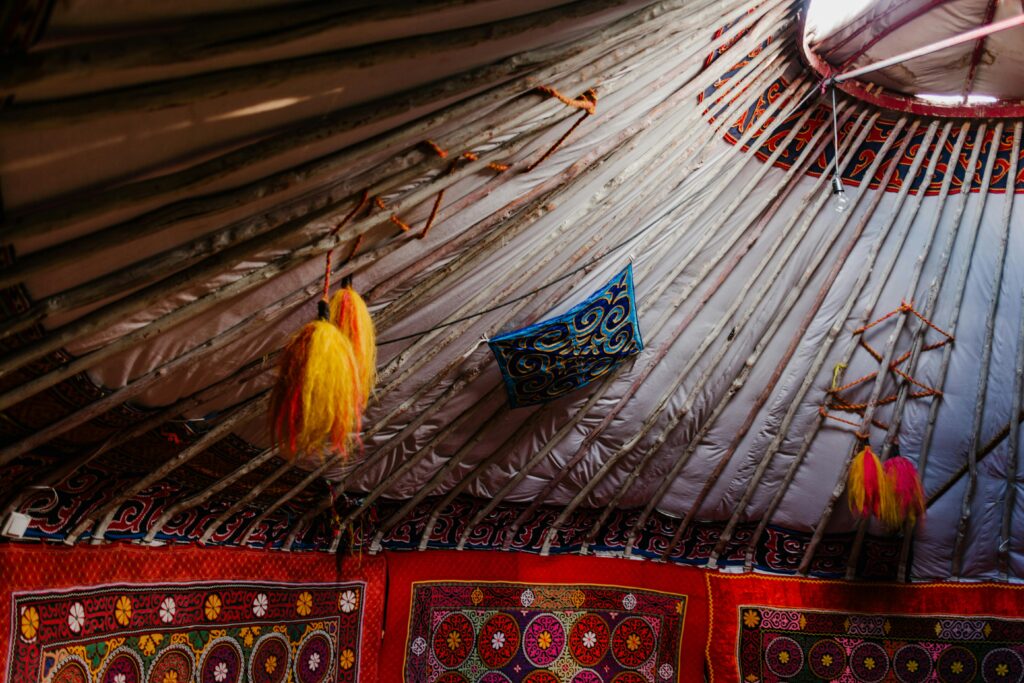
Unlike the large lakeside yurt camps at Song-Kul, Ala-Kul yurt camps are part of the trekking infrastructure. Seasonal camps are positioned at different stages of the route, allowing travellers to spend the night in a traditional Kyrgyz yurt instead of carrying a tent and complete camping setup.
The main accommodation areas include Karakol Camp, Sirota, Bulak-Say, the Ala-Kul Lake area and Keldike. There are several yurts in some of these locations, so the exact number of available camps can change from season to season.
The accommodation is simple. Expect shared yurts, mattresses or beds, blankets, basic bathrooms and communal meals rather than hotel-style comfort.
For many travellers, however, staying in a yurt is one of the highlights of the Ala-Kul experience.
Yurt Camps Along the Ala-Kul Route
The best way to understand Ala-Kul yurt accommodation is to divide the route into its main overnight areas.
1. Karakol Camp / First Camp
The first major yurt-camp area is located deeper in the Karakol Valley after entering the national park.
This area is often referred to as Karakol Camp or First Camp. There are several camps in the same general area rather than a single property. Recent trekking guides report around four camp options in this section.
This makes Karakol Camp an important option for travellers who want to divide the approach to Sirota into shorter stages.
What to expect
Yurts in this area generally provide:
- Simple sleeping places
- Shared accommodation
- Basic bedding
- A communal dining yurt
- Meals
- Simple toilet facilities
- A place to rest before continuing deeper into the valley
The atmosphere is typical of a remote Kyrgyz mountain camp, with travellers sharing the same dining and sleeping areas.
Because several camps operate in the area, the exact facilities and prices can differ.
2. Sirota Yurt Camp
Sirota is one of the most important overnight stops on the Ala-Kul route.
The camp is located at approximately 2,900 metres and is positioned before the steep ascent toward Ala-Kul Lake. The Sirota area contains several yurt camps, with recent trekking information identifying around four options in the area.
Sirota Yurt Camp
The accommodation is designed primarily for trekkers.
Depending on the operator, you may find:
- Shared yurts
- Private yurts when available
- Beds or mattresses
- Sleeping bags or blankets
- A heated communal yurt
- Breakfast and dinner
- Basic toilet facilities
- Limited electricity
- Sometimes Wi-Fi
Recent traveller reports also confirm that the setup and availability can vary considerably between individual camps in the Sirota area.
Why stay at Sirota?
Sirota is a particularly practical overnight stop because it breaks up the route before the major climb to Ala-Kul.
It is also one of the easiest places on the trek to experience a traditional yurt without carrying a tent.
3. Bulak-Say Yurt Camp
Bulak-Say is closely associated with the Sirota section of the Ala-Kul route.
It is important to mention it separately because travellers may encounter Bulak-Say and Sirota as different accommodation options, even though they are located very close to one another.
Older and recent trekking sources describe Bulak-Say as a separate yurt camp in the Sirota area. One established guide places it approximately 50 metres from Sirota Camp.
Bulak-Say Yurt Camp
Current accommodation listings describe Bulak-Say as offering shared yurts, with breakfast and dinner included in some arrangements.
Bulak-Say accommodation
A typical stay can include:
- Shared yurt accommodation
- Sleeping places for several guests
- Breakfast
- Dinner
- Communal dining
- Basic mountain facilities
Some travellers choose Bulak-Say specifically because of its atmosphere and hospitality.
Availability should be confirmed before arrival, especially during July and August.
4. Ala-Kul Lake Yurt Camps
The next important accommodation area is Ala-Kul Lake itself.
This section needs to be treated differently from Sirota because the camps around the lake are much more seasonal and exposed.
Recent trekking sources report several camps around the Ala-Kul Lake section, with one guide identifying around four camp options. The exact locations and availability can change depending on the season.
Алакуль лагерь
Some travellers also report camps located farther along the lake, including accommodation near the far end where the scenery opens toward the glacier.
What to expect at the lake
A yurt at Ala-Kul is considerably more remote than accommodation around Sirota.
Expect:
- Very basic accommodation
- Cold nights
- Strong winds
- Limited facilities
- No reliable Wi-Fi
- Limited electricity
- Shared yurts
- Simple meals where available
The advantage is the location.
Staying near the lake allows travellers to spend the night surrounded by the high mountains instead of descending immediately after reaching Ala-Kul.
Important booking note
Do not assume that every camp shown on older trekking maps or travel blogs will operate every year.
The lake camps are seasonal, and their locations and services can change.
If you specifically want to sleep in a yurt at Ala-Kul Lake, confirm the current camp before starting the trek.
5. Ala-Kul Camp / Kyrgyz Life Camp
Some trekking operators run their own yurt accommodation around the Ala-Kul section.
One example is the Kyrgyz Life Ala-Kul Camp, which is described as being farther along the lake, near its far end. This location can add several kilometres to the second trekking day, but it provides a particularly scenic overnight position.
This type of camp is useful for travellers booking a guided or organized Ala-Kul trek.
The important difference is that it may not function like a conventional independently bookable hotel. Availability can depend on the tour operator and trekking season.
6. Keldike Yurt Camp
After crossing the Ala-Kul Pass, the route descends toward Keldike Valley.
Keldike is another important yurt-accommodation area on the Ala-Kul route.
Keldike Yurt Camp
The accommodation here is intended for trekkers who want to spend the night in the mountains rather than continuing immediately farther down the valley.
Keldike accommodation
Depending on the current camp and season, expect:
- Traditional yurts
- Shared sleeping arrangements
- Simple beds or mattresses
- Blankets or sleeping bags
- Basic toilets
- Communal meals
- Limited electricity
- Very limited connectivity
The environment is more remote than Sirota, and facilities should be considered basic.
Keldike is therefore best suited to travellers who are comfortable with simple mountain accommodation.
7. ALA KOL URMAT CAMP
Another currently listed accommodation in the Keldike area is:
ALA KOL URMAT CAMP
This is a useful option to mention separately because it appears in current business listings around Keldike.
As with other mountain camps, travellers should confirm the current season, sleeping arrangements, meals and facilities directly before booking.
Watch next stop: Altyn Arashan Yurt camps
How Many Ala-Kul Yurt Camps Are There?
There is no reliable permanent number because Ala-Kul does not have a fixed collection of hotels or registered resort camps.
Instead, there are clusters of seasonal yurts.
A useful way to understand them is:
Karakol Valley
Several yurt camps around the first major overnight area.
Sirota
Several yurt camps clustered around Sirota.
Bulak-Say
A separate yurt-camp option very close to Sirota.
Ala-Kul Lake
Several seasonal camps can operate around different parts of the lake.
Keldike
Yurt accommodation in the valley after the Ala-Kul Pass.
Recent trekking guides describe approximately four camp options in each of the Karakol, Sirota and Ala-Kul sections, but the exact operators and number can change.
For SEO purposes, it is therefore better to describe the main camps and accommodation areas rather than claiming that there are exactly X camps.
What Is an Ala-Kul Yurt Stay Like?
An Ala-Kul yurt stay is very different from a comfortable yurt resort.
These yurts are primarily designed for trekkers.
Inside you may find:
- Mattresses or beds
- Blankets
- Sleeping bags
- Carpets
- A central stove
- Low tables
- Several sleeping places
Many yurts are shared.
During the high season, it is common to sleep with other hikers who are following the same route.
This creates a social atmosphere: travellers eat together, exchange information about the trail and weather, and prepare for the next day’s hiking.
Meals at Ala-Kul Yurt Camps
Food is one of the biggest advantages of staying in a yurt instead of carrying camping equipment.
Many established camps offer breakfast and dinner, while some can prepare a packed lunch if requested in advance.
Meals are generally simple and filling.
You may find:
- Soup
- Rice
- Pasta
- Potatoes
- Meat
- Bread
- Porridge
- Tea
- Homemade preserves
- Simple snacks
Vegetarian meals may be possible at some camps with advance notice, but this should always be confirmed when booking.
Bathrooms and Showers
Bathroom facilities vary considerably between camps.
At the more established camps, you may find basic toilets and washing facilities.
At more remote camps, facilities can be extremely simple.
Do not book an Ala-Kul yurt expecting:
- Private bathrooms
- Guaranteed hot showers
- Hotel-style toilets
- Reliable hot water
If a shower is important to you, ask specifically about it before booking.
Electricity, Wi-Fi and Mobile Signal
Connectivity is limited throughout the route.
Some camps have electricity and even Wi-Fi, particularly in communal yurts or through limited local systems. Recent traveller reports indicate that Sirota-area accommodation can have Wi-Fi and charging facilities, but this should not be assumed for every camp.
At remote lake camps, connectivity is much less predictable.
Bring:
- Power bank
- Headlamp
- Offline maps
- Downloaded reservations
- Phone with battery-saving mode
Treat electricity and Wi-Fi as a bonus rather than something guaranteed.
Are Ala-Kul Yurt Camps Comfortable?
For a mountain camp, yes.
For a hotel, no.
The yurts provide a warm place to sleep after a demanding day, and many camps provide meals and bedding.
However, conditions are basic.
The main reasons to stay in a yurt are:
- Avoiding the need to carry a tent
- Having meals available
- Sleeping in a warm communal space
- Experiencing traditional Kyrgyz accommodation
- Meeting other trekkers
- Making the trek logistically easier
Comfort should be judged in the context of a high-altitude mountain trek.
What to Expect at Night
Ala-Kul is a high-altitude environment, and nights can be cold even during summer.
At Sirota, the elevation is around 2,900 metres, while Ala-Kul itself is around 3,500 metres.
At the lake, expect:
- Cold temperatures
- Strong wind
- Rapid weather changes
- Possible rain or snow
- Very cold mornings
Bring warm layers even if Karakol is warm when you leave.
A good sleeping bag or warm sleeping system is recommended, particularly for travellers who get cold easily.
Yurt Camp or Tent Camping?
Both options are possible along the Ala-Kul route.
Staying in a yurt
- Less equipment to carry
- Meals often available
- Bed or mattress provided
- Warm communal space
- Easier logistics
- Social atmosphere
Camping independently
- More privacy
- More flexibility
- Ability to choose your campsite
- More control over your schedule
- More equipment to carry
Recent trekking guides confirm that both tent camping and yurt accommodation are common on the route.
For travellers who want to keep their backpack lighter, yurts are particularly convenient.
Best Ala-Kul Yurt Camps for Different Travellers
Best for a first overnight stop: Sirota
Sirota is one of the most established accommodation areas and is a natural overnight stop before the climb to Ala-Kul.
Best alternative near Sirota: Bulak-Say
Bulak-Say is very close to Sirota and provides another option if the main Sirota camp is full.
Best for a mountain-lake experience: Ala-Kul Lake camps
If you want to wake up close to Ala-Kul itself, a seasonal lake camp can provide the most spectacular setting.
Availability is more variable, however.
Best for the descent: Keldike
Keldike is convenient after crossing the Ala-Kul Pass and allows trekkers to spend the night in the high mountain valley.
Best for splitting the approach: Karakol Camp
The Karakol Valley camps can be useful if you want a slower itinerary before reaching Sirota.
Best Time for Ala-Kul Yurt Camps
The main season for the Ala-Kul trek is summer.
The most popular period is generally:
June – September
July and August are normally the busiest months.
The exact opening dates of individual yurt camps depend on snow, weather and the operators.
High-altitude conditions can change quickly, so always check the current trail and camp situation before departure.
What to Bring for an Ala-Kul Yurt Stay
Even though you are sleeping in a yurt, you are still travelling through a remote mountain environment.
Bring:
- Warm jacket
- Waterproof jacket
- Thermal layers
- Warm socks
- Hat and gloves
- Hiking shoes
- Headlamp
- Power bank
- Water bottle
- Sunglasses
- Sunscreen
- Personal medication
- Toiletries
- Cash
- Sleeping bag or liner
A small backpack is ideal if your main luggage can be left in Karakol.