
Table of Contents
ToggleKok-Jaiyk Valley, Kyrgyzstan
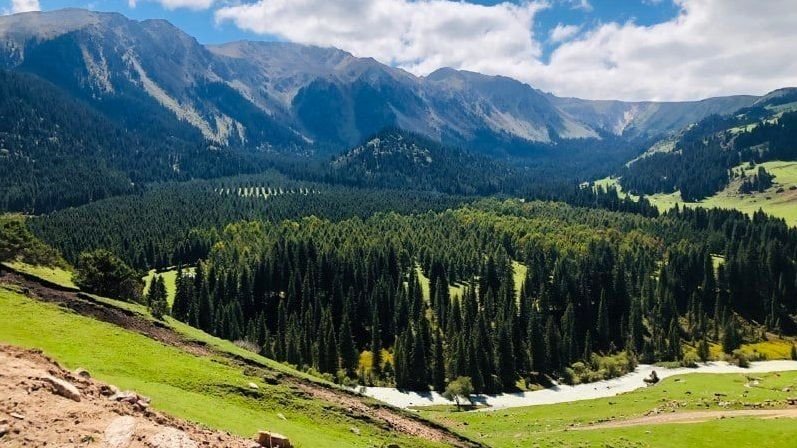
Kok-Jaiyk Valley, also spelled Kok-Zhayyk, Kok-Zhaiyk or Kok-Jayik, is a beautiful alpine valley and summer pasture in the Jeti-Oguz area of Kyrgyzstan’s Issyk-Kul Region. The name is commonly translated as “green pasture” or “green meadow.” Located in the Tien Shan mountains, the valley is surrounded by spruce forests, open alpine meadows and snow-covered peaks.
Kok-Jaiyk is particularly popular in summer, when the pastures become green, wildflowers appear across the valley and seasonal yurts are established by local families. Visitors come for hiking, horseback riding, mountain scenery, waterfalls and the opportunity to experience traditional Kyrgyz pastoral life.
The valley is reached through the famous Jeti-Oguz Gorge, making it easy to combine Kok-Jaiyk with the Seven Bulls rock formations, Broken Heart rock and other attractions around Jeti-Oguz.
Where Is Kok-Jaiyk Valley?
Kok-Jaiyk Valley is located in the Jeti-Oguz area on the southern side of Lake Issyk-Kul, approximately 25–30 km southwest of Karakol. The valley lies beyond the Jeti-Oguz resort, deeper in the mountain gorge.
The area belongs to the Terskey Ala-Too mountain system of the Tien Shan. The lower part of the route passes through the famous red-rock landscape of Jeti-Oguz before gradually changing into a greener mountain environment with spruce forests and alpine pastures.
Kok-Jaiyk Valley at a Glance
| Feature | Information |
|---|---|
| Location | Jeti-Oguz, Issyk-Kul Region |
| Type | Alpine valley / summer pasture |
| Elevation | Approximately 2,500–2,800 m, depending on the area |
| Nearest city | Karakol |
| Distance from Karakol | Approximately 25–30 km to the Jeti-Oguz area |
| Landscape | Alpine meadows, spruce forests, mountains and river |
| Main activities | Hiking, horseback riding, photography and yurt stays |
| Famous nearby attraction | Jeti-Oguz Seven Bulls |
| Waterfall | Maiden’s Braids |
| Main season | June-September |
Published sources give somewhat different elevations because Kok-Jaiyk refers to a broader valley and pasture area rather than a single measured point.
Why Visit Kok-Jaiyk Valley?
Alpine Meadows and Wildflowers
Kok-Jaiyk is known as the Valley of Flowers, particularly because of the colorful vegetation that appears during the warmer months. Spring and early summer can bring carpets of flowers across the meadows, while the valley remains green later in the season.
The combination of open grasslands, dark spruce forests and high snowy mountains gives the valley a very different character from the red cliffs at the entrance to Jeti-Oguz Gorge.
Traditional Summer Pastures
Kok-Jaiyk is a jailoo, a traditional seasonal pasture where local families bring livestock during the warmer months.
In summer, visitors may see horses, sheep and cattle grazing around the valley, while yurts are set up for seasonal living. Some local families also offer visitors meals, horseback riding and opportunities to experience aspects of nomadic life.
Visitors should remember that the valley remains a working pasture. Ask permission before entering a yurt, photographing local people or animals, and interacting with livestock.
Kok-Jaiyk Yurt Camps
Seasonal yurt camps are one of the most memorable features of Kok-Jaiyk. Staying in a yurt allows visitors to spend a night in the mountain valley rather than returning to Karakol after a short excursion.
Accommodation is generally simple and may include traditional meals, bedding and access to shared facilities. Some camps also organize horseback riding and other local activities.
Facilities vary between camps, so it is best to confirm availability and services before arriving. At this altitude, nights can be cold even during summer.
Hiking in Kok-Jaiyk Valley
Kok-Jaiyk is suitable for both short walks and longer mountain excursions. The valley itself offers relatively gentle walking through meadows and forest, while trails become more demanding as they continue deeper into the mountains.
A walk from the Jeti-Oguz resort toward Kok-Jaiyk can take several hours depending on the exact starting point, route and pace. Current local sources describe the valley as roughly 5–6 km beyond the resort, although distances vary according to the point measured.
For longer hikes, visitors should carry water, food, warm clothing and offline navigation. Weather can change quickly in the mountains.
Maiden’s Braids Waterfall
One of the popular excursions from Kok-Jaiyk is the Maiden’s Braids waterfall, also known by variations of the name Maiden Tears.
The waterfall is located in the mountain landscape beyond the main meadow and can be reached by walking or horseback riding. The route passes through forest and mountain terrain, with walking times depending on the starting point and current trail conditions.
The waterfall is especially attractive during the snowmelt and early summer period, when water flow can be stronger.
Horseback Riding
Horseback riding is one of the best ways to explore Kok-Jaiyk and the surrounding Jeti-Oguz mountains.
Local guides and yurt camps may organize rides through the pasture, toward the waterfall and along mountain trails. Horseback travel also reflects the traditional role of horses in Kyrgyz pastoral culture.
Visitors with little riding experience should inform their guide before choosing a route. Mountain trails can include steep or uneven sections, and weather conditions may change during the ride.
Kok-Jaiyk and Jeti-Oguz Gorge
Kok-Jaiyk is part of the wider Jeti-Oguz mountain landscape rather than a completely separate region.
A typical visit can combine:
- Seven Bulls, the famous red-rock formations at the entrance to Jeti-Oguz.
- Broken Heart Rock, another distinctive red formation.
- Jeti-Oguz Resort, known for its mineral springs.
- Kok-Jaiyk Valley, with alpine meadows and yurts.
- Maiden’s Braids Waterfall.
- Longer mountain trails deeper into the Terskey Ala-Too.
Jeti-Oguz itself is approximately 28–30 km southwest of Karakol, while the Kok-Jaiyk section lies farther up the valley.
How to Get to Kok-Jaiyk Valley
From Karakol
Karakol is the main tourist base for visiting Jeti-Oguz. The road from Karakol leads toward Jeti-Oguz village and then continues deeper into the gorge toward the resort.
Public transport may take travelers only as far as Jeti-Oguz village, which is lower in the valley. The resort and Kok-Jaiyk are farther up, so a taxi, private vehicle or organized excursion is more convenient for visitors planning to reach the mountain area.
By Car
The road to the Jeti-Oguz resort is accessible by ordinary vehicles under suitable conditions. Beyond the resort, toward Kok-Jaiyk, the road becomes rougher and includes unpaved sections. Conditions can deteriorate after rain, so check locally before driving farther into the valley.
By Horse
Horseback excursions can be arranged in the Jeti-Oguz area and provide an alternative way to reach and explore the valley.
With a Tour
A guided excursion is useful for travelers who want to combine Kok-Jaiyk with Seven Bulls, the waterfall, a yurt stay or horseback riding without arranging separate transport.
Best Time to Visit Kok-Jaiyk Valley
The main season for visiting Kok-Jaiyk is June to September. During this period, the valley is generally accessible and seasonal pasture life is most visible.
- May: Early flowers may appear, but conditions can still be wet and cold.
- June: Meadows become green and wildflowers are particularly attractive.
- July: A popular period for hiking, horseback riding and yurt stays.
- August: Good conditions for mountain excursions, although weather can change quickly.
- September: Cooler and quieter, with autumn colors developing.
- Winter: The valley becomes snow-covered and remote; normal summer services may not operate.
If your main goal is to see the valley covered with flowers, early summer is generally the most suitable period.
Practical Information
Kok-Jaiyk is a mountain destination rather than a developed resort, so visitors should be prepared for basic conditions.
What to Bring
- Comfortable hiking shoes or boots.
- Warm layers and a windproof jacket.
- Rain protection.
- Sun protection, sunglasses and a hat.
- Water and snacks.
- Cash in Kyrgyz som.
- Offline maps or another navigation method.
- Personal medication and basic first-aid supplies.
Mobile phone coverage can become weak or disappear farther into the gorge, so download maps before leaving Karakol.
Altitude
Kok-Jaiyk lies at high elevation, and the surrounding routes climb considerably higher. Visitors coming directly from low elevations should take time to acclimatize before attempting strenuous hikes.
Road Conditions
The road becomes rougher beyond the Jeti-Oguz resort. After heavy rain, sections can become muddy or difficult to drive. Conditions should be checked locally before continuing into the upper valley.
Places Near Kok-Jaiyk Valley
Jeti-Oguz Seven Bulls
The Seven Bulls are the iconic red-rock formations that give Jeti-Oguz its name. They are located before the resort and are usually included in trips to Kok-Jaiyk.
Broken Heart Rock
A distinctive red rock formation located near the road into Jeti-Oguz Gorge. It can easily be combined with the Seven Bulls.
Jeti-Oguz Resort
A historic mountain resort associated with mineral springs and surrounded by Tien Shan forest.
Karakol
Karakol is the main city and tourism base for exploring the eastern Issyk-Kul region. It provides accommodation, restaurants, guides and transport services for mountain excursions.
Ala-Kul Lake
Longer trekking routes from the wider Jeti-Oguz mountain region connect with the high mountain landscapes around Ala-Kul, although these are substantially more demanding than a visit to Kok-Jaiyk itself.


