
Table of Contents
ToggleKunya Ark Khiva, Uzbekistan
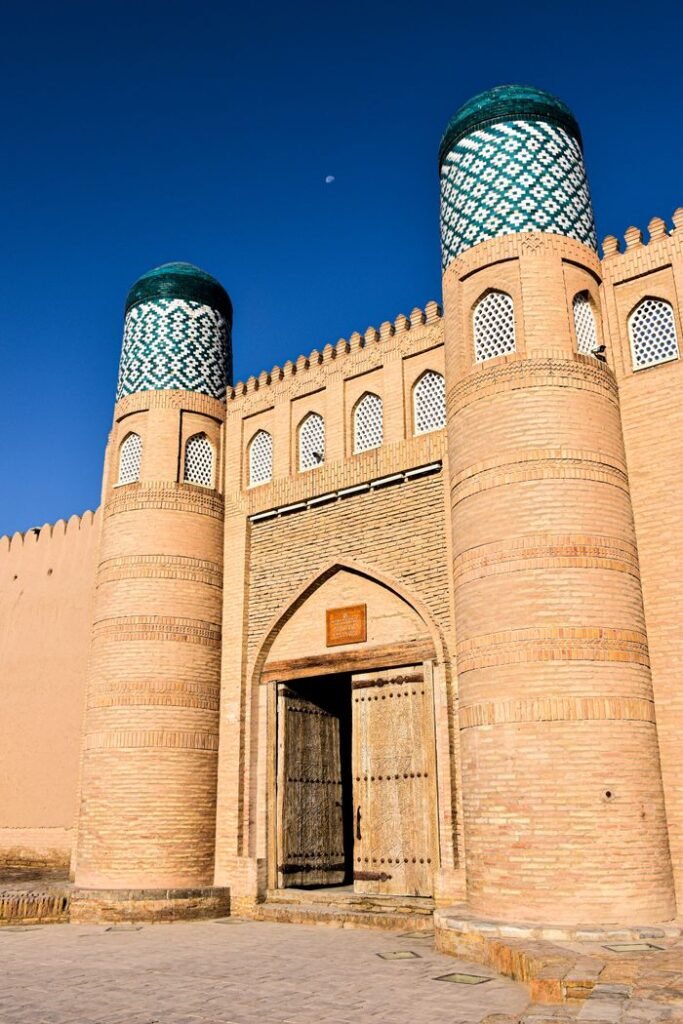
Kunya Ark in Khiva, Uzbekistan, is one of the most important historical landmarks inside the ancient walled city of Itchan Kala. Once the fortified residence and administrative center of the Khiva Khans, this remarkable citadel offers visitors a glimpse into the political, military, and royal life of the Khiva Khanate.
The name Kunya Ark is commonly translated as “Old Fortress.” Unlike a single palace building, the complex developed into a collection of courtyards, reception halls, administrative spaces, and royal residences enclosed within defensive walls. Its traditional architecture, decorated interiors, and historic layout make it one of the most fascinating places to explore in Khiva.
Today, Kunya Ark is an essential stop for travelers interested in the history of Uzbekistan and the architectural heritage of Central Asia. Located near the western entrance of Itchan Kala, the fortress also provides an excellent starting point for discovering the surrounding mosques, madrasas, minarets, and historic streets.
Where Is Kunya Ark Located?
Kunya Ark is situated inside Itchan Kala, the historic inner city of Khiva in Uzbekistan’s Khorezm region. The fortress stands close to the western entrance of the old town, near the famous Kalta Minor Minaret and Muhammad Amin Khan Madrasa.
Its position within the historic city makes it easy to include in a walking tour of Khiva. Visitors can explore the fortress before continuing through the narrow streets toward Juma Mosque, Islam Khoja Minaret, and other notable monuments.
Itchan Kala is recognized as a UNESCO World Heritage Site for its exceptional collection of historic buildings and preserved urban environment. Kunya Ark contributes significantly to this heritage because it illustrates how Khiva’s rulers lived, governed, and protected their capital.
History of Kunya Ark Fortress
The history of Kunya Ark is closely connected with the development of the Khiva Khanate, a historic Central Asian state that played an important role in regional politics and trade.
The fortress is traditionally associated with Arang Khan, who established the original complex in the late 17th century, commonly dated to around 1686–1688. Over subsequent centuries, the citadel was expanded, modified, and rebuilt by different rulers.
Kunya Ark gradually developed into a fortified royal compound containing the spaces required for government and court life. It served not only as the residence of the khan but also as a center for official meetings, ceremonial receptions, and administrative activities.
The complex suffered damage and underwent significant changes during periods of conflict and political upheaval. Many of the structures visible today reflect later phases of construction and restoration rather than a single building campaign.
During the 19th century, Khiva continued to develop as an important political and cultural center in the Khorezm region. Kunya Ark remained a powerful symbol of the authority of the khans until the political transformation of the region in the early 20th century.
Today, the surviving buildings and courtyards help visitors understand the changing history of Khiva and the lives of its rulers.
Architecture of Kunya Ark
Kunya Ark is an excellent example of traditional Khorezm architecture, combining defensive design with decorative palace spaces. Its walls, courtyards, reception rooms, and religious structures demonstrate how a royal residence could function as both a protected stronghold and a center of government.
Rather than forming a single monumental building, the fortress consists of several interconnected areas, each designed for a different purpose.
1. Defensive Walls and Entrance
The fortress was designed to protect the ruler and important administrative facilities. Its enclosing walls separated the royal compound from the surrounding streets of Itchan Kala.
The entrance provided controlled access to the complex, allowing visitors, officials, and other authorized individuals to enter different areas of the royal residence.
Although the fortress is located inside the larger city walls of Itchan Kala, it functioned as a distinct fortified complex within the historic urban landscape.
2. Kurinishkhana – The Royal Reception Hall
One of the most significant parts of Kunya Ark is the Kurinishkhana, or royal reception hall. This area was used for official audiences and meetings between the khan and visitors, officials, or other important figures.
The reception hall is especially notable for its traditional design and richly decorated interior. Colorful ceramic tiles, carved wooden elements, and painted surfaces demonstrate the artistic skills of regional craftsmen.
The courtyard and surrounding rooms help visitors imagine the ceremonial functions that once took place here.
3. Ak Sheykh Bobo Observation Area
The Ak Sheykh Bobo area is associated with one of the elevated viewpoints within the fortress complex. From accessible vantage points, visitors may enjoy views across the rooftops, historic streets, and surrounding monuments of Itchan Kala.
The elevated position helps illustrate the relationship between Kunya Ark and the wider defensive layout of Khiva.
Access to particular rooftops or viewpoints can depend on current visitor arrangements, so check locally before planning to climb.
4. Khan’s Mosque
The complex includes a mosque associated with the religious life of the royal court. Its presence reflects the close connection between political authority and Islamic religious traditions in the Khiva Khanate.
Decorative details and the traditional layout complement the other buildings within the fortress, creating a broader picture of royal life.
5. Courtyards and Residential Spaces
The courtyards and rooms of Kunya Ark provided space for everyday activities, official functions, and private royal life.
Their arrangement reflects the need to organize different parts of the court while maintaining security and privacy. The courtyards also create a contrast between the fortress’s protective exterior and the more decorative spaces inside.
Why Is Kunya Ark Famous?
Kunya Ark is one of Khiva’s most important historical attractions for several reasons.
1. Former royal residence: The fortress served as a residence for the Khiva Khans and a center of government.
2. Political importance: Its history reflects the rise, development, and eventual transformation of the Khiva Khanate.
3. Traditional architecture: The complex combines defensive walls, courtyards, reception halls, and decorated interiors.
4. Kurinishkhana reception hall: This important space provides insight into the ceremonial and administrative life of the royal court.
5. Elevated views of Itchan Kala: Accessible viewpoints offer opportunities to appreciate the historic city’s rooftops and monuments.
6. Historic location: Kunya Ark forms part of Itchan Kala, a UNESCO World Heritage Site and one of Uzbekistan’s most remarkable preserved historic urban areas.
For visitors, the fortress provides more than architectural beauty. It offers an opportunity to understand the political and social history behind Khiva’s famous monuments.
Best Time to Visit Kunya Ark
Spring and autumn are generally the most comfortable seasons for exploring Khiva. Temperatures are often suitable for walking between monuments, visiting courtyards, and spending time outdoors.
Early morning is a good option for visitors who prefer a quieter atmosphere. The softer light can also help highlight the details of the fortress’s traditional architecture.
Late afternoon is another attractive time for photography, particularly when the sunlight warms the colors of the old city.
Summer temperatures in Khiva can become very high, so carry water, wear sun protection, and plan outdoor sightseeing for cooler parts of the day. Winter visits may be quieter, although temperatures can be cold.
For a rewarding visit, allow enough time to explore the interior spaces rather than focusing only on the exterior walls and viewpoints.
Things to See Near Kunya Ark
Kunya Ark is located among several of Khiva’s most famous monuments. These nearby attractions can easily be combined into a walking itinerary.
Kalta Minor Minaret
Kalta Minor is famous for its striking turquoise and blue glazed tiles and its unusual unfinished shape. It stands near Muhammad Amin Khan Madrasa and is one of the most photographed landmarks in Khiva.
Muhammad Amin Khan Madrasa
This historic madrasa was commissioned by Muhammad Amin Khan and is known for its monumental entrance and traditional architectural design. Its proximity to Kunya Ark makes it an easy addition to the same sightseeing route.
Juma Mosque
Juma Mosque is distinguished by its spacious prayer hall supported by more than 200 carved wooden columns. Its interior offers a different architectural experience from the fortress’s royal courtyards and reception halls.
Islam Khoja Minaret
Islam Khoja Minaret is one of the most recognizable vertical landmarks in Khiva. Its slender shape contrasts with the broad, fortified appearance of Kunya Ark.
Pahlavon Mahmud Mausoleum
This important mausoleum is associated with Pahlavon Mahmud, a celebrated figure in Khiva’s cultural traditions. The complex is notable for its decorative architecture and religious significance.
Itchan Kala City Walls
The historic walls surrounding Itchan Kala provide an essential context for understanding Khiva’s defensive architecture. Exploring the gates and surrounding streets helps visitors appreciate how Kunya Ark formed part of a larger fortified city.
Travel Tips for Visiting Kunya Ark
Use these practical recommendations to make your visit more enjoyable:
Wear comfortable shoes: Exploring the fortress and surrounding old town involves walking on traditional streets and uneven surfaces.
Allow time for the interior: Courtyards, reception halls, and decorated rooms are important parts of the experience.
Bring a camera: The traditional architecture and colorful decorative details offer excellent photography opportunities.
Visit in comfortable weather: Spring and autumn are generally good seasons for walking around Khiva.
Explore nearby monuments: Combine Kunya Ark with Kalta Minor, Muhammad Amin Khan Madrasa, and Juma Mosque.
Check current admission arrangements: Ticket prices, access rules, and opening hours can change.
Confirm viewpoint access: Not every elevated area may be open to visitors at all times.
Respect historic structures: Avoid touching fragile decorative surfaces and follow signs or staff instructions.
If you enjoy history, consider hiring a local guide who can explain the functions of individual rooms and the historical figures associated with the fortress.
Kunya Ark Khiva Information Table
| Feature | Details |
|---|---|
| Name | Kunya Ark |
| Alternative names | Kunya Ark Fortress, Kunya Ark Citadel |
| Location | Itchan Kala, Khiva, Uzbekistan |
| Region | Khorezm Region |
| Original establishment | Commonly dated to around 1686–1688 |
| Associated ruler | Arang Khan |
| Historical role | Royal residence and administrative center |
| Architectural style | Traditional Khorezm architecture |
| Main features | Defensive walls, courtyards, reception halls, royal spaces |
| Notable building | Kurinishkhana royal reception hall |
| Viewpoint area | Ak Sheykh Bobo |
| Historic setting | Itchan Kala UNESCO World Heritage Site |
| Nearby attraction | Kalta Minor Minaret |
| Recommended visit duration | Approximately 45–90 minutes |
Dates refer to the commonly cited establishment of the original complex. Individual buildings have been modified, rebuilt, or restored over time. The suggested visit duration is an estimate for sightseeing.


