
Inhaltsverzeichnis
UmschaltenJuma Mosque Khiva, Uzbekistan
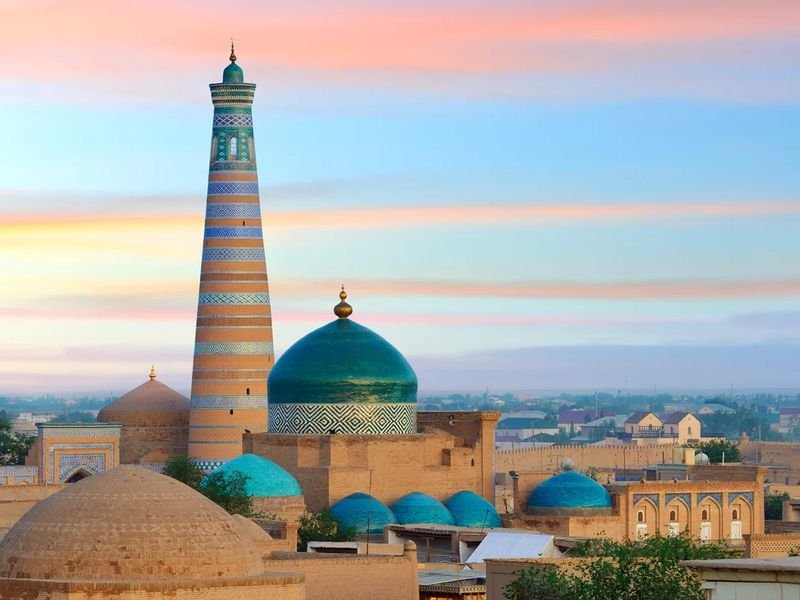
Juma Mosque in Chiwa, Usbekistan, is one of the most unusual historical landmarks in Central Asia. Located in the heart of the ancient walled city of Itchan Kala, this remarkable mosque is famous for its large prayer hall supported by more than 200 carved wooden columns. Unlike many traditional Islamic monuments, it has no prominent central dome or monumental entrance portal, giving the interior a distinctive and peaceful atmosphere.
Also known as Djuma Mosque or the Friday Mosque, this historic building reflects centuries of religious tradition, craftsmanship, and architectural development in the Khorezm region. Although the present structure dates mainly to the 18th century, the mosque’s history is associated with an earlier place of worship believed to have existed here by the 10th century.
For travelers exploring Khiva’s historic streets, blue-tiled minarets, ancient madrasas, and traditional architecture, Juma Mosque offers a different perspective on Uzbekistan’s cultural heritage. Its wooden columns, subtle lighting, and simple architectural design make it an essential stop on a sightseeing tour of Itchan Kala.
Where Is Juma Mosque Located?
Juma Mosque is situated in the central part of Itchan Kala, the historic inner city of Khiva in Uzbekistan’s Khorezm region. The mosque stands along the main route connecting the western and eastern gates of the old city, making it convenient to visit while exploring Khiva on foot.
Itchan Kala is a UNESCO World Heritage Site known for its preserved city walls, traditional houses, historic mosques, madrasas, and monumental minarets. Juma Mosque forms an important part of this historic landscape.
The surrounding area includes several famous attractions, such as Kalta Minor Minaret, Muhammad Amin Khan Madrasa, Kunya-Ark Citadel, and Pahlavon Mahmud Mausoleum.
Because of its central location, Juma Mosque can easily be included in a half-day or full-day sightseeing itinerary around Khiva’s old town.
History of Juma Mosque in Khiva
The history of Juma Mosque reaches back many centuries. Historical accounts associate the mosque’s origins with the 10th century, when an earlier congregational mosque is believed to have stood at the same location.
Over time, the original building deteriorated and was eventually replaced. The present mosque was reconstructed in the late 18th century, generally dated to around 1788–1789, during the period of the Khiva Khanate.
The reconstruction is associated with Abdurahman Mihtar, a high-ranking official who helped finance the project. Rather than adopting the monumental domes and elaborate entrance portals seen in many other Islamic buildings, the mosque retained a simpler architectural arrangement centered on a large covered prayer hall.
One of the most remarkable aspects of the reconstruction was the preservation and reuse of older wooden columns. Some columns are believed to date from earlier medieval structures, making the interior a valuable record of different periods of regional craftsmanship.
Today, Juma Mosque stands as an important monument reflecting the religious traditions, architectural skills, and cultural history of Khiva.
The Ancient Wooden Columns of Juma Mosque
The most famous feature of Juma Mosque is its forest of wooden columns. More than 200 pillars support the flat roof of the spacious prayer hall, creating a remarkable visual effect as visitors move between the rows.
Many columns feature intricate carvings, including geometric patterns, floral motifs, and decorative inscriptions. Their shapes, proportions, and ornamental details vary, reflecting different periods of construction and craftsmanship.
Some of the oldest columns are associated with the 10th–12th centuries, while many others date from later periods. Researchers have suggested that certain pillars may have been reused from earlier buildings in the wider Khorezm region.
The differences between the columns are particularly interesting. Some have elaborate carved capitals, while others feature simpler patterns or weathered surfaces that reveal their age.
Together, these wooden elements turn the interior into a living record of the region’s architectural traditions. For visitors interested in historic craftsmanship, Juma Mosque is one of the most fascinating places to explore in Khiva.
Architecture of Juma Mosque
Juma Mosque is architecturally distinctive because of its simple exterior and extraordinary interior. Rather than relying on monumental domes, tall entrance portals, or a large open courtyard, the building is organized around a broad, covered prayer hall.
The mosque measures approximately 55 by 46 meters and has a relatively low, flat-roofed appearance compared with many other famous Islamic monuments in Uzbekistan.
A Flat Roof and Spacious Prayer Hall
The roof is supported by rows of wooden columns arranged in a regular pattern. Openings in the roof allow natural light to enter the interior, creating soft patches of light and shadow across the columns and floor.
This lighting gives the prayer hall a quiet, atmospheric quality that contrasts with the colorful tiled exteriors of other Khiva landmarks.
Carved Wooden Craftsmanship
The columns display a range of decorative styles, including traditional geometric designs, plant-inspired patterns, and carved inscriptions. Differences in their decoration help demonstrate the evolution of local woodworking techniques.
The craftsmanship also reflects the importance of wood carving in Khorezm, where artisans have long decorated doors, columns, furniture, and other architectural elements.
The Mihrab
Inside the mosque, the mihrab marks the direction of Mecca for prayer. Its decorative treatment complements the interior’s restrained architectural style and provides an important religious focal point.
Juma Minaret
A separate minaret stands beside the mosque. It is an important part of the surrounding historic ensemble and provides a contrasting vertical element to the mosque’s broad, low profile.
The minaret is distinct from Kalta Minor Minaret, the famous blue-tiled landmark elsewhere in Itchan Kala. Together, these structures demonstrate the variety of architectural forms found within Khiva’s old city.
Why Is Juma Mosque Famous?
Juma Mosque is one of Khiva’s most important sightseeing attractions for several reasons.
1. More than 200 wooden columns: The large number of carved pillars creates a distinctive interior unlike that of many other mosques in Uzbekistan.
2. Centuries of history: The site is associated with an earlier mosque dating to the medieval period, while the present building largely reflects an 18th-century reconstruction.
3. Unusual architecture: Its flat roof, broad prayer hall, and lack of a monumental dome or entrance portal distinguish it from many celebrated Islamic buildings.
4. Traditional wood carving: The decorative columns showcase the craftsmanship of artisans from different periods in Khorezm’s history.
5. A peaceful atmosphere: Natural light filtering through the roof openings creates a calm setting for observing the building’s architecture.
6. Its location in Itchan Kala: The mosque is surrounded by other historic landmarks, making it a natural stop on a walking tour of Khiva.
These features make Juma Mosque a valuable destination for travelers interested in architecture, history, religion, and cultural heritage.
Best Time to Visit Juma Mosque
Spring and autumn are generally excellent seasons to explore Khiva. Temperatures are often more comfortable for walking around Itchan Kala and visiting several historic monuments in one day.
Early morning can be a good choice for visitors who prefer a quieter sightseeing experience. During the day, natural light entering through the roof openings can help reveal the patterns and textures of the wooden columns.
Summer can be very hot in Khiva, so it is advisable to plan outdoor sightseeing for the cooler hours of the day and carry drinking water. Winter offers a quieter atmosphere but can bring cold weather.
Before visiting, check local opening arrangements, particularly around Friday prayers and religious observances. As Juma Mosque is a religiously significant place, visitors should behave respectfully and follow any instructions from staff.
Things to See Near Juma Mosque
Juma Mosque is conveniently located among Khiva’s most famous historical attractions. Visitors can explore several nearby landmarks on the same walking tour.
1. Kalta Minor Minaret
Kalta Minor is one of Khiva’s most recognizable monuments, famous for its broad shape and vivid turquoise and blue glazed tiles. The minaret was intended to be much taller, but construction stopped before the original design could be completed.
2. Muhammad Amin Khan Madrasa
Located near Kalta Minor, this impressive historic madrasa was commissioned by Muhammad Amin Khan. Its monumental entrance and traditional architecture provide insight into the educational and cultural life of the Khiva Khanate.
3. Kunya-Ark Citadel
Kunya-Ark served as a fortified residence and administrative center for Khiva’s rulers. Its courtyards and historic structures offer a glimpse into the political life of the old khanate.
4. Pahlavon Mahmud Mausoleum
This important religious complex honors Pahlavon Mahmud, a celebrated figure associated with Khiva’s cultural traditions. Its decorative architecture and spiritual significance make it one of the city’s notable historic sites.
5. Islam Khoja Minaret
Islam Khoja Minaret stands out for its slender shape and considerable height. It provides a striking contrast to Kalta Minor and the low-profile architecture of Juma Mosque.
Exploring these attractions alongside Juma Mosque allows visitors to appreciate the architectural diversity and historical significance of Itchan Kala.
Travel Tips for Visiting Juma Mosque
To make the most of your visit, keep the following recommendations in mind:
Wear comfortable footwear: The old city has traditional stone streets and uneven surfaces.
Respect religious customs: Dress modestly, speak quietly, and follow any instructions regarding access.
Check prayer times: Visitor access may be affected by religious activities or local arrangements.
Look closely at the columns: Take time to examine the carvings, inscriptions, and differences in decorative styles.
Use natural light for photography: Observe how the light entering through the roof openings changes the atmosphere inside the hall.
Check photography rules: Follow any restrictions, especially during prayers or when other visitors are worshipping.
Plan nearby attractions together: Combine Juma Mosque with Kalta Minor, Kunya-Ark, and other monuments in Itchan Kala.
Confirm ticket requirements: Entrance arrangements and admission charges can change, so verify current details locally.
Allow enough time to appreciate the building’s interior rather than treating it as only a brief stop between other attractions.
Juma Mosque Khiva Information Table
| Merkmal | Details |
|---|---|
| Name | Juma-Moschee |
| Alternative name | Djuma Mosque or Friday Mosque |
| Ort | Central Itchan Kala, Khiva, Uzbekistan |
| Region | Khorezm Region |
| Historical origins | Associated with a mosque dating to the 10th century |
| Heutiges Gebäude | Mainly an 18th-century reconstruction |
| Reconstruction date | Commonly dated to 1788–1789 |
| Architekturstil | Traditional Khorezm columned mosque |
| Main building material | Brick and carved wood |
| Prayer hall dimensions | Approximately 55 × 46 meters |
| Wooden columns | More than 200; commonly reported as 212 or 213 |
| Oldest columns | Some are associated with the 10th–12th centuries |
| Roof design | Flat roof supported by wooden columns |
| Distinctive feature | Large prayer hall with carved wooden pillars |
| Nearby landmark | Juma Minaret |
| Historic setting | Itchan Kala UNESCO World Heritage Site |
| Recommended visit duration | Around 30–45 minutes |
Historical dates and column counts vary between published sources. The present building is generally dated to the late 18th century, while the mosque’s origins are associated with an earlier structure.


