
Inhaltsverzeichnis
UmschaltenAssy Plateau: Discover Kazakhstan's Spectacular Alpine Wilderness
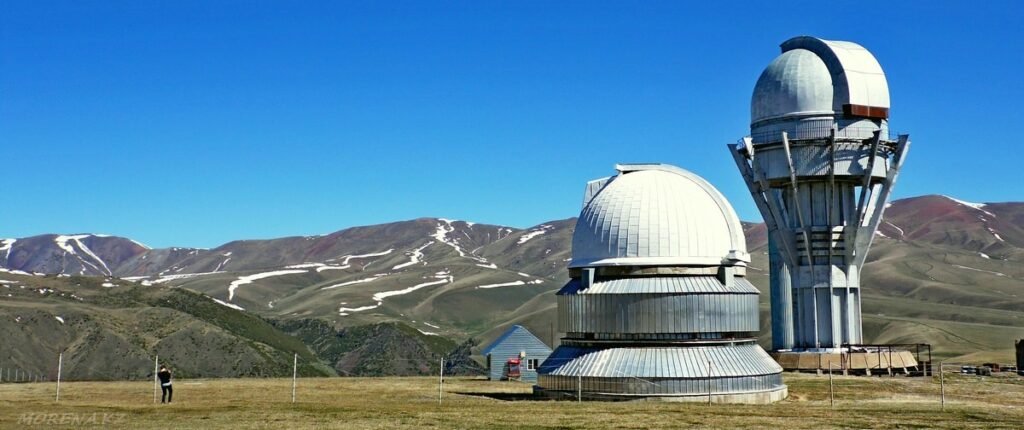
Assy Plateau is one of the most beautiful natural attractions in southeastern Kasachstan, offering vast mountain meadows, open grasslands, winding dirt roads, and breathtaking views of the surrounding ranges. Located east of Almaty, between Turgen Gorge and the Bartogay Reservoir, this high-altitude destination provides a peaceful escape from city life and an opportunity to experience the wild beauty of the Kazakh mountains.
Situated at elevations of approximately 2,100 to 3,200 meters, depending on the area, Assy Plateau is known for its expansive pastures, flowing streams, seasonal wildflowers, and traditional livestock herding. During the warmer months, horses, sheep, and cattle graze across the grasslands, while herding families use the plateau as a seasonal summer pasture. The landscape combines natural beauty with a living cultural tradition that has shaped rural life in Kazakhstan for generations.
Another distinctive feature is the Assy-Turgen Astronomical Observatory, whose buildings stand against the broad mountain horizon. The plateau’s elevation and distance from major urban lights make the area attractive to astronomy enthusiasts and photographers interested in the night sky.
Unlike heavily developed tourist destinations, Assy Plateau remains a remote outdoor location where the journey is part of the experience. Travelers come here for scenic drives, photography, hiking, camping, stargazing, and the chance to explore one of the most open and peaceful landscapes in the Almaty Region.
History of Assy Plateau
A Traditional Summer Pasture
Assy Plateau has long been valued for its natural grasslands and seasonal grazing opportunities. In the traditional pastoral lifestyle of Kazakhstan, herding families moved livestock between different landscapes according to the season, taking advantage of available water, vegetation, and weather conditions.
High-altitude pastures, commonly known as zhailau, played an important role in this way of life. During summer, mountain grasslands provided grazing areas for horses, sheep, cattle, and other livestock. The animals benefited from the seasonal vegetation, while families maintained connections with the surrounding landscape and their established herding traditions.
Assy Plateau continues to serve as a summer pasture. Visitors may encounter grazing animals, yurts, and temporary herding camps during the warmer months, offering a glimpse into a cultural practice that remains relevant in rural Kazakhstan.
The Historical Importance of the Almaty Region
The wider Almaty Region has a long history shaped by mountain communities, pastoral traditions, trade, and movement across Central Asia. The mountains and valleys provided natural resources, grazing areas, and routes connecting settlements throughout the region.
Although Assy Plateau is primarily known today for its natural scenery, its landscape has practical importance beyond tourism. Seasonal grazing, water resources, and access to high mountain terrain have helped shape how people use the area.
The plateau illustrates the close relationship between the environment and traditional livelihoods in southeastern Kazakhstan.
The Development of the Assy-Turgen Observatory
One of the plateau’s most distinctive landmarks is the Assy-Turgen Astronomical Observatory. Established in the high mountains, the observatory takes advantage of the area’s elevation and relatively dark skies for astronomical research.
Its domed buildings create a striking visual feature in the open grassland, contrasting with the surrounding hills and distant peaks. The observatory also highlights another side of Kazakhstan’s mountain landscapes: their value not only for recreation and livestock grazing but also for scientific observation.
The facility is not a conventional tourist attraction, and access to its buildings may be restricted. Visitors should admire the site from permitted areas and confirm any access arrangements before planning a visit.
Assy Plateau as a Modern Nature Destination
In recent years, Assy Plateau has attracted increasing interest from travelers looking for less-developed destinations near Almaty. Its broad grasslands, mountain scenery, and remote atmosphere offer a different experience from the region’s popular lakes, waterfalls, and forested gorges.
The plateau is particularly appealing to visitors who enjoy off-road journeys and outdoor photography. However, its remote location means that access, weather, and road conditions remain important considerations.
Responsible tourism is essential to preserving the area’s natural character and respecting the families who use the plateau for seasonal grazing.
What to See at Assy Plateau
1. Vast Alpine Meadows
One of the main attractions of Assy Plateau is its immense open grassland. The landscape stretches across rolling hills and broad mountain valleys, creating a sense of space that is difficult to find in more developed destinations.
During spring and summer, the grasslands can become green and dotted with seasonal wildflowers. The colors change with the light, weather, and elevation, while distant mountain ridges provide a dramatic backdrop.
Unlike densely forested mountain valleys, the plateau offers wide, unobstructed views. Travelers can look across the open terrain, watch clouds move over the hills, and appreciate the scale of the surrounding landscape.
These meadows are ideal for photography, quiet walks, and simply spending time in nature.
2. The Assy-Turgen Astronomical Observatory
The Assy-Turgen Astronomical Observatory is one of the plateau’s most recognizable landmarks. Located at high elevation, its domed structures stand out against the surrounding grasslands and mountains.
The observatory reflects the scientific value of the region’s clear skies and relative isolation from major sources of artificial light. Its presence gives Assy Plateau a distinctive identity among Kazakhstan’s natural attractions.
Visitors often photograph the observatory as part of the wider landscape. However, it is important to remember that the facility is associated with scientific work rather than general tourism. Do not enter restricted buildings or grounds without permission.
For travelers interested in astronomy, the wider plateau can also offer excellent opportunities for observing the night sky when weather conditions are favorable.
3. Panoramic Mountain Views
Assy Plateau is surrounded by mountain ridges that create a dramatic natural setting. From different points along the plateau, visitors can enjoy views of rolling hills, distant peaks, open valleys, and broad stretches of grassland.
The scenery changes throughout the day. In the morning, soft light reveals the shapes of the hills, while afternoon clouds can create dramatic contrasts across the landscape. Near sunset, the grasslands may take on golden tones that make the surrounding mountains especially attractive for photography.
There is no single viewpoint that defines the plateau. Much of its appeal comes from traveling through the area and discovering different perspectives along the route.
4. Traditional Nomadic Summer Camps
During the warmer months, Assy Plateau may be used by herding families as a seasonal grazing area. Visitors can sometimes see yurts, livestock, and temporary camps spread across the open landscape.
These scenes provide a connection to Kazakhstan’s pastoral heritage. Horses moving across the grasslands and livestock grazing beneath the mountains illustrate how the plateau remains part of a living rural landscape rather than simply a scenic destination.
Travelers should observe these areas respectfully. Ask permission before photographing people, yurts, or private activities, and do not approach livestock without guidance from their owners.
5. The Assy River and Mountain Streams
Water is an important part of the plateau’s landscape. The Assy River runs through the region, while smaller streams and springs flow from the surrounding valleys and slopes.
These waterways add variety to the grasslands and provide essential resources for wildlife and livestock. Depending on the season, visitors may find clear flowing water, damp meadow areas, and green vegetation along the banks.
The river and streams also create attractive locations for landscape photography. However, water levels and currents can change with rainfall and snowmelt, so avoid unsafe crossings and be careful near the banks.
6. Rolling Hills and Open Valleys
The plateau’s terrain is characterized by broad, gently rolling grasslands rather than a single dramatic summit. This makes it visually different from destinations where the main attraction is a towering peak or a deep canyon.
As the road crosses the plateau, the landscape repeatedly opens into new valleys and distant horizons. Some sections are surrounded by low grassy hills, while others offer wider views of the mountain ranges.
The changing scenery makes the journey itself one of the best reasons to visit. Travelers should allow enough time for stops at safe locations to appreciate the views.
7. Wildlife and Mountain Nature
The varied habitats around Assy Plateau support wildlife adapted to high-altitude grasslands and mountain environments. Depending on the location and season, visitors may observe birds of prey, smaller mountain birds, and other animals.
Wildlife sightings are never guaranteed, and many animals avoid busy roads and groups of people. Patient observation from a respectful distance is more rewarding than approaching or disturbing them.
The area’s natural value also depends on protecting its grasslands, streams, and seasonal pastures. Visitors should avoid littering, damaging vegetation, or driving away from established tracks.
8. Sunrise and Sunset Photography
The wide horizon makes Assy Plateau particularly appealing to photographers. The open landscape allows sunlight to illuminate the hills and grasslands without being blocked by dense forests or urban structures.
Sunrise can bring soft colors and a peaceful atmosphere, while sunset creates long shadows across the rolling terrain. Clouds and changing weather can add drama to the mountain backdrop.
Photographers should plan carefully because travel to the plateau can take several hours from Almaty. If you want to capture sunrise or sunset, arrange transportation in advance and account for the time needed to return safely.
Best Things to Do at Assy Plateau
Assy Plateau is best suited to outdoor activities and travelers who appreciate remote natural landscapes.
Scenic Off-Road Driving
The journey to Assy Plateau is one of its major attractions. The route passes through Turgen Gorge before climbing toward the open highlands.
The road becomes rougher beyond the paved sections, with gravel, ruts, uneven surfaces, and potentially difficult conditions after rain. A suitable high-clearance four-wheel-drive vehicle and an experienced driver are strongly recommended.
The changing scenery makes the drive rewarding, but safety should take priority over reaching a particular viewpoint.
Hiking and Nature Walks
Short walks across the grasslands allow visitors to experience the plateau at a slower pace. You can explore the rolling hills, observe seasonal plants, photograph the mountains, and enjoy the quiet atmosphere.
There may not be clearly marked tourist trails throughout the area, so avoid wandering into unfamiliar terrain without a reliable navigation plan. Weather can change quickly, and the high altitude can make physical activity more demanding than expected.
Choose a route that matches your fitness level and return before conditions deteriorate.
Landscape Photography
Assy Plateau offers excellent opportunities for wide-angle landscape photography. The combination of open meadows, mountain ridges, grazing animals, and changing skies creates a variety of compositions.
A camera or smartphone can capture the scenery, but a wide-angle lens is particularly useful for showing the scale of the landscape. A telephoto lens can help photograph distant animals without disturbing them.
If you plan to photograph the observatory, stay within permitted areas and respect any restrictions around the facility.
Stargazing
The plateau’s elevation and distance from city lights can provide favorable conditions for stargazing. On a clear night, visitors may be able to observe numerous stars and, when conditions allow, the Milky Way.
For the best experience, choose a clear night with limited moonlight and avoid shining bright lights toward other observers. A tripod is useful for night photography, while a warm jacket is essential even during summer.
Remember that clear skies are not guaranteed. Clouds, wind, and sudden changes in temperature can affect the experience.
Camping Under the Stars
Camping can be an appealing way to experience the plateau after daytime visitors have left. The open landscape, quiet surroundings, and dark skies create a memorable outdoor setting.
However, the area is remote and exposed. Nights can be cold, wind can become strong, and there may be no nearby shops, toilets, or other visitor facilities.
Before camping, check local rules, weather forecasts, access conditions, and whether the chosen site is permitted. Bring appropriate cold-weather equipment, sufficient drinking water, food, and a way to navigate without mobile coverage.
Leave no waste behind, avoid damaging grassland, and follow local restrictions on fires. A camping stove may be more appropriate than an open fire where permitted.
Experiencing Rural Kazakh Culture
If you encounter local herding families, the plateau offers an opportunity to learn about the pastoral traditions that remain part of life in Kazakhstan.
Approach people politely, ask permission before taking photographs, and do not enter a yurt or private camp without an invitation. Visitors should also avoid disturbing livestock or blocking access routes used by herders.
Respectful interaction helps ensure that tourism complements rather than disrupts local livelihoods.
Practical Visitor Information
Ort
Assy Plateau is located in the Almaty Region of southeastern Kazakhstan, between Turgen Gorge and the Bartogay Reservoir.
The plateau lies east of Almaty and is usually reached by traveling through Turgen Gorge before continuing along mountain roads toward the highlands.
Distance from Almaty
The plateau is roughly 90–130 kilometers from Almaty, depending on the destination point and route used. Although the distance may appear manageable, travel time can be considerable because the final section includes rough mountain roads.
Allow approximately three to four hours each way under suitable conditions, and potentially longer when the road is difficult or weather changes.
A visit is possible as a long day trip, but an overnight stay may be more comfortable for travelers who want to enjoy the landscape without rushing.
How to Get There
The usual route begins in Almaty and continues toward Turgen before climbing into the mountains.
Common transport options include:
Private four-wheel-drive vehicle: Suitable for travelers with the right vehicle and experience driving on rough mountain roads.
Local driver or guide: A practical option for visitors unfamiliar with the route and local conditions.
Organized tour: Can simplify transportation and help with planning stops and managing changing road conditions.
The upper route is not suitable for every vehicle. Ordinary passenger cars may struggle with uneven surfaces, washouts, and muddy sections.
Always check current road conditions before departure. Rain, snow, and river crossings can make a route that was passable recently unsafe on another day.
Beste Reisezeit
The main visiting season is generally late spring through early autumn, with summer often offering the most reliable access and the greenest pastures.
Frühling: The landscape begins to recover from winter, and lower areas may become green. However, snow and muddy roads can still affect access to the upper plateau.
Sommer: This is generally the most popular period for visiting. The grasslands are often green, seasonal flowers may be visible, and herding activity adds cultural interest.
Herbst: The grasslands can turn golden, creating attractive conditions for landscape photography. Temperatures fall, and the risk of snow or difficult road conditions increases as the season progresses.
Winter: Heavy snow and severe weather can make access difficult or impossible. Winter travel should not be attempted without current local information and suitable equipment.
The actual opening period varies according to weather and road conditions rather than a fixed calendar.
Entrance Fees and Permits
Access arrangements may depend on the route, protected-area rules, and current local requirements. Environmental fees may apply at checkpoints along the way.
Because the plateau is remote and access conditions can change, confirm any fees, permits, and identification requirements with a local operator or the relevant authorities before traveling.
Facilities and Mobile Signal
Assy Plateau is a remote natural destination, not a fully developed resort area. Shops, restaurants, public toilets, fuel stations, and reliable mobile coverage may be unavailable in the upper sections.
Buy supplies before leaving populated areas and do not rely on being able to make phone calls throughout the journey.
Download offline maps, tell someone your route and expected return time, and consider carrying a power bank or other suitable backup equipment.
Was man mitbringen sollte
Pack carefully for the high-altitude environment.
Warm clothing, including a windproof and waterproof outer layer.
Bequeme Wanderschuhe oder Stiefel.
Drinking water and enough food for the entire trip.
Sunglasses, sunscreen, and a hat.
A first-aid kit and any personal medication.
An offline map or reliable navigation device.
A fully charged phone and power bank.
Cash for possible local fees or purchases.
Camping equipment if you plan to stay overnight.
A camera or binoculars for scenery and wildlife.
Even in summer, the weather can change rapidly, so do not rely on the temperature forecast for Almaty alone.
Safety Tips for Visiting Assy Plateau
Assy Plateau is beautiful but remote. A safe visit requires more preparation than a typical city sightseeing trip.
Prepare for High Altitude
Much of the plateau lies above 2,000 meters, and some areas are higher still. Physical exertion may feel more demanding than it does at lower elevations.
Walk at a comfortable pace, drink water regularly, and pay attention to symptoms such as headache, dizziness, nausea, or unusual shortness of breath. If symptoms become significant, stop ascending and seek appropriate assistance.
Check Weather and Road Conditions
Mountain weather can change rapidly, even during summer. Rain can make dirt roads slippery, while cold temperatures and strong winds can make outdoor stops uncomfortable.
Check conditions immediately before departure and be prepared to postpone your trip if the road is unsafe.
Use Appropriate Transportation
The rough upper road is a major consideration. A suitable four-wheel-drive vehicle, adequate ground clearance, and a driver experienced in mountain conditions can make a significant difference.
Do not attempt difficult river crossings or damaged road sections simply because another vehicle has passed through. Water depth and current can change quickly.
Respect Livestock and Local Camps
The plateau is used for grazing, and animals may move freely across roads and tracks. Reduce speed near herds and give animals plenty of space.
Do not approach horses or other livestock without permission from their owners, and avoid disturbing herding camps.
Protect the Environment
Carry all rubbish back with you, avoid damaging vegetation, and use established tracks wherever possible. Do not leave plastic, food waste, or other materials in the grasslands.
Responsible behavior helps preserve the landscape for local communities, wildlife, and future visitors.
Best Places to Visit Near Assy Plateau
A visit to Assy Plateau can be combined with other natural attractions in the Almaty Region. The best combination depends on road conditions, available daylight, and how much time you have.
Turgen-Schlucht
Turgen Gorge is one of the main natural gateways to Assy Plateau. The route passes through a mountain valley with forested slopes, flowing water, and scenic landscapes that contrast with the open grasslands higher up.
The gorge is known for outdoor recreation and access to several natural attractions. It is worth allowing time to appreciate the scenery rather than treating it only as a road leading to the plateau.
Kairak Waterfall
Kairak Waterfall is a well-known natural attraction in the Turgen area. Reaching it generally involves a hike and careful consideration of trail and river conditions.
The waterfall offers a different landscape from Assy’s open grasslands, with flowing water, rocky terrain, and mountain vegetation.
Do not assume that the waterfall can always be combined easily with a plateau visit. Road damage, river crossings, and changing weather can affect access, so confirm current conditions before planning a combined trip.
Bartogay Reservoir
Bartogay Reservoir lies east of Assy Plateau and is another notable landscape in the Almaty Region. The reservoir and surrounding mountains offer open views and opportunities for photography.
Although the reservoir and plateau are geographically connected by the wider regional landscape, traveling between them can take time. Plan the route carefully rather than assuming they are close together by road.
Issyk-See
Issyk Lake is a well-known mountain lake in the Almaty Region, surrounded by steep slopes and forested scenery. Its landscape contrasts with the expansive grasslands of Assy Plateau.
It may be possible to include Issyk Lake in a broader regional itinerary, but combining the destinations in one day can make for a long trip. Check distances and driving conditions before committing to the route.
Almaty
Almaty is the main urban base for travelers exploring this part of Kazakhstan. The city offers hotels, restaurants, museums, parks, shopping, and transport connections for excursions into the surrounding mountains.
Many visitors stay in Almaty before and after visiting Assy Plateau, making it a convenient starting point for a wider exploration of the region.


