
Inhaltsverzeichnis
UmschaltenBolo Hauz Mosque Bukhara
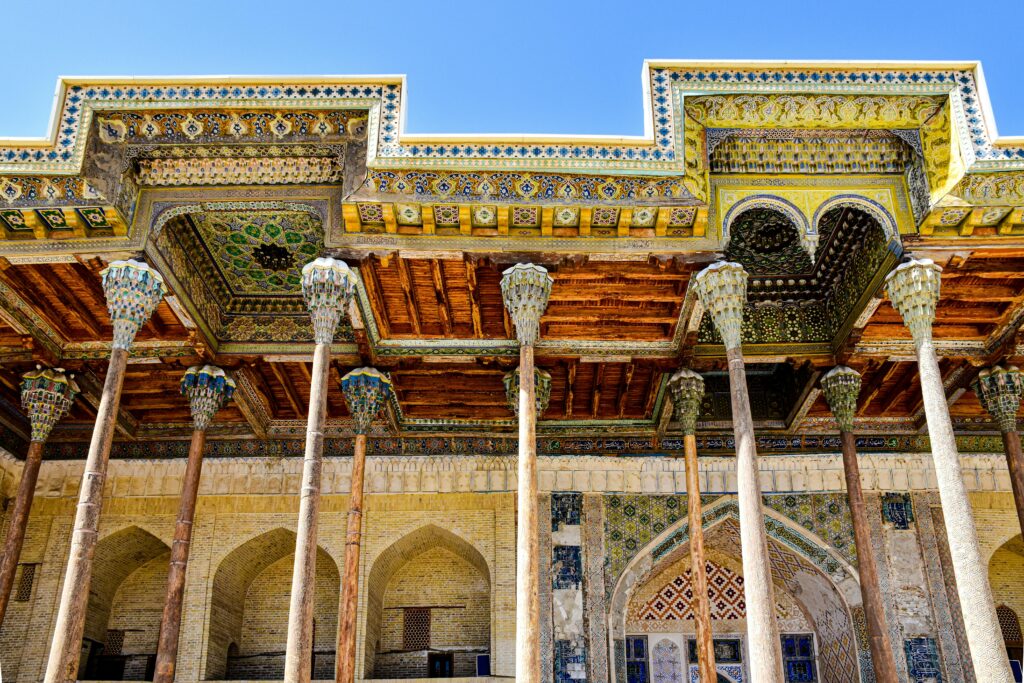
Bolo Hauz Mosque is one of the most picturesque historical landmarks in Buchara, Uzbekistan. Located opposite the impressive Ark Fortress, this elegant mosque is famous for its beautifully carved wooden columns, colorful painted ceilings, and traditional reflecting pond. Its harmonious combination of Islamic architecture, decorative craftsmanship, and peaceful surroundings makes it a memorable stop for anyone exploring Bukhara’s Old Town.
Built in 1712, the mosque became an important place of worship during the era of the Bukhara Khanate. It was also associated with the emir, who reportedly attended Friday prayers here. Today, Bolo Hauz Mosque remains an important part of the city’s architectural heritage and forms part of the Historic Centre of Bukhara, a UNESCO World Heritage Site.
Whether you are interested in history, religious architecture, photography, or traditional Uzbek culture, Bolo Hauz Mosque offers a wonderful opportunity to discover another side of this ancient Silk Road city.
Where Is Bolo Hauz Mosque Located?
Bolo Hauz Mosque stands in the historic Registan area of Bukhara, directly across from the Ark Fortress. The surrounding district was once an important civic and public center, where significant buildings and communal spaces formed part of the city’s daily life.
Its central location makes the mosque easy to include in a walking tour of Bukhara’s major historical attractions. Visitors can explore the Ark Fortress and then cross the square to admire the mosque, pond, and minaret.
Lage: Registan area, Bukhara, Uzbekistan.
For its historical setting and relationship with the surrounding monuments, see the official Uzbekistan tourism guide to the Bolo-House complex.
History of Bolo Hauz Mosque
Construction in the 18th Century
Bolo Hauz Mosque was built in 1712 during the rule of the Ashtarkhanid dynasty. Historical accounts associate the construction of the complex with the mother of Abulfayz Khan, although details of its patronage are best treated as historical accounts rather than modern-day visitor legends.
The mosque served the religious needs of the local community and later became closely connected with the rulers of Bukhara. Its position opposite the Ark Fortress made it particularly convenient for the emir and members of the court.
A Mosque Connected with the Emir
During the emirate period, Bolo Hauz Mosque served as an important Friday mosque. Its location near the ruler’s citadel gave it a prominent role in the religious and ceremonial life of the city.
The space between the fortress and mosque helped connect political authority with religious practice. This relationship remains visible today in the way the two monuments face each other across the historic square.
The Addition of the Wooden Iwan
One of the mosque’s most recognizable features is its monumental open-fronted summer prayer area, known as an iwan oder ayvan. Its tall wooden columns and elaborate ceiling decoration distinguish the mosque from many other historic buildings in Bukhara.
The summer structure and its decorative elements developed after the original mosque was built. The complex is therefore best understood as an architectural ensemble shaped over time rather than a monument completed entirely in 1712.
Bolo Hauz Mosque Today
Bolo Hauz Mosque survives as an important example of Bukhara’s traditional religious architecture. It also helps visitors understand the historical character of the Registan area, where much of the earlier urban ensemble has disappeared.
The mosque is recognized as part of the wider heritage of Bukhara’s historic center, which UNESCO describes as an exceptionally well-preserved example of a medieval Central Asian city.
Architecture of Bolo Hauz Mosque
Bolo Hauz Mosque is especially admired for its combination of traditional building techniques, ornamental woodwork, and carefully composed surroundings.
The Famous Wooden Columns
The mosque’s summer iwan is supported by twenty slender wooden columns. Their surfaces feature detailed carving, including ornamental forms associated with muqarnas, a decorative architectural technique often used in Islamic buildings.
The columns are among the mosque’s most distinctive elements. Their height and graceful proportions create an elegant entrance, while their arrangement gives the façade a remarkable sense of rhythm and balance.
Painted Ceilings and Decorative Details
Look upward when viewing the iwan: the ceiling features intricate painted patterns and traditional ornamental designs. Floral motifs, geometric arrangements, and rich colors reflect the craftsmanship associated with Bukhara’s historic decorative arts.
The ceiling and columns work together to transform a functional prayer space into a carefully designed architectural composition.
The Winter Prayer Hall
Behind the open iwan is the mosque’s enclosed prayer hall, which provides a more sheltered space for worship. The contrast between the interior hall and the open summer area reflects a practical approach to seasonal conditions.
Together, these spaces demonstrate how traditional mosque architecture accommodated both religious use and the local climate.
The Historic Pond — Hauz
The pond in front of the mosque is known as a hauz. Historically, ponds were important features of Bukhara’s urban landscape, providing water and serving as recognizable communal spaces.
The water also creates the visual effect for which the mosque is widely known. When the wooden columns are reflected on the pond’s surface, the rows of supports appear doubled, creating the impression of forty columns. This is the origin of the mosque’s popular “forty-column” description.
The Minaret
A small minaret stands beside the mosque and completes the historic ensemble. The present minaret dates to the early 20th century, with sources associating its reconstruction with 1917.
Although it is more modest than Bukhara’s famous Kalon Minaret, it contributes to the mosque’s distinctive silhouette and historical character.
Why Is Bolo Hauz Mosque Famous?
Bolo Hauz Mosque is famous for several reasons:
Its twenty carved wooden columns: The tall supports of the summer iwan are a highlight of traditional Uzbek craftsmanship.
The forty-column effect: Reflections in the pond make the twenty columns appear doubled.
Its connection with Bukhara’s rulers: The mosque was associated with the emir and served as an important Friday prayer site.
Its architectural beauty: The painted ceiling, carved woodwork, pond, and minaret create a distinctive ensemble.
Its location opposite the Ark Fortress: The mosque provides an opportunity to explore two major historic landmarks in one visit.
Its cultural significance: It forms part of the heritage of Bukhara’s UNESCO-listed historic center.
Best Time to Visit Bolo Hauz Mosque
The best time to visit Bolo Hauz Mosque depends on the weather, your sightseeing schedule, and the kind of photographs you hope to take.
Spring: March to May
Spring is an excellent season for exploring Bukhara on foot. Temperatures are generally more comfortable than in midsummer, making it easier to visit the mosque alongside other attractions in the historic center.
Summer: June to August
Summer can be very hot in Bukhara. If visiting during this period, plan outdoor sightseeing for the early morning or later in the day, and carry drinking water.
Autumn: September to November
Autumn is another appealing season for cultural sightseeing. The weather often becomes more comfortable, and the historic streets and monuments are pleasant to explore on foot.
Winter: December to February
Winter can bring cold weather, but the mosque remains an interesting architectural stop when conditions permit. Check local access arrangements before visiting.
Best time of day: Early morning or late afternoon is often ideal for photography, when the light can bring out the colors of the wooden columns and ceiling. Always respect prayer times and worshippers’ privacy.
Places to Visit Near Bolo Hauz Mosque
Bolo Hauz Mosque is conveniently located near several important landmarks in Bukhara. These attractions can be combined into a walking itinerary, depending on opening hours and access conditions.
1. Ark Fortress
Das Ark-Festung stands directly opposite the mosque. This historic citadel served as the residence and administrative center of Bukhara’s rulers for centuries. Its gates, walls, courtyards, and museum displays provide insight into the political history of the city.
2. Chashma-Ayub Mausoleum
Chashma-Ayub Mausoleum is known for its unusual architectural profile and traditions associated with the Prophet Job. It is an interesting stop for visitors exploring Bukhara’s religious heritage.
3. Samanid Mausoleum
The Samanid Mausoleum is one of Central Asia’s most celebrated examples of early Islamic architecture. Its intricate brickwork and balanced geometric design make it a valuable comparison with the later decorative traditions seen at Bolo Hauz Mosque.
4. Poi Kalyan Architectural Ensemble
Poi Kalyan is one of Bukhara’s best-known historic complexes, featuring the Kalon Minaret, Kalon Mosque, and Mir-i-Arab Madrasah. It is especially worthwhile for travelers interested in the city’s monumental Islamic architecture.
5. Lyabi-Hauz Ensemble
Lyabi-Hauz is a historic square organized around a pond and surrounded by traditional buildings, including madrasahs. It offers a different example of the important role water features played in Bukhara’s urban design.
Travel Tips for Visiting Bolo Hauz Mosque
To make the most of your visit, keep the following practical tips in mind:
Dress respectfully: Choose modest clothing suitable for a religious site.
Check access before entering: The mosque may be active for worship, and visitor access to prayer spaces can be restricted.
Be considerate during prayers: Avoid interrupting worshippers, and follow any instructions from mosque staff.
Ask before taking portraits: Seek permission before photographing worshippers or local residents at close range.
Protect the historic structure: Do not climb on columns, touch fragile decorations unnecessarily, or enter restricted areas.
Allow time for photographs: The pond and carved columns are among the most photogenic features of the complex.
Combine nearby sights: Pair the mosque with the Ark Fortress to make efficient use of your time in the Registan area.
Verify current opening arrangements: Hours, access rules, and any photography restrictions may change.
Bolo Hauz Mosque – Quick Information Table
| Merkmal | Details |
|---|---|
| Official/common name | Bolo Hauz Moschee |
| Alternative spelling | Bolo-Khauz or Bolo-Hauz Mosque |
| Ort | Registan area, Bukhara, Uzbekistan |
| Main construction date | 1712 |
| Historical period | Bukhara Khanate |
| Original patronage | Traditionally associated with the family of Abulfayz Khan |
| Main architectural feature | Open summer iwan with twenty carved wooden columns |
| Weitere Merkmale | Painted ceiling, winter prayer hall, pond, minaret |
| Historic function | Mosque associated with the emir and Friday prayers |
| Nearby landmark | Ark-Festung |
| Heritage status | Part of the Historic Centre of Bukhara, a UNESCO World Heritage Site |
| Recommended visit duration | Around 20–40 minutes, depending on access and interest |
| Entry arrangements | Check locally; rules may differ for worship areas and visitors |
Visitor duration is a planning estimate, not an official time limit. Confirm access and any fees locally before your visit.


