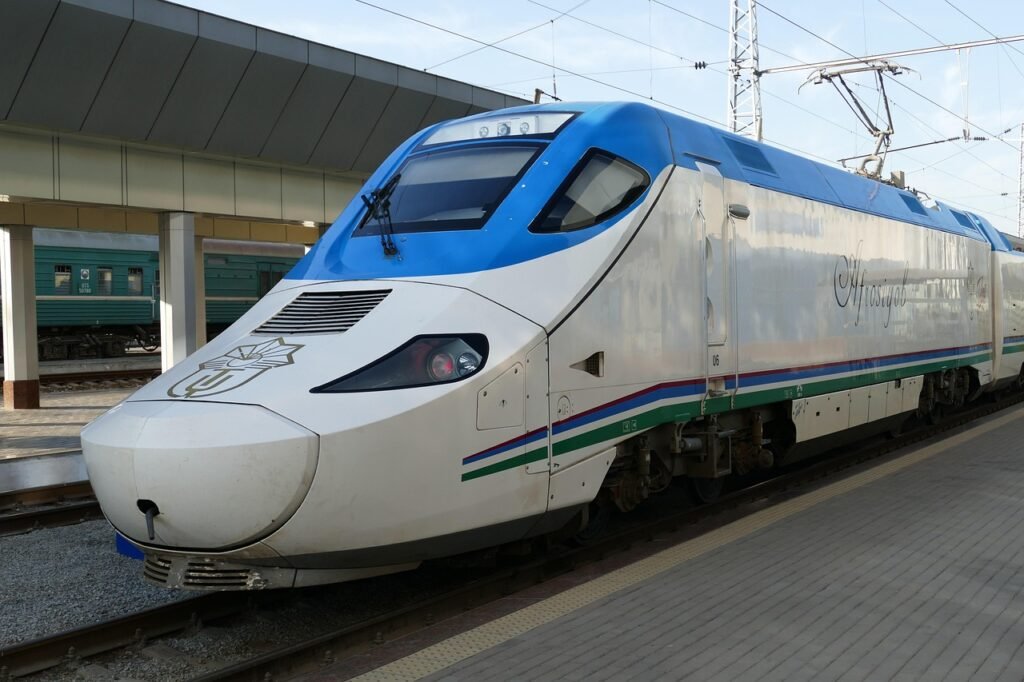
Traveling to Uzbekistan by train is one of the most convenient ways to explore the country’s historic Silk Road cities. From the lively capital of Tashkent to the magnificent architectural landmarks of Samarkand and Bukhara, the railway connects several of Uzbekistan’s most important destinations.
For international visitors, Uzbekistan train travel offers a practical alternative to long road journeys. Modern high-speed services operate on key routes, while conventional trains provide additional connections to other parts of the country, including the Khorezm region and the historic city of Khiva.
Whether you are planning an independent holiday or organizing a longer cultural journey, understanding the train network can help you save time and build a more comfortable itinerary.
In this guide, you will discover the main Uzbekistan train routes, the differences between high-speed and conventional trains, how to buy railway tickets, and how to combine train journeys with sightseeing.
Why Travel Around Uzbekistan by Train?
Uzbekistan is famous for its Silk Road heritage, spectacular Islamic architecture, traditional bazaars, and historic trading cities. Many first-time visitors want to explore several destinations during one trip, and trains make this possible without spending every day on the road.
There are several advantages to traveling by train in Uzbekistan.
Convenient connections between major cities
Rail services connect Tashkent with popular destinations such as Samarkand and Bukhara. Other services extend toward Khiva and destinations in the Fergana Valley and southern Uzbekistan.
High-speed travel on key routes
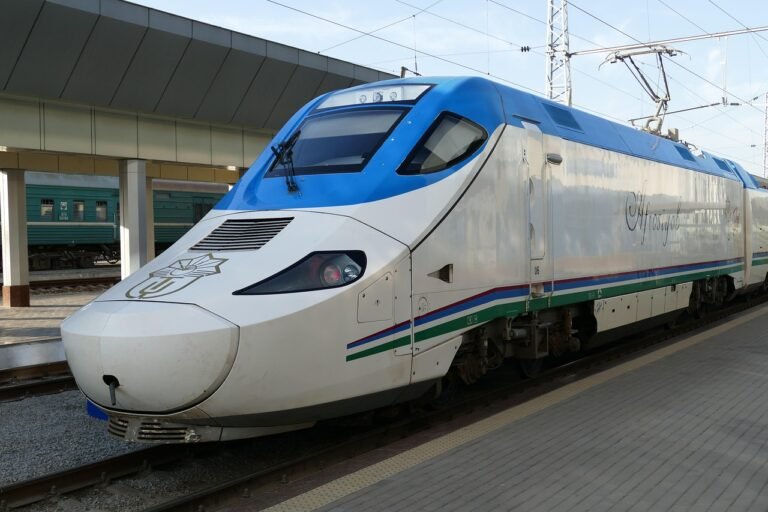
The Afrosiyob high-speed train significantly reduces travel time between Tashkent, Samarkand, and Bukhara compared with slower conventional services.
A comfortable alternative to long drives
Passengers can sit back, relax, read, or enjoy the changing landscapes instead of concentrating on the road.
Suitable for cultural itineraries
Train travel works particularly well for travelers interested in visiting several historic cities during a single Uzbekistan holiday.
Flexible travel options
Depending on the route, travelers can choose high-speed trains, conventional seated services, or trains with sleeping accommodation.
However, train availability and journey times vary by route and date. It is important to check the current timetable before finalizing your itinerary.
Types of Trains in Uzbekistan
Understanding the different train types will help you choose the most suitable service for your journey.
Afrosiyob High-Speed Train
Afrosiyob is Uzbekistan’s best-known high-speed train service. It is particularly useful for traveling between Tashkent, Samarkand, and Bukhara.
The service is designed for relatively fast intercity journeys and offers several seating classes.
Afrosiyob is usually a good choice for travelers with limited time who want to visit multiple Silk Road cities without spending too many hours in transit.
Seats on popular departures can sell out, especially during busy travel periods. Booking ahead is therefore advisable.
Conventional Passenger Trains
Conventional trains serve a wider range of destinations and can offer alternatives when high-speed tickets are unavailable or when a different departure time suits your itinerary.
Depending on the service, passengers may find seated carriages, compartments, or sleeper accommodation.
These trains can be useful for longer journeys, including travel toward Khiva and other regional destinations.
Although conventional trains are often slower than Afrosiyob, they can provide greater flexibility for some itineraries.
Night Trains
Night trains can be useful when traveling long distances. Instead of dedicating the entire day to transportation, passengers can travel overnight and arrive at their destination the following morning.
Accommodation varies by train, so check whether the selected service offers the type of sleeper compartment you prefer.
Consider arrival times carefully. Reaching a city early in the morning can be convenient, but you may need to arrange hotel luggage storage, early check-in, or transportation to your accommodation.
Uzbekistan Train Routes: Popular Journeys and Approximate Travel Times
The best train route depends on which cities you want to visit and how much time you have.
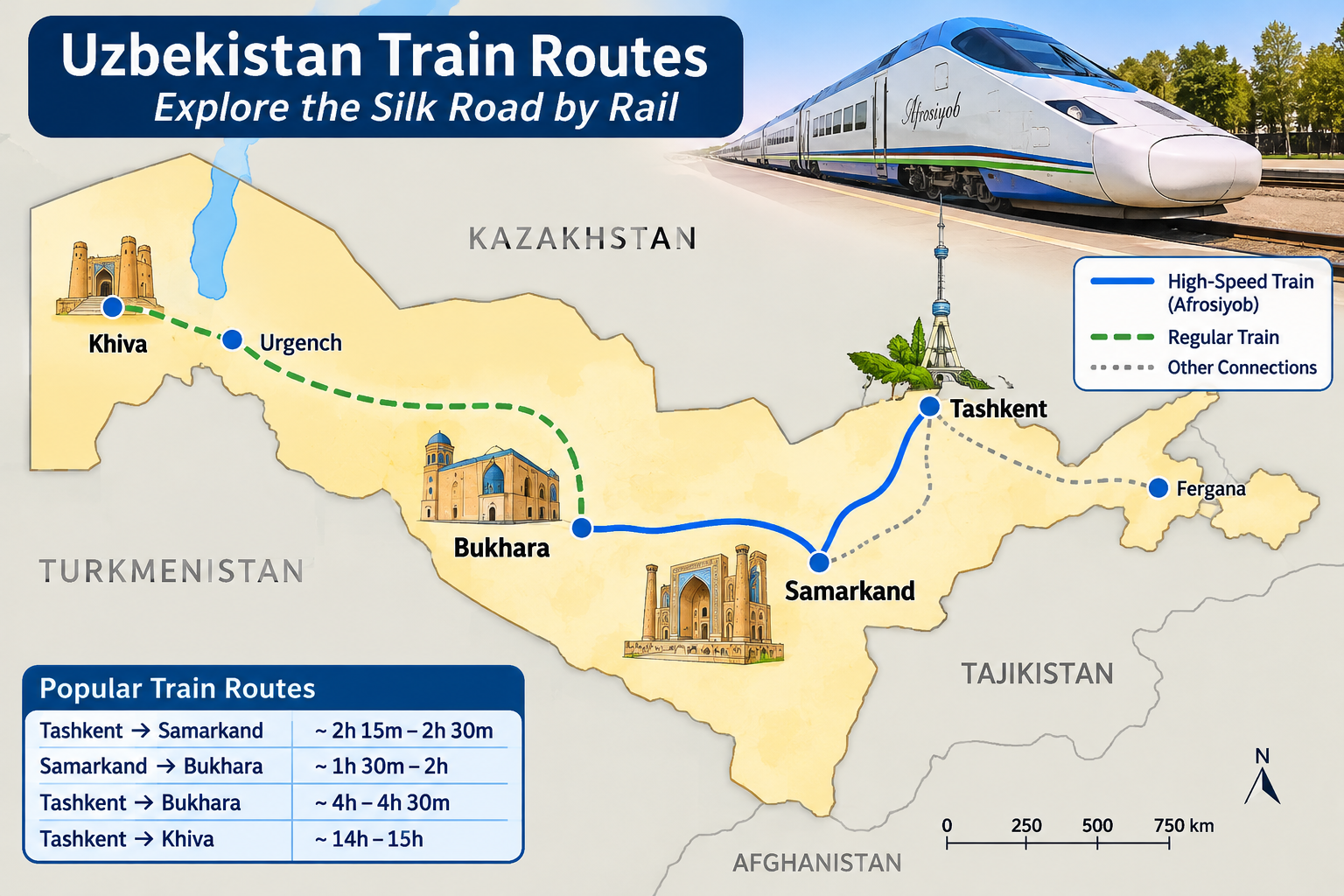
The following table provides general planning estimates, not guaranteed departure times. Actual journey durations depend on the selected train, timetable, and travel date.
| Train route | Approximate journey time | Recommended for |
|---|---|---|
| Tashkent to Samarkand | Around 2 hours 15 minutes to 2 hours 30 minutes on Afrosiyob | Visiting Samarkand from the capital |
| Samarkand to Bukhara | Around 1 hour 30 minutes to 2 hours on suitable faster services | Exploring two major Silk Road cities |
| Tashkent to Bukhara | Around 4 to 4.5 hours on Afrosiyob | Traveling directly from the capital to Bukhara |
| Tashkent to Khiva | Around 14–15 hours on certain conventional services | Reaching the historic Khorezm region |
| Bukhara to Khiva | Depends on the service and connection available | Continuing west toward Khiva |
Important: These are indicative planning figures, not a live timetable. The operator may change departure times, journey durations, and operating days. Always search for your exact date before booking.
Tashkent to Samarkand by Train
The journey from Tashkent to Samarkand is one of the most popular rail trips in Uzbekistan.
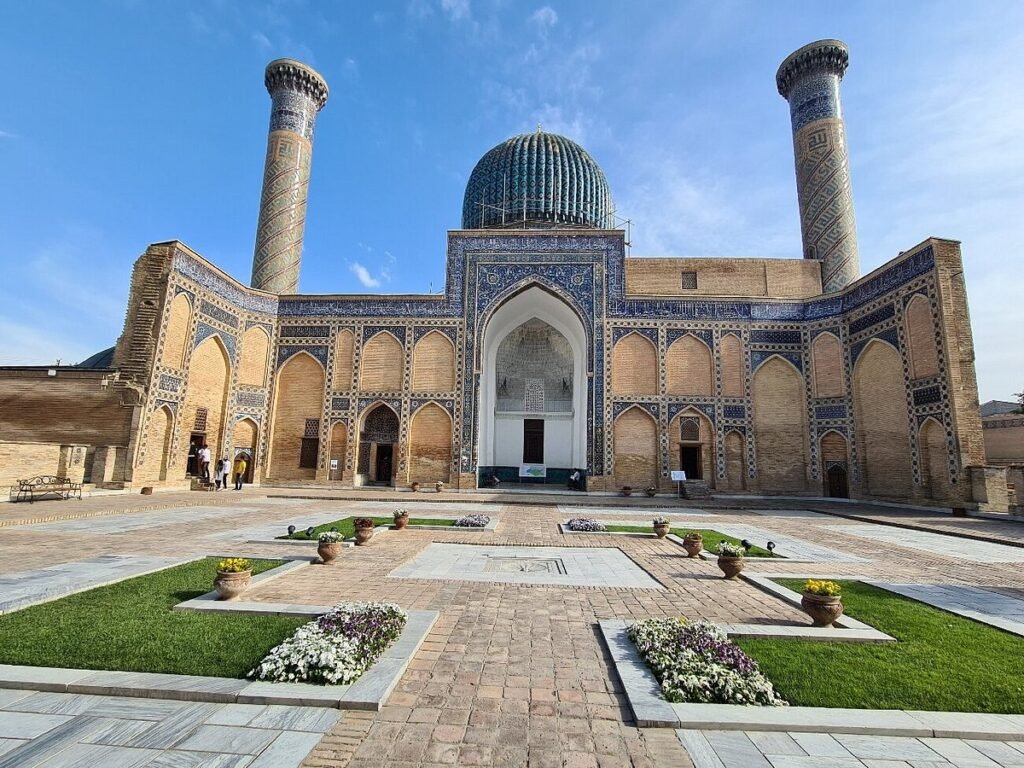
Samarkand is renowned for its monumental architecture, blue-tiled madrassas, historic squares, and connection to the Silk Road. The city’s main attractions include Registan Square, Shah-i-Zinda, and the Gur-e-Amir Mausoleum.
Afrosiyob makes the journey particularly convenient, with a typical travel time of approximately two hours and fifteen minutes to two and a half hours.
Travelers can visit Samarkand as a day trip from Tashkent, although staying overnight gives more time to explore its historic neighborhoods and major landmarks.
If Samarkand is part of a longer journey, taking the train allows you to continue toward Bukhara without returning to Tashkent first.
Samarkand to Bukhara by Train
Bukhara is another highlight of Uzbekistan’s Silk Road heritage.
Its historic center features traditional trading domes, mosques, madrassas, and the impressive Kalon Minaret complex.
Traveling from Samarkand to Bukhara by train is a practical way to connect the two cities. Faster services can complete the journey in roughly one and a half to two hours, although the exact duration depends on the train.
When planning your itinerary, allow sufficient time for transfers between the railway station and your hotel.
Bukhara’s historic center is best explored on foot, so choosing accommodation within or near the old town can make sightseeing easier.
Tashkent to Bukhara by Train
Travelers who want to move directly from the capital to Bukhara can take a train without necessarily stopping in Samarkand.
Afrosiyob typically covers this journey in approximately four to four and a half hours.
This option is useful for visitors with limited vacation time who prefer to spend more days exploring Bukhara and other historic destinations.
Alternatively, you can stop in Samarkand first and continue to Bukhara later. The best choice depends on your arrival time, sightseeing priorities, and available train departures.
Traveling by Train to Khiva
Khiva is one of Uzbekistan’s most distinctive destinations. Its walled inner city, Itchan Kala, contains historic monuments, madrassas, minarets, and traditional streets.
Unlike the principal Afrosiyob corridor, travel to Khiva requires more careful planning.
Conventional passenger services operate on selected routes between Tashkent and Khiva, while other itineraries may involve the Urgench area or a combination of transport options.
Journey times are considerably longer than travel between Tashkent and Samarkand.
Before booking, confirm the destination station, operating date, arrival time, and transfer arrangements. Do not assume that every service runs daily or that a particular connection will be available on your travel date.
How to Buy Uzbekistan Train Tickets

Booking train tickets in advance is one of the most important steps when planning a trip around Uzbekistan.
The official railway ticketing website allows travelers to search for trains, select available departures, and purchase electronic tickets.
Step 1: Search for Your Route
Visit the official Uzbekistan Railways ticketing portal and enter your departure station, destination, and travel date.
Use the station names provided in the booking system rather than relying only on city names.
Step 2: Compare Available Trains
Review the departures displayed for your selected date.
Check the train type, departure time, arrival time, seating class, and ticket price.
If Afrosiyob is unavailable, see whether a conventional train provides a suitable alternative.
Step 3: Enter Passenger Details
Enter your personal information carefully and ensure that the details match the identity document required for your journey.
International travelers should pay particular attention to passport details.
Incorrect passenger information can cause problems during ticket checks or require a correction before departure.
Step 4: Complete the Payment
Follow the payment instructions shown by the booking platform.
Available payment methods can vary, so confirm that your preferred method is accepted before completing the purchase.
Step 5: Save Your Electronic Ticket
After purchasing the ticket, save the confirmation and electronic ticket on your phone.
Check the ticket details before departure, including the passenger’s name, route, date, and train number.
The official booking instructions state that a printed ticket is not generally required for domestic electronic tickets. Nevertheless, carry the identification document associated with your booking and follow any instructions provided for your specific service.
If you need assistance planning your trip to Uzbekistan, feel free to contact us. We’ll be happy to help you arrange your tour and create a memorable travel experience.
How Far in Advance Should You Book?
Popular high-speed departures can sell out, particularly during holidays, busy travel seasons, and periods of high tourist demand.
Tickets have been offered for sale approximately 60 days before departure, but the applicable booking window should be verified for your route and travel date.
For a multi-city itinerary, it is sensible to check availability before committing to non-refundable hotels or other arrangements.
If your preferred train is unavailable, compare alternative departures, dates, and train types.
Uzbekistan Train Travel: Practical Tips for Visitors
A little preparation can make your journey smoother.
Arrive at the Station Early
Allow enough time to locate your platform, confirm the departure information, and complete any required boarding procedures.
For international visitors unfamiliar with the station, arriving early is particularly useful.
Check your ticket for the correct departure station. Tashkent has more than one railway station, and the departure location depends on the service.
Keep Your Passport and Ticket Accessible
Carry the identity document used to purchase your ticket.
Save a copy of your electronic ticket offline in case you have limited internet access at the station.
Keep your belongings secure while waiting and boarding.
Check Luggage Arrangements
Review the railway operator’s current baggage rules before traveling with large suitcases or unusually heavy luggage.
Pack essentials in a smaller bag that you can keep close to you during the journey.
Plan Transfers in Advance
Railway stations are not always located next to the main tourist attractions or your accommodation.
Arrange a taxi, hotel transfer, or other local transportation where necessary.
For an early-morning or late-night arrival, it is especially helpful to confirm how you will reach your hotel.
Choose the Right Train for Your Schedule
The fastest train is not automatically the best option for every traveler.
Consider the total journey, including getting to the station, waiting before departure, and traveling from the destination station to your accommodation.
A slower train may be preferable if it offers a better departure time or avoids an inconvenient connection.
Book Sightseeing Around Your Arrival Time
Avoid scheduling an important guided excursion too close to your train’s arrival.
Delays, station transfers, and hotel check-in can take longer than expected.
If possible, leave a comfortable gap between arriving in a city and starting a prepaid activity.
Uzbekistan Train Travel vs. Car Travel
Should you explore Uzbekistan by train or hire a car with a driver?
Both options have advantages, and your decision should depend on your itinerary, budget, and travel preferences.
| Factor | Train travel | Car with a driver |
|---|---|---|
| Travel between major cities | Very convenient on established rail corridors | Flexible, including routes beyond the railway network |
| Journey time | Fast on high-speed routes | Depends on road conditions, distance, and stops |
| Sightseeing along the way | Limited freedom to stop | Stops can be arranged along the route |
| Comfort | Comfortable seating on suitable services | Private space and flexible departure arrangements |
| Access to remote attractions | May require an additional transfer | Often more convenient |
| Luggage | Subject to train baggage rules and available space | Usually easier to manage, depending on vehicle capacity |
| Schedule flexibility | Must follow available departures | Greater flexibility over departure time |
| Best for | Connections between major cities | Rural areas, remote sites, and customized itineraries |
Which option is better?
For journeys between Tashkent, Samarkand, and Bukhara, the train is often a convenient choice.
A private car can be more suitable when you want to visit places away from railway stations, stop for photographs, explore rural areas, or follow a customized route.
Many travelers find that combining the two methods offers the best balance.
Independent Train Travel vs. an Organized Uzbekistan Tour
Taking the train independently can be rewarding, especially if you enjoy arranging your own travel.
However, planning a multi-city holiday involves more than purchasing railway tickets. You may also need to coordinate accommodation, station transfers, guided sightseeing, entrance arrangements, and connections between destinations.
An organized tour can simplify these arrangements.
| Factor | Independent train travel | Organized Uzbekistan tour |
|---|---|---|
| Itinerary | You arrange each stage yourself | The itinerary is planned according to the package |
| Train tickets | You research and book your own tickets | Ticket arrangements depend on the tour inclusions |
| Hotels | You choose and book accommodation | Accommodation may be included in the package |
| Sightseeing | You organize visits and guides | Guided excursions may be included |
| Transfers | You arrange station and local transfers | Transfers may be coordinated by the tour operator |
| Flexibility | Greater freedom to change plans | Depends on the itinerary and booking conditions |
| Planning effort | Requires independent research | Less coordination if the package covers the main arrangements |
| Best for | Independent travelers who enjoy planning | Travelers who prefer a coordinated itinerary |
Neither option is automatically better for everyone.
Independent travel offers greater control over individual bookings, while an organized tour can reduce the time spent coordinating different services.
Before booking a tour, check exactly what is included. Train tickets, entrance fees, meals, guides, transfers, and accommodation are not necessarily included in every package.
Explore Uzbekistan Beyond the Train Journey
Train travel is an excellent way to connect Uzbekistan’s historic cities, but the railway is only one part of the overall travel experience.
You may also want to explore ancient monuments with a local guide, discover traditional markets, experience regional cuisine, and arrange comfortable transfers between railway stations and your accommodation.
If you would prefer to combine these experiences in one itinerary, explore our Uzbekistan custom tours to discover available travel options and find a journey that suits your interests.
Whether you prefer a cultural holiday, a private itinerary, or a multi-city Silk Road experience, compare the available tour details before choosing the package that best matches your travel plans.
How to Plan an Uzbekistan Train Itinerary
A good itinerary should balance travel time with enough time to explore each destination.
For a first visit, consider building your route around Tashkent, Samarkand, and Bukhara, with Khiva added if you have sufficient time.
Example: Seven-Day Uzbekistan Itinerary
The following is an illustrative itinerary rather than a fixed transport schedule.
| Day | Destination | Suggested activities |
|---|---|---|
| Day 1 | Tashkent | Explore the capital, visit local markets, and discover its cultural landmarks |
| Day 2 | Tashkent to Samarkand | Take a suitable train and explore Samarkand after arrival |
| Day 3 | Samarkand | Visit Registan Square, Shah-i-Zinda, and other historic sites |
| Day 4 | Samarkand to Bukhara | Travel by train and explore Bukhara’s old town |
| Day 5 | Bukhara | Discover historic monuments, trading domes, and traditional neighborhoods |
| Day 6 | Bukhara | Enjoy additional sightseeing or a local cultural experience |
| Day 7 | Departure or onward travel | Continue your journey according to your flight and transport arrangements |
This itinerary prioritizes the main central Silk Road cities. Adding Khiva generally requires additional travel time and careful coordination of the rail or other transport connections.
If you have more time, consider extending your stay rather than rushing through every destination.
Should You Visit Khiva on a Short Trip?
Khiva is well worth considering for its distinctive historic architecture and atmosphere.
However, its location makes it more time-consuming to combine with Tashkent, Samarkand, and Bukhara on a short itinerary.
If Khiva is a priority, allow additional days and confirm the available train services or other connections before booking accommodation.
A realistic itinerary is usually more enjoyable than trying to fit too many destinations into a limited number of days.
Common Mistakes to Avoid When Booking Uzbekistan Trains

Even a well-planned trip can become stressful if transport details are overlooked.
Avoid these common mistakes:
1. Waiting too long to book popular trains.
High-speed services may sell out for your preferred date.
2. Assuming every route has a daily service.
Check the current timetable rather than relying on a general travel guide.
3. Confusing railway stations.
Verify the exact departure station shown on your ticket.
4. Planning a tight connection.
Allow enough time for transfers, sightseeing, and hotel check-in.
5. Assuming every train is high-speed.
Compare the train type and journey duration before purchasing a ticket.
6. Ignoring the final transfer.
Consider how you will travel from the destination station to your hotel or attraction.
7. Booking accommodation before checking train availability.
Confirm your intended connections first, particularly if your itinerary depends on a specific departure.
8. Assuming a tour includes every transport expense.
Check the package inclusions and exclusions before making a booking.
By addressing these details early, you can build a more reliable travel plan and enjoy more time exploring Uzbekistan.
Make the Most of Uzbekistan Train Travel
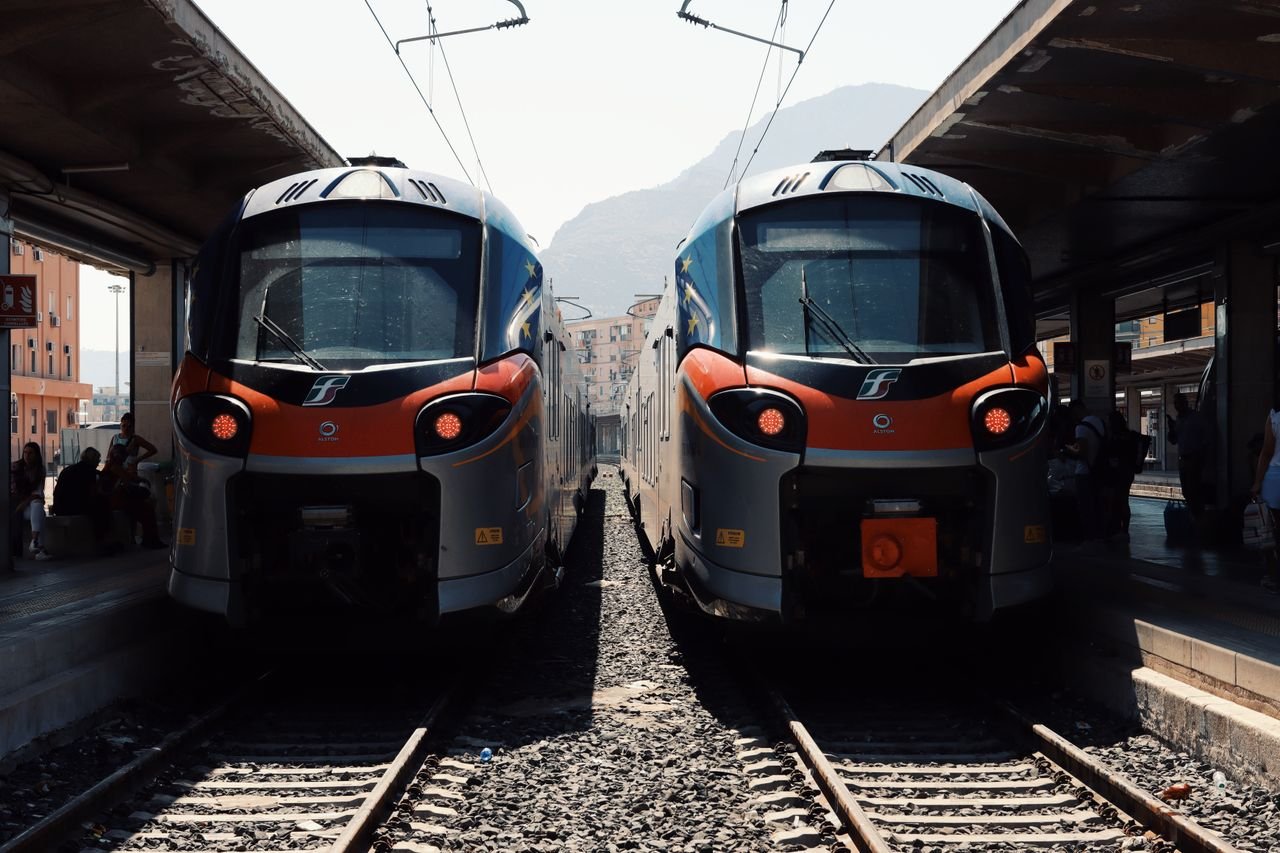
Train travel offers a convenient way to discover Uzbekistan’s historic Silk Road cities. From the high-speed connection between Tashkent and Samarkand to journeys toward Bukhara and Khiva, the railway can form an important part of a well-planned itinerary.
The key is to choose suitable routes, check the latest schedules, book popular services early, and allow enough time for transfers and sightseeing.
For independent travelers, the railway provides flexibility to arrange a trip at their own pace. For visitors who prefer help coordinating transport, accommodation, and cultural experiences, an organized itinerary may be a better fit.