
Table of Contents
ToggleLyabi Hauz Ensemble Bukhara
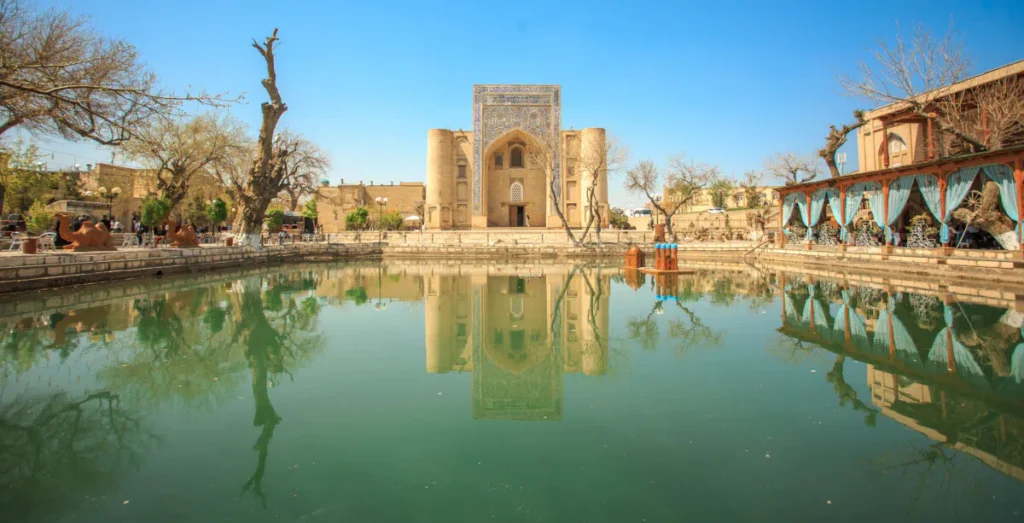
The Lyabi Hauz Ensemble is one of the most atmospheric historical landmarks in Bukhara, Uzbekistan. Located in the heart of the Old Town, this architectural complex is built around a historic pond surrounded by impressive madrasas, a traditional Sufi lodge, shaded walkways, and lively cafés.
Unlike many monumental squares centered on a mosque or palace, Lyabi Hauz developed around a body of water. The pond once played an important role in Bukhara’s water supply and urban life, while the surrounding buildings served educational, religious, and social purposes.
The name Lyabi Hauz is commonly translated as “by the pond” or “at the edge of the pool.” The ensemble took shape mainly during the 16th and 17th centuries and includes three principal monuments: Kukeldash Madrasa, Nadir Divan-Begi Khanaka, and Nadir Divan-Begi Madrasa.
Today, Lyabi Hauz is both a historical attraction and a popular gathering place. Visitors come to admire the architecture, relax beside the water, explore traditional craft shops, and experience Bukhara’s welcoming atmosphere.
Whether you are interested in history, Islamic architecture, photography, or local culture, Lyabi Hauz deserves a place on your Bukhara sightseeing itinerary.
Where Is the Lyabi Hauz Ensemble Located?
Lyabi Hauz is situated in the historic center of Bukhara, Uzbekistan, within walking distance of many of the city’s best-known monuments and traditional trading streets.
The ensemble occupies a distinctive public space in the Old Town. Its pond forms the center, while the principal historic buildings frame the area on three sides. The surrounding streets connect the complex with traditional bazaars, madrasas, mosques, and other heritage sites.
Its central location makes Lyabi Hauz easy to combine with a walking tour of Bukhara’s historic center.
Location: Old Town, Bukhara, Uzbekistan.
The ensemble forms part of the wider Historic Centre of Bukhara, which was inscribed on the UNESCO World Heritage List in 1993. The area’s significance lies in its architecture, urban layout, and evidence of Bukhara’s long history as a center of trade, learning, and culture.
History of the Lyabi Hauz Ensemble
Kukeldash Madrasa: The Earliest Main Monument
The development of the present-day ensemble began with Kukeldash Madrasa, built in 1568–1569 during the Shaybanid period. It became one of Bukhara’s largest and most important educational buildings.
The madrasa provided accommodation and teaching spaces for students studying Islamic subjects. Its size and architectural design reflected the importance of religious education in Bukhara during the 16th century.
Kukeldash Madrasa established the northern edge of the area that would later become the Lyabi Hauz ensemble.
The Construction of the Historic Pond
The pond was established around 1620, during the rule of Imam Quli Khan. It was associated with the powerful court official Nadir Divan-Begi, who played a central role in shaping the surrounding architectural complex.
Historically, ponds known as hauz were an important feature of Bukhara’s urban landscape. They stored water and provided places where residents could collect water, rest, and gather.
Over time, many of Bukhara’s old ponds were drained as concerns grew about waterborne disease and changing approaches to public water supply. Lyabi Hauz survived, preserving an important element of the city’s earlier urban environment.
Nadir Divan-Begi Khanaka
Around 1619–1620, Nadir Divan-Begi sponsored a khanaka near the pond. A khanaka was a religious retreat or lodge associated with Sufi traditions, providing space for spiritual gatherings and accommodation for visiting religious figures.
The building’s central domed hall, surrounding rooms, and monumental entrance reflect its original function. Together with the pond, the khanaka helped establish the western side of the ensemble.
Nadir Divan-Begi Madrasa
The Nadir Divan-Begi Madrasa was built in the early 17th century, generally dated to 1622–1623. Historical accounts state that it was initially planned as a caravanserai before being converted into a madrasa under Imam Quli Khan.
A caravanserai was a roadside or urban lodging complex where merchants and travelers could rest, store goods, and conduct business. The building’s conversion reflects how structures in historic Bukhara could be adapted to changing educational and religious needs.
Its elaborate entrance portal, glazed tilework, and unusual figurative decoration make it one of the ensemble’s most recognizable buildings.
Lyabi Hauz in the Modern Era
Lyabi Hauz has retained its historic character while becoming an important part of contemporary life in Bukhara.
The pond, surrounding monuments, and shaded public areas continue to attract residents and travelers. Cafés and restaurants now occupy parts of the surrounding area, while cultural performances and other events may take place nearby.
The ensemble provides a valuable example of how historic architecture can remain part of a city’s everyday social life rather than functioning solely as a museum setting.
Main Attractions of the Lyabi Hauz Ensemble
The ensemble is best explored as a group of related monuments surrounding the pond. Each building represents a different function within Bukhara’s historical urban landscape.
1. Lyabi Hauz Pond
The historic pond is the central feature of the entire ensemble and the reason for its name.
Its rectangular basin is traditionally described as measuring approximately 36 by 46 meters. Stone edges and steps surround the water, while mature trees provide shade around the public space.
In earlier centuries, the pond played a practical role in the city’s water system. It also served as a social gathering point where residents could rest, meet others, and spend time near the water.
Today, the pond is one of the most photogenic places in Bukhara. The water reflects the surrounding architecture and trees, creating a peaceful atmosphere that contrasts with the busier streets nearby.
2. Kukeldash Madrasa
Kukeldash Madrasa stands on the northern side of the ensemble and is its oldest principal building.
Constructed in 1568–1569, it was one of the major educational institutions of historic Bukhara. Its traditional layout centers on an internal courtyard surrounded by student rooms and other functional spaces.
The building is known for its monumental scale, arched openings, and restrained decorative details. Compared with the more vividly decorated Nadir Divan-Begi Madrasa, Kukeldash provides a useful example of another approach to Central Asian Islamic architecture.
Its position beside the pond also shows how educational institutions formed an integral part of Bukhara’s public spaces.
3. Nadir Divan-Begi Khanaka
The Nadir Divan-Begi Khanaka stands on the western side of the pond.
Built around 1619–1620, the structure served as a religious lodge associated with Sufi practice. Khanakas provided spaces for spiritual gatherings and could accommodate dervishes and visiting religious figures.
Its architecture is organized around a central domed hall, with additional rooms integrated into the building. The prominent entrance portal gives the structure a monumental appearance, while its position opposite the madrasa helps create the ensemble’s visual balance.
The khanaka is an important reminder that historic Bukhara was not only a center of commerce but also a place of religious learning and spiritual life.
4. Nadir Divan-Begi Madrasa
The Nadir Divan-Begi Madrasa occupies the eastern side of the pond and is among the most visually striking buildings in the ensemble.
Originally intended as a caravanserai, the building was later converted into a madrasa. Its monumental entrance features intricate glazed tilework and unusual depictions of mythical or symbolic creatures, including birds and a sun with a human face.
Such figurative decoration is notable in the context of Islamic religious architecture, where the use of human and animal imagery varies by building type, artistic tradition, and historical period.
The façade’s blue, turquoise, and other colored details contrast beautifully with the surrounding brickwork. Visitors should take time to study the entrance portal and its ornamental details rather than viewing the building only from a distance.
5. The Statue of Khoja Nasreddin
Near the pond stands a popular bronze statue depicting Khoja Nasreddin riding a donkey.
Khoja Nasreddin is a legendary character in stories told across Central Asia and other regions. He is often portrayed as a witty, unconventional figure whose humorous adventures reveal lessons about human behavior, authority, and everyday life.
The statue adds a lighthearted element to the historic square and has become a favorite meeting point for visitors. It also reflects the importance of storytelling and oral traditions in the region’s cultural heritage.
6. Traditional Trees and Shaded Walkways
The mature trees around the pond are an important part of Lyabi Hauz’s atmosphere.
They provide welcome shade during Bukhara’s hot summers and soften the monumental character of the surrounding buildings. The combination of water, trees, and historic architecture makes the square feel different from the more exposed courtyards and open plazas found elsewhere in the city.
The shaded area is especially pleasant for a short rest during a walking tour of Bukhara.
Architectural Features of the Lyabi Hauz Ensemble
Lyabi Hauz is significant not only because of its individual monuments but also because of the way architecture, water, and public space work together.
Traditional Central Asian Islamic Architecture
The madrasas and khanaka display features associated with historic Islamic architecture in Central Asia, including monumental entrance portals, internal courtyards, domed halls, arched openings, and ornamental tilework.
Although the buildings share some design principles, each has its own architectural character. Kukeldash Madrasa emphasizes scale and educational function, while the Nadir Divan-Begi buildings feature more elaborate entrance decoration.
Decorative Tilework
The Nadir Divan-Begi Madrasa is especially famous for its decorative façade.
Glazed tiles create vivid patterns and images around the entrance, using color and symmetry to emphasize the portal. The imagery of birds and the sun is unusual and makes the madrasa particularly interesting for visitors studying the decorative traditions of Uzbekistan.
The other buildings provide a contrast through their brickwork, architectural proportions, and more restrained decorative features.
Courtyards and Domed Spaces
The internal courtyards and domed halls reflect the functional requirements of traditional educational and religious buildings.
Madrasas needed space for students and teaching, while khanakas provided rooms for spiritual gatherings and accommodation. Their layouts reveal how architecture responded to the different needs of the institutions that occupied them.
Water as the Center of Urban Life
The pond is the defining feature that distinguishes Lyabi Hauz from many other architectural ensembles.
Instead of placing a single monumental building at the center, the complex developed around a shared water source. This arrangement connected practical needs with social interaction and gave the surrounding monuments a common focal point.
The ensemble therefore illustrates an important aspect of traditional Bukhara: water, shade, commerce, religion, and education were closely connected within the city’s urban fabric.
Why Is the Lyabi Hauz Ensemble Famous?
Lyabi Hauz is one of Bukhara’s best-known landmarks because of its architecture, historic pond, and lively atmosphere.
The historic pond: One of the few surviving traditional reservoirs in Bukhara.
Three principal monuments: Kukeldash Madrasa, Nadir Divan-Begi Khanaka, and Nadir Divan-Begi Madrasa.
Distinctive tilework: The Nadir Divan-Begi Madrasa features an unusually decorated entrance portal.
Historic urban planning: The ensemble demonstrates how water and public space shaped the development of the old city.
Connection with Silk Road history: The surrounding district was associated with commerce, travel, and cultural exchange.
Khoja Nasreddin statue: A recognizable local landmark linked with regional storytelling traditions.
Contemporary atmosphere: Cafés, shaded seating, and public gatherings make it a pleasant place to experience everyday life in Bukhara.
Best Time to Visit the Lyabi Hauz Ensemble
Lyabi Hauz can be visited throughout the year, although weather and the time of day influence the experience.
Spring: March to May
Spring is one of the most comfortable seasons for exploring Bukhara on foot. The weather is often pleasant for walking between the pond, historic madrasas, and nearby attractions.
The trees and open public space make Lyabi Hauz an enjoyable place to pause during a spring sightseeing itinerary.
Summer: June to August
Summer can be extremely hot in Bukhara. The trees around the pond provide shade, making the square more comfortable than many exposed areas of the Old Town.
Plan longer walks for early morning or late afternoon, carry water, and take breaks in shaded areas.
Autumn: September to November
Autumn is another excellent season for exploring the ensemble. Temperatures often become more comfortable, and the historic square provides attractive opportunities for architectural and street photography.
Winter: December to February
Winter visits are possible, although the weather can be cold. The square may feel quieter, offering a different perspective on its architecture and public spaces.
Check local conditions if you plan to visit outdoor cafés or attend cultural events.
Best time of day: Late afternoon and early evening are particularly appealing if you want to experience the square’s social atmosphere. Morning is a good choice for quieter photographs of the pond and surrounding buildings.
Places to Visit Near the Lyabi Hauz Ensemble
Lyabi Hauz is an excellent starting point for exploring Bukhara’s historic center. Several other landmarks can be reached on foot.
1. Magoki-Attori Mosque
Magoki-Attori Mosque is one of Bukhara’s important historic religious buildings. Its surviving architectural elements reflect different phases of the city’s development and make it a valuable stop for visitors interested in early Islamic architecture.
2. Trading Domes of Bukhara
The traditional covered trading domes once sheltered merchants and specialized markets along Bukhara’s commercial routes.
Today, visitors can explore shops selling crafts, textiles, ceramics, jewelry, and souvenirs. The domes provide a glimpse of the city’s historic role as a trading center.
3. Po-i-Kalyan Complex
Po-i-Kalyan is one of Bukhara’s most famous architectural ensembles, featuring the Kalon Minaret, Kalon Mosque, and Mir-i-Arab Madrasa.
Its monumental scale and distinctive brickwork make it an essential stop for travelers interested in Islamic architecture.
4. Ark Fortress
The Ark Fortress served as the historic citadel and residence of Bukhara’s rulers. Its walls, gates, and museum spaces provide insight into the city’s political and administrative history.
5. Bolo Hauz Mosque
Located opposite the Ark Fortress, Bolo Hauz Mosque is known for its tall carved wooden columns, painted ceiling, and reflecting pond. It is a rewarding stop for anyone interested in the decorative traditions of Bukhara.
6. Samanid Mausoleum
The Samanid Mausoleum is a celebrated example of early Islamic architecture in Central Asia. Its intricate brickwork and carefully balanced geometric patterns make it particularly interesting for visitors who have already admired the brick decoration at Bukhara’s other monuments.
Travel Tips for Visiting the Lyabi Hauz Ensemble
Keep these practical tips in mind when planning your visit:
Allow time to relax: Unlike some monuments that are mainly visited for their interiors, Lyabi Hauz is also a public gathering place. Leave time to enjoy the pond and surrounding atmosphere.
Explore the architecture from different angles: Walk around the pond to see how the three main buildings frame the space.
Look closely at the madrasa portal: The decorative imagery at Nadir Divan-Begi Madrasa is one of the ensemble’s most distinctive details.
Visit at different times of day: The square can feel quieter in the morning and more lively later in the day.
Dress respectfully: The surrounding monuments include religious and educational buildings, so modest clothing is advisable.
Respect active religious spaces: Follow local instructions and check access arrangements before entering buildings.
Ask before photographing people: Be considerate of residents, staff, and visitors, especially near religious sites.
Try local food nearby: Cafés and restaurants around the square offer opportunities to sample Uzbek dishes and tea.
Check event schedules locally: Cultural performances and other activities may take place in the surrounding area, but schedules can change.
Combine nearby sights: The ensemble is conveniently located for walking tours of Bukhara’s historic center.
Lyabi Hauz Ensemble – Quick Information Table
| Feature | Details |
|---|---|
| Name | Lyabi Hauz Ensemble |
| Alternative spellings | Lyabi-Hauz, Lyab-i-Hauz, Lyabi Khauz |
| Location | Historic Old Town, Bukhara, Uzbekistan |
| Name meaning | “By the pond” or “at the edge of the pool” |
| Main development period | 16th–17th centuries |
| Main historic feature | Traditional water reservoir or hauz |
| Pond dimensions | Approximately 36 × 46 meters |
| Oldest principal building | Kukeldash Madrasa |
| Kukeldash Madrasa date | 1568–1569 |
| Nadir Divan-Begi Khanaka | Around 1619–1620 |
| Nadir Divan-Begi Madrasa | Commonly dated to 1622–1623 |
| Architectural style | Central Asian Islamic architecture |
| Notable features | Historic pond, madrasas, khanaka, tilework, mature trees |
| Nearby landmark | Trading Domes of Bukhara |
| Heritage context | Part of the Historic Centre of Bukhara, a UNESCO World Heritage Site |
| Recommended visit duration | Around 45–75 minutes |
| Visitor access | The outdoor square is generally accessible; individual buildings may have separate restrictions |
Dates and dimensions are commonly cited figures. Visit duration is an estimate, and access to individual buildings may vary.


